40 Years of Whodini’s “Back in Black”: The Blueprint of Cool
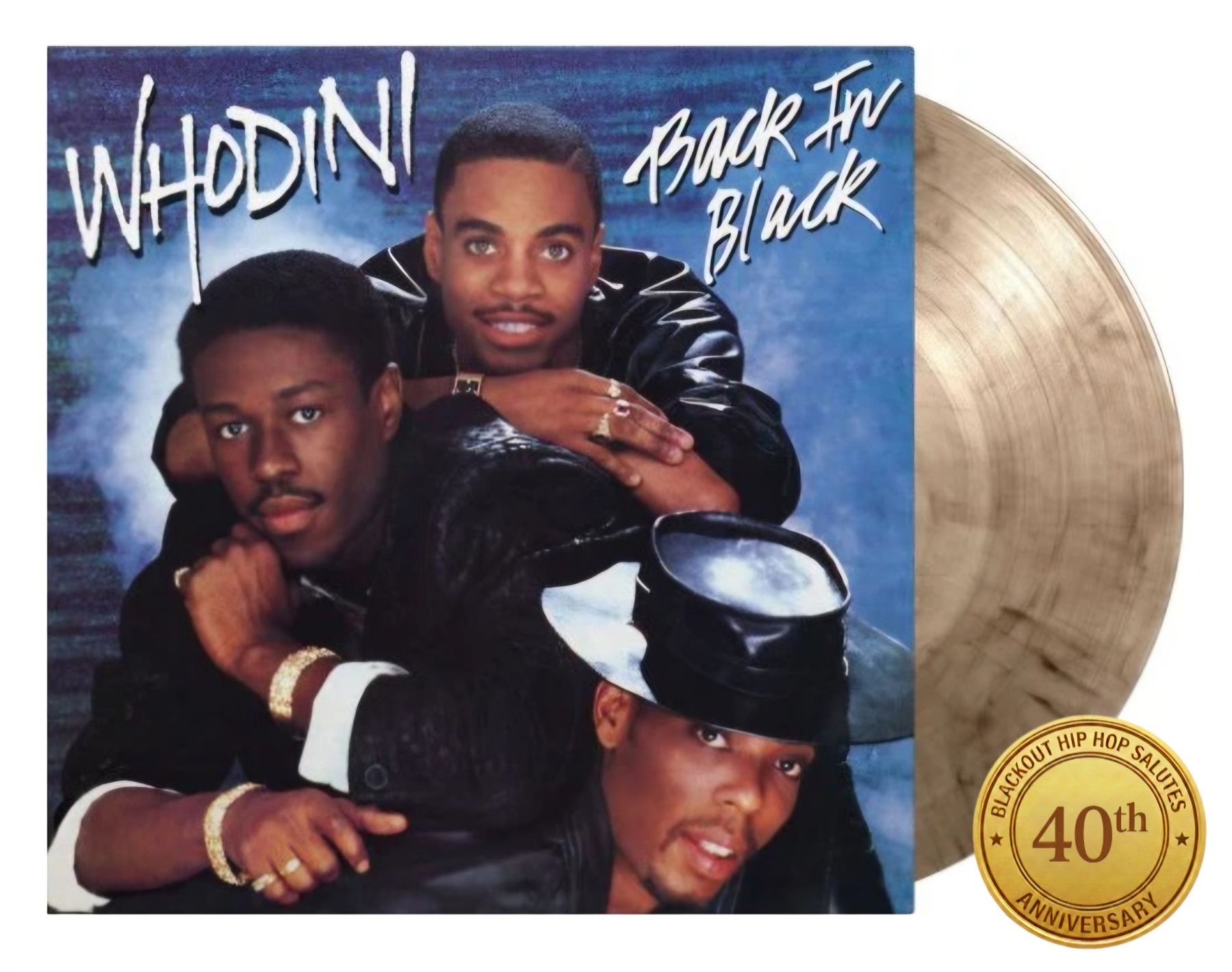
Today marks exactly 40 years since the Brooklyn trio Whodini released their third studio album, Back in Black. Dropping on April 29, 1986, via Jive Records, this project arrived at a pivotal moment for hip hop. While the genre was still largely defined by raw park jams and early “new school” aggression, Whodini—consisting of Jalil Hutchins, John “Ecstasy” Fletcher, and Drew “Grandmaster Dee” Carter—opted for a more polished, melodic approach that bridged the gap between the streets and R&B radio.
One of the most defining aspects of Back in Black is its sonic texture. Unlike many of their peers who were recording in local NYC booths, Whodini traveled to London to record at Battery Studios. This move allowed their producer, the legendary Larry Smith, to access high-end technology and instrumentation not yet common in US rap circles . Smith, often called the “Quincy Jones of rap,” was a trained bassist who preferred creating original compositions over the emerging trend of heavy sampling .
On this album, Smith utilized a “big beat” sound characterized by heavy snare and kick drums, combined with sophisticated synth arrangements . His perfectionist approach stripped artists of their egos in the booth, pushing them to deliver flows that matched his “future shock” sound . It was during these sessions that Grandmaster Dee officially transitioned from being a featured DJ to a full member of the trio, adding a new dimension to their stage presence and sound .
The album opens with “Funky Beat,” a track that remains a cornerstone of 80s hip hop. The song features a booming Larry Smith production and is famous for its music video, which served as a who’s-who of the era, featuring cameos from Run-DMC, Bobby Brown, and Malcolm-Jamal Warner. It wasn’t just a party track; it was a statement of cultural dominance.
Then there is “One Love,” arguably the group’s most enduring hit. Reaching #10 on the Billboard R&B/Hip-Hop chart, the song was revolutionary for its time. Instead of the standard bravado, Jalil and Ecstasy explored themes of monogamy and the value of true relationships. This maturity helped Whodini cultivate a massive following among female listeners, a demographic often overlooked by the harder rap acts of the time.
However, the album wasn’t without its “blunter” moments. “I’m a Ho” remains one of the most discussed tracks in their catalog. In a clever (and controversial) twist, the group applied the derogatory term to themselves rather than women, exploring male sexuality with a mix of humor and street grit. While some critics at the time found the lyrics stagnant or “corny,” the track became a street favorite and a staple on early mixtapes.
Back in Black achieved Gold status by June 1986, proving that Whodini had staying power beyond their platinum predecessor, Escape. But their real legacy lies in the sound they pioneered. By blending rap with “radio-friendly” R&B melodies, they laid the essential groundwork for the New Jack Swing movement that would dominate the late 80s. Producers like Teddy Riley would later take these “swingbeats” and melodic structures to even greater heights, but the blueprint was undeniably drafted here .
Whodini also changed the visual game. Ecstasy’s trademark Zorro hat and the group’s penchant for leather attire redefined hip hop fashion, moving away from simple tracksuits toward a more curated, “cool” aesthetic .
Four decades later, Back in Black stands as a reminder that hip hop doesn’t always have to be abrasive to be authentic. It was a sophisticated, well-produced, and immensely catchy record that proved rap could be a professional art form with long-term commercial viability.