40 Years of “Raising Hell”: The Album That Redefined Hip-Hop
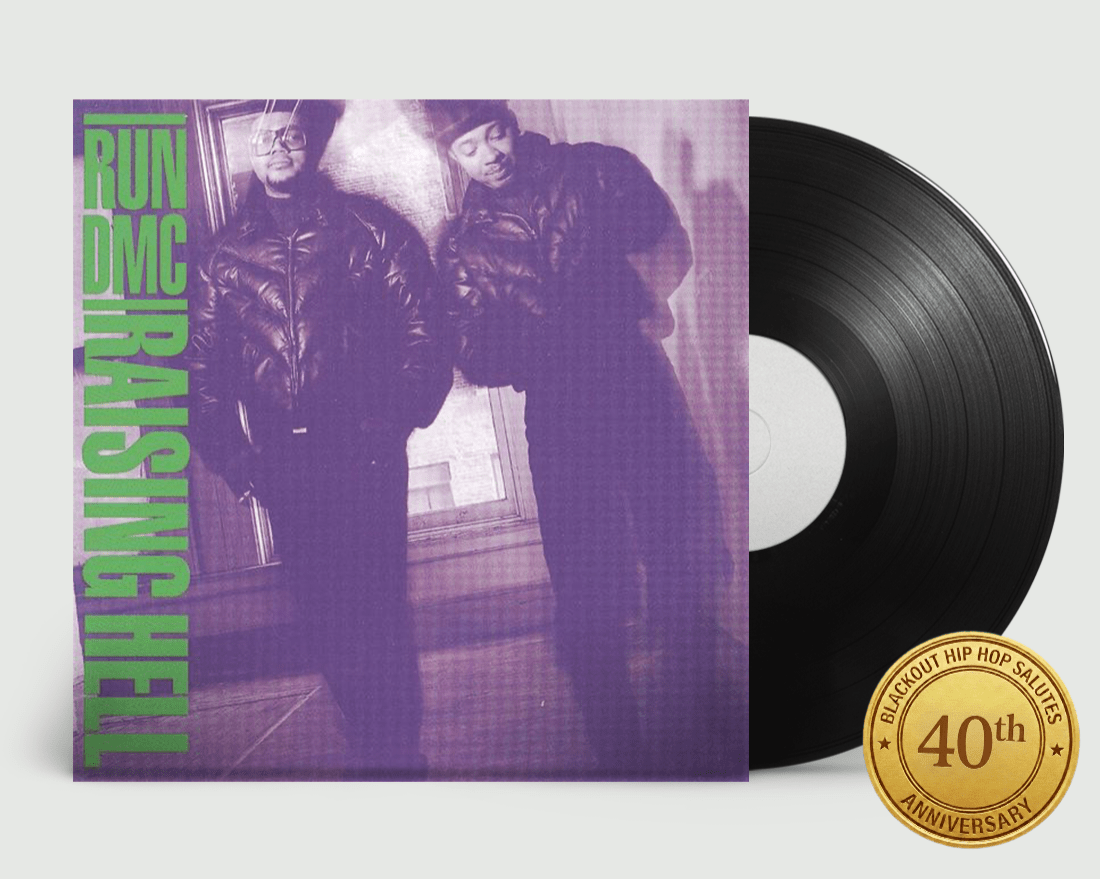
Today, we commemorate exactly four decades since three guys from Hollis, Queens, permanently altered the trajectory of popular music. On this day, May 15, 1986 (though some sources cite May 27 ), Run-D.M.C. released their third studio album, Raising Hell. At the time, hip-hop was still treated as a “passing fad” by mainstream critics, but this project served as definitive proof that the genre was ready for stadiums, platinum plaques, and global dominance.
A Production Revolution at Chung King
Following two successful LPs with Larry Smith, the trio decided to refresh their sonic direction. Joseph “Run” Simmons, Darryl “D.M.C.” McDaniels, and Jam Master Jay entered Manhattan’s Chung King Studios with a young student named Rick Rubin. Rubin brought a minimalist, “stripped-down” approach to the boards, fusing heavy drum patterns with a rock-and-roll edge. While Russell Simmons and Rick Rubin are credited as primary producers, the group members have often maintained that Jam Master Jay was the true architect behind the turntables, manipulating samples live to give the record its raw, street energy.
Classics That Broke Down the Walls
The album kicks off with “Peter Piper,” which has since become an absolute masterclass in b-boy aesthetics. Jam Master Jay masterfully flips a Bob James sample (“Take Me to the Mardi Gras”), while Run and D.M.C. trade rhymes inspired by nursery rhymes in a fashion that sounded entirely futuristic back then.
Of course, it is impossible to discuss Raising Hell without mentioning “Walk This Way.” Rick Rubin pitched the cover after hearing Jay scratching the introductory drum break of the Aerosmith original. Although Run and D.M.C. were initially skeptical, the collaboration with Steven Tyler and Joe Perry became the first hip-hop crossover hit to reach the Top 5 on the Billboard Hot 100. The music video, depicting the literal destruction of a wall between rock and rap studios, became an icon for a new era of music.
Beyond the Music: The Adidas Business Blueprint
Beyond sonic innovation, Raising Hell laid the foundation for modern lifestyle marketing. The track “My Adidas” wasn’t a paid endorsement; it was a sincere tribute to their favorite laceless sneakers. Lyor Cohen, the group’s co-manager at the time, recognized the potential and invited Adidas executives to a Madison Square Garden show, where the crowd held thousands of sneakers in the air. The result was a $1.6 million endorsement deal—the first of its kind in music history.
Legacy and the Golden Age
Raising Hell was the first rap album to be certified Platinum (just two months after its release), eventually reaching triple-platinum status. It kicked off the “Golden Age” and the “album era,” paving the way for landmark releases from the Beastie Boys and Public Enemy. Chuck D even stated that this specific record made him realize hip-hop was an album-oriented genre.
Forty years later, joints like “It’s Tricky” and “You Be Illin’” still carry that signature punch. While some contemporary critics pointed out “monotone” flows or lyrical gaffes, the impact on aesthetics, fashion, and the industry’s business model is immeasurable. Raising Hell isn’t just an album; it’s the moment hip-hop stopped knocking on the industry’s door and simply kicked it down.