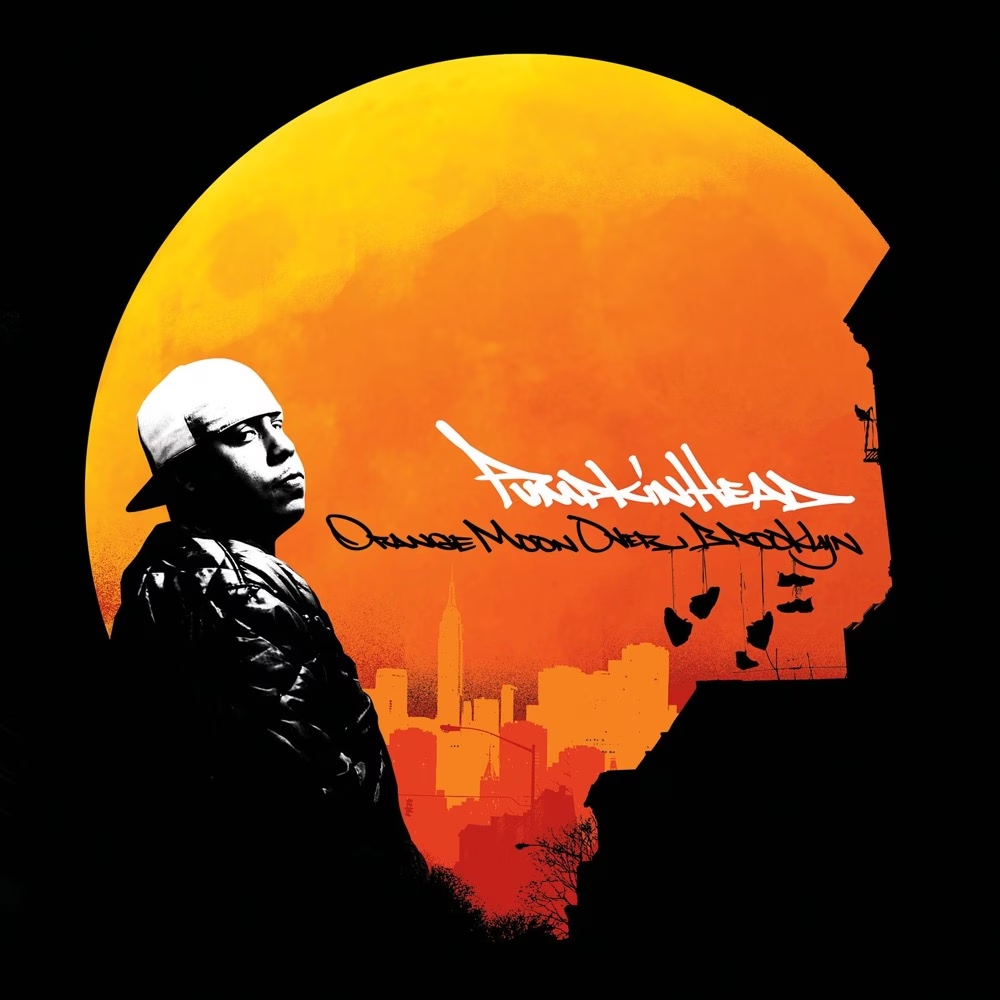
Orange Moon Over Brooklyn: A Testament to Pumpkinhead’s Undying Dedication to Hip-Hop
mage 19M
Author: RAProgram
The View From Park Slope
The story of Robert Alan Diaz (1975–2015), better known as Pumpkinhead (and later simply PH), carries that distinct, bittersweet taste of the New York underground. Raised in Park Slope, Brooklyn, PH was a golden-era head through and through. Lyrically bred since age 10—when he penned his first bars in 6th-grade language arts after hearing Dana Dane’s “Nightmares”—he devoured the styles of Redman, Leaders of the New School, and Doug E. Fresh. But it was a legendary session watching 2Pac lay down heat on the spot that gave him the final push to take emceeing seriously.
His big break in the borough came when a homie passed a demo tape to Bobbito Garcia for the iconic Stretch & Bobbito Show on WKCR. His 1997 breakthrough single, “Dynamic,” became a permanent fixture on late ’90s mixtapes—a status cemented when The World Famous Beat Junkies put the posse remix on Vol. 2.
During that late ’90s boom-bap era, PH anchored the Brooklyn Academy crew alongside heads like Block McCloud, Mr. Met, and Chase. Pushing raw 12-inch vinyl independently and trading features with crews like O.B.S. and Natural Resource, Brooklyn Academy defined the gritty, no-sellout ethos of NYC’s indie movement.
Yet despite a decade of mileage, a ferocious reputation in street ciphers, and classic guest verses for Immortal Technique (Revolutionary Vol. 1 & 2) and Jean Grae, PH remained the uncrowned king of the underground. When Orange Moon Over Brooklyn dropped on August 23, 2005 via Soulspazm (with Rawkus handling the re-release), it was the ultimate turning point: a battle-tested spit-kicker proving he could craft a cohesive, mature, and front-to-back classic LP.
Marco Polo on the Boards
The main drawback in PH’s catalog prior to this project was finding beats that could match his throaty, booming delivery. On his 2001 debut The Old Testament, the beat selection was hit-or-miss. But locking in almost exclusively with a young Toronto native named Marco Polo proved to be the ultimate cheat code.
Marco laid down a blueprint for how true boom-bap should sound in 2005:
Drums & Knocks: Snaps that crack, neck-snapping tempos, and heavy basslines built strictly for system jeep beats.
Crates & Ambiance: Flipping jazzy xylophones on “Authentic”, dark synth chops, and even pulling off an off-the-wall sample flip of A Silver Mt. Zion on “Rock On”.
Turntablism & Breaks: Heavy vocal cuts on the hooks and clean needle-drops (assisted by DP One) that bring that true ’90s wax feel to a modern mix.
Dissecting the Tracks
What sets Orange Moon Over Brooklyn apart from the average indie release of that era is PH’s range on the mic. He isn’t just dropping battle punchlines; he’s dropping science, cracking jokes, and laying his soul bare.
Street Authority & Cipher Lore
The album fires off with “Alkaline ‘n’ Acid“ (featuring Raiden), where PH lays down aggressive bars that state his place in the game. “Authentic“ follows with D.V. Alias Khryst on the hook, where PH vows to bring back that raw ’92 vibe while flexing a multi-syllabic flow way ahead of its time. On “Trifactor“, he trades rapid-fire darts with underground heavyweights Supastition and Wordsworth in a pure 16-bar clinic.
Political Heat & Anti-Establishment Darts
On “Grenades“, PH skips the usual rap tropes to vent real gnev. Fed up with the Bush administration and the Iraq War, he drops biting political commentary rooted in personal trauma—calling out how his father suffered from Agent Orange exposure in the military. It’s street-level commentary turned into an anthemic, unyielding track.
Humor, Meta-Jabs & Hip-Hop Homage
“I Just Wanna Rhyme“: A masterclass where PH professes his love for the culture while ripping into “net nerds” and internet rap critics. The skit at the end parodies amateur battle heads dropping fake gun-talk in the cipher.
“Swordfish” (feat. Archrival): PH calls out Marco Polo right on the track for flipping the beat in reverse—a nod to his classic “Dynamic” remix.
“Jukebox“: A genius concept track where PH writes his verses using nothing but titles of classic hip-hop joints that raised him.
“The Best“: A hilarious, nostalgic joint where he lists life’s greatest moments—from grandma’s peach cobbler to tossing his GoBots in the trash the day Transformers hit the shelves.
Autobiographical Depth
On “Rock On“, PH delivers his life story over a haunting sample. No sugarcoating, no fake flexes—just ten years of grinding on the indie circuit, getting burned by failing labels, and sitting at 28 without a major deal, yet refusing to put the pen down.
Closing out the LP, long-time collaborator Jean Grae and Chas join him on “Anthem for the End of the World“, crafting a somber, apocalyptic joint that finishes the album on a high note.
The Legacy
Outside of a couple of skits that interrupt the momentum, Orange Moon Over Brooklyn stands as an absolute cornerstone of mid-2000s NYC underground rap.
Pumpkinhead pulled off what few battle MCs ever manage: converting raw cipher energy into fully fleshed-out, conceptually tight songs. When Robert Diaz passed away in June 2015 while awaiting surgery, the culture lost a genuine underground hero. The outpouring of love from heads like Talib Kweli, Brother Ali, and Immortal Technique—along with a street co-named in his honor in Park Slope—proved his impact.
Orange Moon Over Brooklyn remains his definitive body of work—uncut, authentic, and rugged to the core.