Eminem: 30 Years of Debut Album “Infinite”
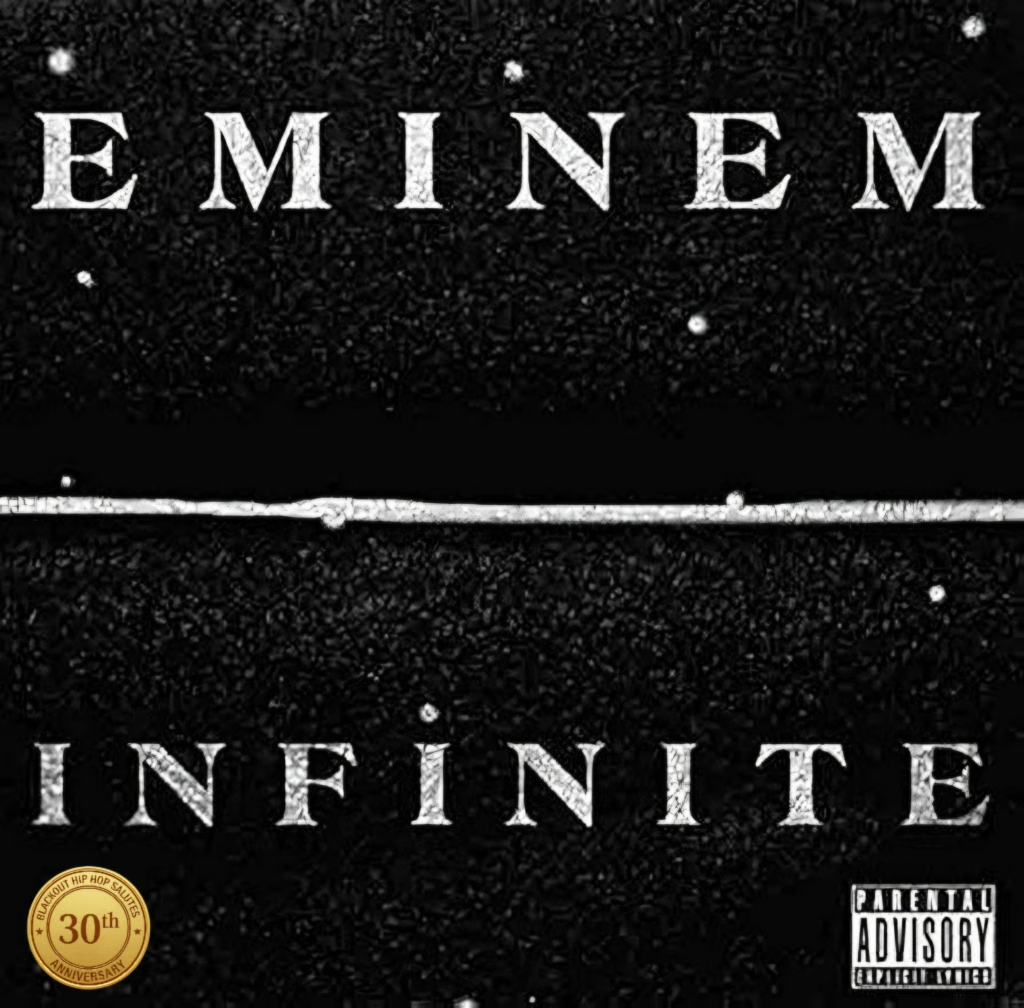
On this day, November 12, 1996, a virtually unknown twenty-four-year-old emcee from Detroit, Eminem (Marshall Bruce Mathers III), released his independent debut studio album, Infinite, through local Detroit imprint WEB Entertainment. Exactly three decades later, this humble release—originally pressed in a tiny batch of roughly one thousand cassettes and vinyl records—occupies a near-mythological place in hip-hop history. Though it suffered an immediate commercial collapse and barely registered outside Detroit’s underground circuit, the stinging rejection surrounding this record sparked the creative metamorphosis that would soon transform Marshall Mathers into the biggest rap superstar on Earth.
The Ferndale Basement and the Struggle for Survival
To grasp the raw urgency woven into every bar of Infinite, one must return to the harsh Michigan winter of 1995 and the spring of 1996. Shortly before recording began, Marshall welcomed his daughter, Hailie Jade, into the world—a life-altering milestone that hit while he was scraping by on minimum-wage shifts cooking and washing dishes at Gilbert’s Lodge in St. Clair Shores. Trapped in poverty and relentless financial stress, he poured his survival instincts into his notebooks under the wing of local producers Mark and Jeff Bass, known professionally as the Bass Brothers, who had first discovered him freestyling on Detroit radio years earlier and invited him into their Ferndale basement studio.
Primary production duties fell to a young, gifted Detroit beatmaker and future D12 co-founder, Denaun Porter (also known as Mr. Porter or Kon Artis), while drum programming was assisted by Marshall’s closest childhood friend, the late Proof. Engineering and mixing were handled by Kevin Wilder and Robert „Flipside” Handy, with turntable scratches provided by DJ Buttafingaz. Recorded on a shoestring budget without major-label backing or promotional machinery, the finished project arrived in November 1996 with Eminem personally selling cassettes and vinyl copies out of the trunk of his car. As he later recounted in his memoir The Way I Am, out of roughly one thousand copies manufactured, only around seventy actually sold.
East Coast Golden-Era Reverence in the Heart of Detroit
Listening to Infinite thirty years on, fans accustomed to Eminem’s later shock-value humor and ferocious vocal delivery are often stunned by how remarkably restrained it sounds. In late 1996, Marshall’s notorious alter-ego did not yet exist; the album features virtually zero profanity, horrorcore imagery, or celebrity satire. Instead, he deliberately crafted „radio-friendly” boom-bap songs in a desperate bid to earn airplay on local Detroit stations. Denaun Porter supplied a laid-back, jazz-inflected sonic palette built around mellow electric keyboards, warm basslines, and dusty late-nineties drum grooves that evoked East Coast underground staples.
Lyrically, the young emcee wore his New York inspirations openly on his sleeve, drawing heavily from landmarks like Nas’s Illmatic (1994) and AZ’s Doe or Die (1995), paired with the emotional weight of Tupac Shakur’s Me Against the World. The opening title track, „Infinite”, remains a dazzling showcase of pure technical dexterity—an unbroken cascade of multisyllabic internal rhymes and dizzying alliteration gliding effortlessly over a dreamy beat. Two decades later, in 2016, the Bass Brothers revisited and remastered the title cut for its first-ever digital release, propelling it onto the Billboard Hot 100.
Across its tight eleven-track, thirty-eight-minute runtime, the album paints a vivid portrait of Marshall’s daily grind and his tight-knit Detroit circle. On the poignant „It’s O.K.” (featuring Eye-Kyu), Eminem candidly raps about sleepless nights, mounting bills, and his fierce determination to build a better future for his newborn daughter. The hometown showcase „313”—named after Detroit’s area code—turns into a pure display of battle-tested lyrical bravado, while the smooth „Tonite” captures a relaxed, mid-nineties late-night groove.
Additional highlights include „Maxine” alongside Denaun Porter and Three, the underground posse cut „Open Mic” featuring Thyme, and the soulful „Searchin’” bolstered by New York vocalist Angela Workman. Tracks such as „Never 2 Far”, „Backstabber”, and the closing cut „Jealousy Woes II” reveal an emcee already possessing elite breath control and rhythmic precision, even while still searching for his unmistakable signature voice amid a crowded underground landscape.
Rejection, Despair, and the Birth of Slim Shady
The immediate aftermath of Infinite‘s November 1996 release was crushing. Local Detroit DJs and underground peers largely brushed the record aside, criticizing Eminem for sounding too derivative of AZ and Nas rather than carving out an original lane. Shut out by local radio, struggling to pay rent, and reeling from personal turmoil, Marshall spiraled into deep depression and substance abuse—a dark chapter that culminated in a suicide attempt during the agonizing months that followed.
Yet from that creative rock bottom emerged the most infamous persona in hip-hop history. Realizing that trying to please gatekeepers had gotten him nowhere, Eminem stopped caring about radio acceptance and unleashed his unfiltered rage, dark humor, and cynicism onto the page. The result was 1997’s groundbreaking Slim Shady EP, which caught the attention of Jimmy Iovine and Dr. Dre following the Rap Olympics and launched the global juggernaut The Slim Shady LP (1999). Eminem himself later reflected that Infinite felt like „a demo that just got pressed up,” yet acknowledged it as the vital growing stage that forged his identity.
Thirty Years On: A Collector’s Holy Grail and Foundation of a Legend
Three decades removed from that cold November in Detroit, Infinite stands as one of the most coveted collector’s artifacts in modern music. Original 1996 cassette and vinyl pressings regularly fetch thousands of dollars at collector auctions around the globe, while the full album remains conspicuously absent from major streaming platforms due to uncleared samples and independent licensing complexities—leaving the 2016 remixed title track as its lone official digital representative.
Viewed across thirty years of hindsight, Infinite is far more than a forgotten commercial misfire or a mere curiosity for die-hard completists. Retrospective critics from Consequence, Stereogum, XXL, and Billboard have increasingly praised its raw lyrical hunger and intricate rhyme patterns. It endures as an invaluable, unvarnished time capsule of the quiet before the storm—a testament to a hungry young lyricist grinding in a Michigan basement, proving that long before the world ever heard of Slim Shady, Eminem already possessed a generational gift and an infinite determination to be heard.