The Game: 20 Years of “Doctor’s Advocate”
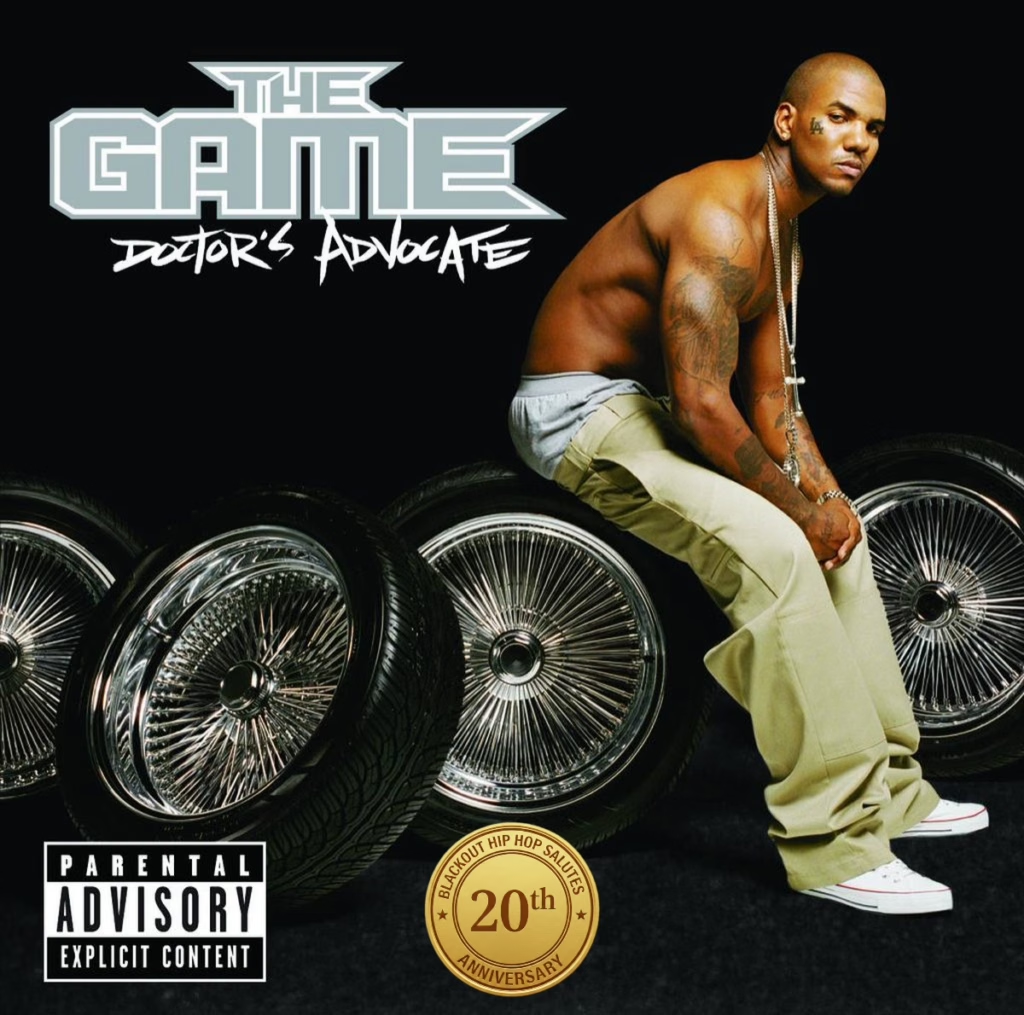
On this day, November 14, 2006, Compton emcee The Game (Jayceon Terrell Taylor) released his sophomore studio album, Doctor’s Advocate, through Geffen Records. Exactly two decades later, this record endures as one of the defining tests of artistic self-reliance in modern West Coast hip-hop history. After his 2005 debut The Documentary conquered the globe under the combined banners of Aftermath Entertainment and G-Unit, industry skeptics openly questioned whether Game could survive commercially without executive production from Dr. Dre or hooks from 50 Cent. He answered with a fierce, unapologetically Californian statement that immediately stormed the charts.
The G-Unit Split and the Move to Geffen
The road to Doctor’s Advocate was forged in one of the most volatile feuds of the mid-2000s. Following his bitter public fallout with G-Unit general 50 Cent, Game parted ways with both Aftermath and G-Unit Records, prompting Interscope to transfer his contract to sister imprint Geffen Records in the summer of 2006 to sever remaining G-Unit ties. Suddenly stripped of his mentor’s studio oversight, Jayceon took creative command alongside manager Jimmy Rosemond, determined to prove his hitmaking instincts and lyrical pedigree stood entirely on their own merits.
Even in separation, the shadow of his former mentor loomed large over the project’s very title. Dr. Dre is referenced by name on every single song on the tracklist except „Wouldn’t Get Far”, with Game repeatedly invoking themes of „family” and „fatherhood” to honor the man who launched his career. Yet whereas The Documentary leaned heavily into East Coast sonic textures, Doctor’s Advocate pivoted decisively back toward authentic West Coast grit, wrapping Compton street narratives in sun-baked California bounce. On release day, Game and New York veteran Fat Joe (who dropped Me, Myself & I the exact same day) even celebrated together by buying copies of each other’s albums at the Virgin Megastore in Times Square.
From „One Blood” to Scott Storch and Kanye West
Though Dre contributed zero beats to the record, The Game assembled an all-star roster of beatmakers to fill the void. Returning hitmakers from his debut—Kanye West, Just Blaze, Scott Storch, and Hi-Tek—were joined by heavyweights including Swizz Beatz, will.i.am, DJ Khalil, J.R. Rotem, Nottz, Mr. Porter, Reefa, and D-Roc. The campaign ignited in July 2006 with lead single „It’s Okay (One Blood)”, featuring reggae veteran Junior Reid. Anchored by a hypnotic loop and rallying hook, it became an instant street anthem and spawned three massive regional remixes—Dirty South (Lil Wayne, Rick Ross, T.I., Bun B), West Coast (Snoop Dogg, Tha Dogg Pound, E-40, WC), and East Coast (Nas, Jadakiss, Styles P, Clipse, Fabolous, Jim Jones)—uniting dozens of top emcees nationwide. Directed for BET premiere on August 22, 2006, the song’s music video featured cameos from Tyrese, DJ Skee, and Ya Boy, amplifying excitement ahead of the album’s arrival.
Second single „Let’s Ride”, crafted by Scott Storch in Miami yet oozing classic Los Angeles G-funk swagger, paid direct homage to Dre’s „Let Me Ride” while weaving in a sample of 2Pac’s „Picture Me Rollin’”. Driven by heavy piano chords and trunk-rattling bass, the track climbed to number 46 on the Billboard Hot 100 and proved Storch and Game could manufacture an undeniable West Coast smash independently. Next came „Wouldn’t Get Far”, produced by and featuring Kanye West, which flipped Creative Source into a sharp critique of video-model culture, while opening salvos „Lookin’ at You” and „Da Shit” (sampling Zoogz Rift and excerpts from Tales from the Hood) established a relentless, uncompromising tone from the jump.
West Coast Solidarity, Busta Rhymes, and Nas
Beyond its chart-ready singles, the soul of the album resides in its deep tracklist and cohesive guest appearances. On the will.i.am-produced „Compton”, Game celebrates his hometown through layered nods to Eazy-E’s „Real Muthaphuckkin G’s”, Ahmad Jamal, and Baby Huey, while „Remedy” fuses classic samples from Isaac Hayes and Public Enemy’s „Black Steel in the Hour of Chaos”. True West Coast solidarity shines across „Too Much” featuring the late, great Nate Dogg, „California Vacation” alongside Snoop Dogg and Xzibit, and „Bang” with Tha Dogg Pound.
The emotional centerpiece arrives on the J.R. Rotem-produced title track „Doctor’s Advocate”, featuring former Aftermath labelmate Busta Rhymes. Over a poignant sample of Lori Perri’s „Up Against the Wind” from the Set It Off soundtrack, Game bares his soul with raw vulnerability about his estranged bond with Dre. The album closes in grand style with the seven-minute Just Blaze epic „Why You Hate the Game”, where Nas and Marsha Ambrosius help deliver a breathtaking finale, rounding out a tracklist also bolstered by „Scream on ‘Em” (with Swizz Beatz), „One Night” (sampling The Deele’s „Two Occasions”), „Ol’ English”, and „Around the World” featuring Jamie Foxx.
Billboard Supremacy and a Twenty-Year Legacy
Doctor’s Advocate moved 358,000 copies in its opening week, debuting at number one on the Billboard 200 as well as topping the Top R&B/Hip-Hop Albums and Top Rap Albums charts. Marking Game’s second consecutive chart-topper, the album approached a million US copies sold by late 2007, charted inside the top ten across Canada, France, and Ireland, and earned Gold certifications in both the United Kingdom (via Polydor distribution) and New Zealand. Critics at outlets like RapReviews and DJBooth lauded his sharpened lyricism and relentless West Coast pride, with DJBooth even comparing his lyrical command to Eminem and Lil Wayne. Although some reviewers still noted his frequent name-dropping, Steve Juon of RapReviews defended those references as authentic expressions of Game’s „soldier of the West” philosophy rather than mere filler.
Reflecting on his body of work in 2012, The Game himself declared Doctor’s Advocate the finest album of his entire catalog, and later releases across the decade—including 2015’s The Documentary 2—never overshadowed its raw urgency, before cementing his longevity with follow-ups like LAX (2008) and The R.E.D. Album (2010). Twenty years later, it stands as an undeniable triumph of grit over corporate politics—proving that Jayceon Taylor could carry the West Coast torch on his own shoulders, silence every doubter in the industry, and deliver an enduring modern classic when his entire career was on the line.