On This Day: Gang Starr’s Guru Was Born
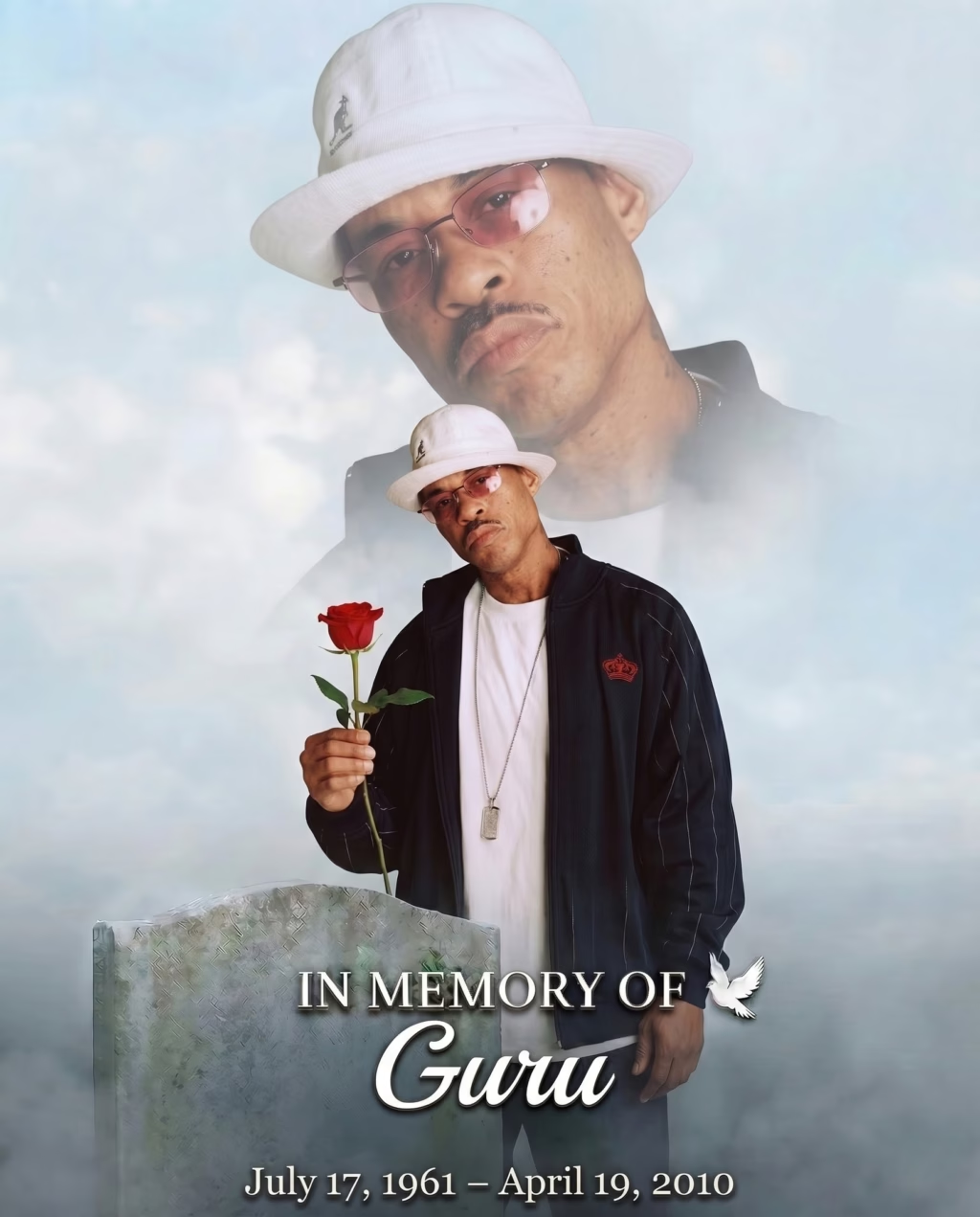
Today, on July 17th, the global hip-hop community takes a collective moment to pay tribute to one of the most influential and instantly recognizable figures in the history of the culture. On this day, Keith Edward Elam, better known to the world as Guru—the ackronym for Gifted Unlimited Rhymes Universal—was born. As the lyrical powerhouse of the legendary duo Gang Starr and a pioneer who successfully bridged jazz and rap through his solo Jazzmatazz project, Guru left an indelible mark on street poetry and musical production. With his signature, authoritative monotone flow and socially conscious messaging, he proved that a voice doesn’t need to scream to make its weight felt worldwide.
From Boston to Brooklyn: Academic Roots and Musical Beginnings
Guru was born on July 17, 1961, in the historic Roxbury neighborhood of Boston, Massachusetts. Although different birth years occasionally circulated in early media reports, official documents and passport scans have long since verified 1961 as his actual birth year. Growing up in a prominent, highly educated household—his father, Harry, was a distinguished attorney who became the first African American judge appointed to the Boston Municipal Court, while his mother, Barbara, served as the co-director of libraries for Boston Public Schools—Keith was well-positioned for an academic career.
After graduating from Cohasset High School, he earned a Bachelor of Science degree in business administration from the historically Black Morehouse College in Atlanta. He went on to take graduate classes at the Fashion Institute of Technology in Manhattan but soon felt the magnetic pull of the burgeoning hip-hop movement and chose to leave his academic pursuits behind. Before fully establishing himself as an MC under the moniker MC Keithy E, Elam worked as a counselor in a maximum-security juvenile detention center in Boston. This crucial experience gave him a raw, unfiltered perspective on street life and the psychology of urban survival, themes he would later weave into his lyrics with great analytical depth.
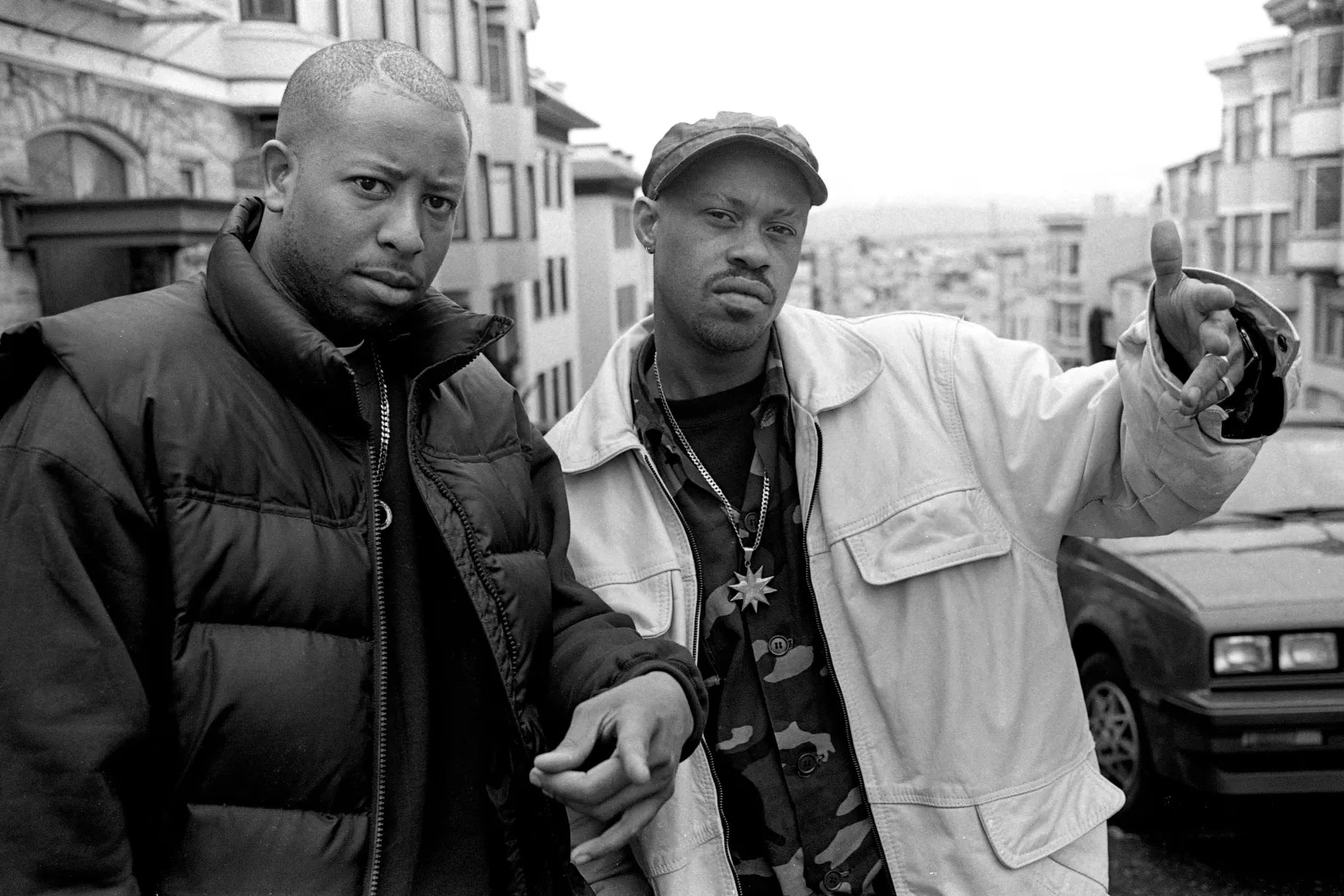
After initially forming Gang Starr in Atlanta in 1987 with his close associate Big Shug, Guru relocated to Brooklyn in search of better opportunities. The group’s early releases on Wild Pitch Records, produced by DJ Mark The 45 King, struggled to gain mainstream traction, leading to a lineup shuffle. The ultimate turning point arrived in 1989 when Guru came across a demo tape by a Texas-born beatmaker named Waxmaster C, soon to be known globally as DJ Premier. This chance encounter sparked the birth of one of the most celebrated and consistent partnerships in music history.
The Golden Era of Gang Starr: Architects of Hardcore Boom-Bap
After quickly wrapping up their debut LP, No More Mr. Nice Guy (1989), the duo caught the ear of filmmaker Spike Lee, who recruited them to record “Jazz Thing” for the soundtrack of his film Mo’ Better Blues. The success of the track landed them a major deal with Chrysalis Records, paving the way for an incredible four-album run that defines the golden era of East Coast hip-hop: Step in the Arena (1991), Daily Operation (1992), Hard to Earn (1994), and Moment of Truth (1998).
Throughout these classics, Guru perfected his trademark delivery. While many of his peers relied on aggressive, loud vocal performances, Guru was laid-back, clinical, and sharp-eyed. Tracks like “Just to Get a Rep” delivered cautionary tales about the cycle of street violence for the sake of reputation, while classic anthems like “Mass Appeal” and “DWYCK” (featuring Nice & Smooth) proved that the duo could achieve radio play without ever compromising their underground aesthetic. Recorded during a highly stressful period where Guru faced a potential five-year prison sentence on a weapon charge, the title track of Moment of Truth delivered some of the most mature, emotionally resonant, and spiritually uplifting bars in the genre’s history.
Jazzmatazz: When Street Poetry Meets Live Instrumentation
Beyond his groundbreaking work with DJ Premier, Guru possessed an artistic vision that looked past standard hip-hop sampling. He wanted to create an actual, real-time studio dialogue between modern rap cadences and veteran jazz masters. This forward-thinking concept materialized on May 18, 1993, with the release of Guru’s Jazzmatazz, Vol. 1 on Chrysalis Records.
Guru assembled an absolute supergroup of legendary figures, including trumpeter Donald Byrd on “Loungin‘”, vibraphonist Roy Ayers on “Take a Look (At Yourself)“, saxophonist Branford Marsalis on “Transit Ride“, and keyboardist Lonnie Liston Smith on “Down the Backstreets“, alongside vocalists N’Dea Davenport and French MC Solaar. Although the United States was heavily immersed in the rise of gangsta rap at the time, Europe enthusiastically embraced this innovative acid-jazz hip-hop fusion. The Jazzmatazz series grew into a globally respected franchise, with Guru proving across four volumes that jazz and rap are spiritual siblings born of the same improvisational freedom.
A Tragic Rift, Dark Controversies, and an Everlasting Legacy
Following the release of The Ownerz in 2003, creative differences and Guru’s struggles with alcohol led to a professional split with DJ Premier. Guru eventually partnered with producer DJ Solar, launching the independent imprint 7 Grand Records in 2005. Regrettably, this final chapter of his life was marked by Solar’s intense, controlling influence, which alienated Guru from his family, his young son, and his longtime peers from the Gang Starr Foundation.
When Guru tragically passed away from multiple myeloma on April 19, 2010, at the age of 48, a highly controversial “deathbed letter” was released by Solar. The note, which claimed Guru wanted nothing to do with his “ex-DJ” and transferred his entire intellectual property to Solar, immediately raised red flags across the industry. A lengthy legal battle ensued, concluding in 2014 when a Rockland County judge declared the letter a forgery—noting that Guru had been in a continuous coma for two months prior to his passing—and restored all rights to his estate to his rightful family.
Thankfully, the dark circumstances of his final years have done nothing to diminish his grand artistic legacy. In 2019, DJ Premier was finally able to reclaim unreleased vocal takes and craft the beats for Gang Starr’s final posthumous masterpiece, One of the Best Yet, proving that their musical chemistry remained unbroken. Their enduring cultural footprint is also visible in mainstream media—such as Marvel’s Netflix series Luke Cage, where every single episode of the first season is named after a classic Gang Starr track.
Guru was a hip-hop educator in the truest sense of the word. His calm demeanor, sharp-eyed storytelling, and fearless genre-bending efforts remain a timeless blueprint for pure hip-hop.
Rest in peace, Guru.
Your voice remains forever etched in the concrete foundation of the culture.