30 Years of Nine’s Cloud 9: A Dark East Coast Classic
Looking Back at 1996: The Dark Side of East Coast Boom-Bap
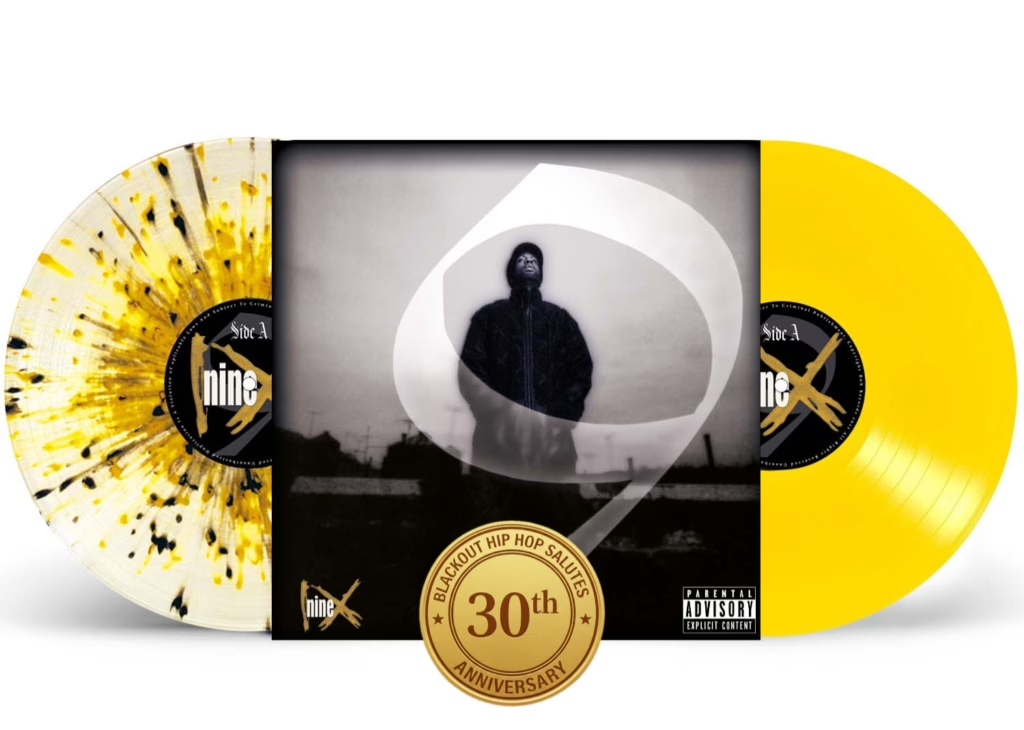
On this day, August 6, 1996, Bronx MC Nine released his sophomore album, Cloud 9, through Profile Records. The year 1996 stands out as one of the most productive eras in East Coast hip-hop history. While glossy aesthetics and mafioso rap tropes were beginning to take over commercial airwaves, Nine stayed true to the underground, delivering an unfiltered portrait of street reality.
Following the success of his 1995 debut Nine Livez—which spawned the street hit “Whutcha Want?“—Profile Records gave Nine the green light for a second album. The result was a 12-track project that skipped radio-friendly hooks in favor of dark atmospheres and rugged lyricism.
Production Architecture and Rob Lewis’ Dark Sound
Just as on his debut, production was mainly handled by Rob Lewis, who produced ten out of the twelve tracks. Lewis crafted a cinematic backdrop filled with somber violin loops, harp touches, and xylophone accents placed over heavy boom-bap drums. Nine’s raspy vocal delivery—first heard on Funkmaster Flex’s 1993 single “Six Million Ways to Die“—complemented the production naturally.
The album opens with “Know Introduction” featuring Shaolin’s King Just, setting a tense tone from the start. On “Every Man 4 Himself,” Nine delivers cold street observations with the memorable line: “Don’t chase dreams, chase paper“. Tracks like “Tha Product,” featuring female MC U-Neek, introduced melodic string arrangements without losing the album’s dark edge.
“Lyin’ King” and Calling Out Studio Gangstas
No review of Cloud 9 is complete without mentioning its lead single, “Lyin’ King,” released in July 1996. The track was a direct call-out aimed at rappers fabricating street personas in the booth. Its opening bar, “I heard your album and I don’t believe a word of it,” remains one of the most memorable lines from his catalog. The song reached number 35 on the Billboard Hot Rap Singles chart.
The second single, “Make or Take,” featured labelmate Smoothe Da Hustler and showcased two of the roughest voices in the city over a horn loop. Other notable features included 3rd Eye on “Richman Poorman” and dancehall artist Bounty Killer on the war chant track “Warriors“. The album closes on a reflective note with “4 Chicken Wings And Rice,” where Nine reminisces about being broke back in 1991.
Label Troubles and Lack of Promotion
Despite its solid execution, Cloud 9 struggled to match the sales numbers of Nine’s debut. While Nine Livez made an appearance on the Billboard 200, Cloud 9 peaked at number 45 on the Top R&B/Hip-Hop Albums chart. The main reason for the lower commercial response was financial trouble at Profile Records. Due to limited promotional resources, only two music videos were made (“Lyin’ King” and “Make or Take”).
Shortly after the release, Profile Records parted ways with Nine, and by the late ’90s, the independent label was absorbed into Arista Records. Cloud 9 ended up being one of the final underground efforts released during the label’s original run.
Legacy After 30 Years
30 years later, Cloud 9 remains a solid document of mid-’90s East Coast rap. While it received mixed reviews upon release and lacked mainstream promotion, its dark production and raw vocal delivery make it a worthy listen for fans of vintage boom-bap. Today, we look back at Cloud 9 as an authentic piece of ’96 hip-hop history.