Atmosphere – Overcast!: How Minneapolis’ Gloomy Clouds Gave Birth to an Independent Revolution
Author: RAProgram
When heads talk about the music scene in Minnesota, the first name that pops up is Prince. Back in the early ’80s, Prince birthed the official sound of Minneapolis, while legends like Bob Dylan, Soul Asylum, and super-producers Jimmy Jam & Terry Lewis built other pillars for the city. But by the late ’90s, far away from the mainstream spotlight and MTV, a whole different movement was brewing in the cold streets of Southside Minneapolis.
In 1997, mainstream hip-hop was still in shock after the tragic deaths of 2Pac and Biggie. The rap game quickly pivoted to the “Bling-Bling” era. Radio was packed with shiny beats, heavy chains, luxury whips, and surface-level bars about flexing cash. The real soul of hip-hop felt locked away in a warehouse labeled “Originality Not Needed.”
Luckily, that shiny corporate rap wave couldn’t penetrate the snowy blockades of Minneapolis. Or maybe Sean Daley (Slug) and Anthony Davis (Ant) were just way too broke to cap about having money. Instead of riding trends, members of the Headshots collective—which soon birthed the independent juggernaut Rhymesayers Entertainment—decided to carve out their own brand of hip-hop.
Dropping their debut album Overcast! on August 5, 1997, Atmosphere—alongside heavyweight crews like Company Flow—helped lay the blueprint for the underground hip-hop movement. They built a sanctuary outside the matrix of major labels, reserved for real MCs and hardcore backpack culture.
Atmosphere’s origin story traces back to Washburn High School, where Sean Daley and Derek Turner first linked up. They initially rocked under names like Mental Subjects and Urban Atmosphere. Early on, Turner (who took the moniker D-Spawn, later just Spawn) held down the main mic duties, while Slug was behind the turntables. Once Spawn pushed Slug to start spitting, Slug tapped into a crazy gifted writing style. Through local MC Musab (then known as Beyond), the duo caught a session at Ant’s home studio. The vibe was instant: Ant became the group’s in-house beat architect, they dropped “Urban” from their name, and Atmosphere was officially locked in.
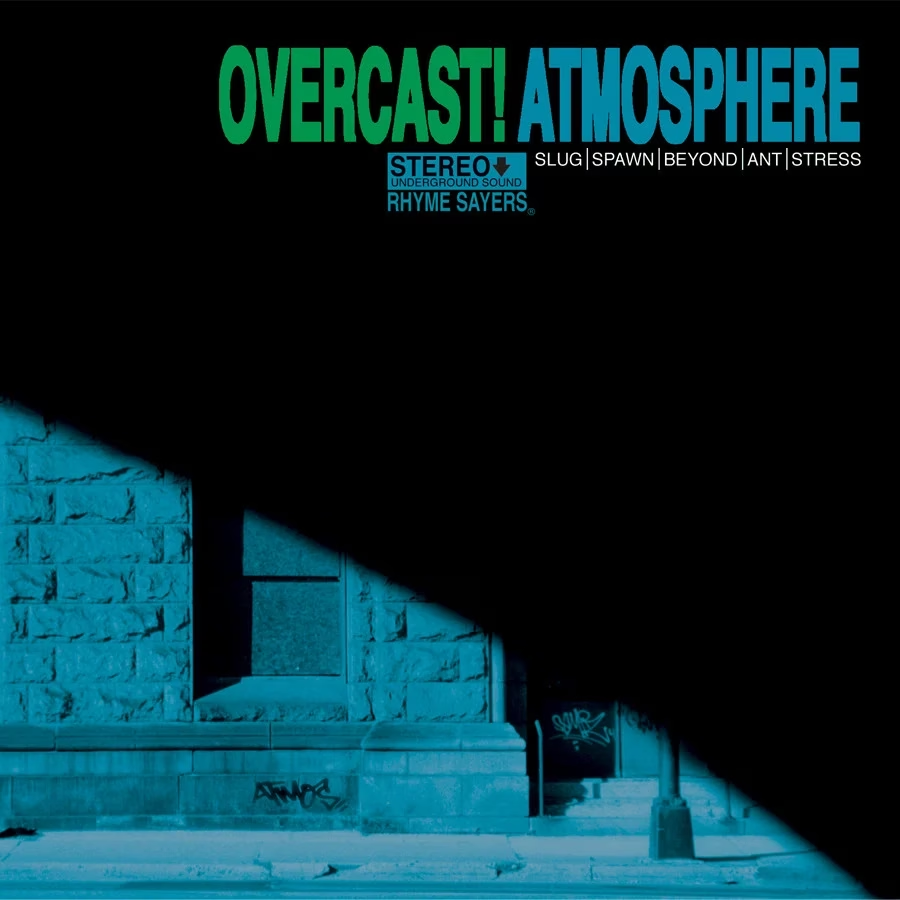
The cover art of Overcast! pays homage to jazz pianist Andrew Hill’s 1964 Blue Note classic, Judgement! This wasn’t just a gimmick—Ant dug deep into the crates for dusty jazz samples to construct the beats. But unlike the upbeat, feel-good jazz-hop of groups like A Tribe Called Quest or Digable Planets, Ant’s soundscapes on Overcast! were dark, gritty, and straight-up somber.
The production is heavy, moody, and drenched in atmosphere. The piano chops on “Scapegoat” crawl at a creepily slow tempo with raw distortion, while joints like “Clay” and “Sound Is Vibration” pack smooth, bouncy basslines. Listening to these instrumentals, the listener is transported straight to the cold pavement of Hennepin Avenue at 4:30 AM—just like the track “4:30 AM” paints it—surrounded by empty blocks, streetlights, and freezing night air. Even with some raw, home-studio flaws from the ’90s, Ant’s boards were way ahead of their time, capturing the true essence of underground hip-hop
The album skips the filler and jumps straight to the action. The very first bars ever kicked on an Atmosphere project come right after the eerie violin sample on “1597”, where Slug opens up:
“Henceforth, step within my psychoanalysis / Calluses upon my mind make me strain for my lines…”
Track “1597” is a certified manifesto—a dark battle joint where Slug puts his own mental state and inner thoughts front and center. Right off the bat, you know you’re listening to an MC who seamlessly blends battle-tested bravado with heavy introspection.
The dynamic between the two spitters brings a unique flavor:
Spawn plays Phife Dawg to Slug’s Q-Tip on this LP. Even though he only drops verses on about a third of the tracklist, his delivery is butter-smooth, rhythmic, and right on point. On “Caved In”, he paints a vivid, dark narrative. But next to Slug’s wild energy, Spawn can sound a bit stiff, occasionally letting his vocal get swallowed up by Ant’s heavy beats.
Slug, on the other hand, comes across like an intellectual battle rapper with a dark, poetic edge. Before this record dropped, Slug was pulling overtime shifts at Target and working at a local record shop just to feed his young son. You can hear that real-life hustle and hunger in his mic presence—he spits with a raw intensity that feels like he’s about to blow up at any second.
Slug’s pen game on Overcast! is poetic, wordy, and super dense. Unlike later Atmosphere projects where his storytelling became more streamlined and accessible, Slug packs these joints with complex rhyme schemes. On “Clay”, he even admits that most casuals won’t put in the brain power to decode his babble.
The absolute crown jewel of the album is the underground classic “Scapegoat”. Over a haunting, minimal beat, Slug runs down an endless laundry list of things people blame for their personal issues and fucked-up choices:
“It’s the monsters that I conjure, it’s the marijuana / It’s the embarrassment, displacement, it’s where I wander… It’s gas fumes, fast food, Tommy Hill, mommy’s pill / Columbia House music club, designer drugs and rhyming thugs… It’s sleep, life, and death / It’s speed, coke, and meth / It’s hay fever, pain relievers, oral sex, and smokers breath… It’s reality, fuck it, it’s everything but me.”
This brutally honest, cynical mirror held up to human nature made “Scapegoat” an instant staple on college radio and laid the groundwork for the “Emo-rap” subgenre. Slug didn’t try to act like a tough or flashy rapper—he put his real flaws and inner demons on full display.
Beyond Slug and Spawn, the record put the extended Headshots family on the map, giving the LP an authentic crew jam session feel:
Beyond (Musab)—the cat who introduced Slug to Ant—blesses “Adjustment” with a laid-back verse, bringing that signature Rhymesayers flavor.
The Abstract Pack and other local heads leave their mark on tracks like “Compost” and “Current Status”, bringing extra diversity to the table. It proved that Overcast! wasn’t just a bedroom project by two guys, but the mouthpiece for an entire sleeping underground scene in Minneapolis.
Is Overcast! a perfect record? Nah, not quite. Clocking in at 18 tracks, it hits a few bumpy patches with filler in the back half. While the lyrics are top-tier, some of the hook structures feel a bit rough around the edges. Because Slug tries to pack so many syllables into a single bar, he occasionally trips over the tempo and has to speed up his flow to catch the beat, sounding more like spoken-word poetry than traditional MCing.
Tracks like “Brief Description” could have used tighter arrangements, and a few guest features show some early-stage amateurism. But those minor flaws don’t ruin the experience—they give it that unpolished, authentic basement dirt you just can’t manufacture in a million-dollar studio.
Overcast! is an album you gotta view as the essential crawl before the run. It captures a raw, dark emotion that Atmosphere never truly revisited, as they went on to polish their sound for massive crowds on later classics like God Loves Ugly and When Life Gives You Lemons…
It’s a dark, cynical, slept-on, and unapologetically real debut. This is music for late-night street walks, true hip-hop heads, and anyone seeking genuine substance over fake flexing. The clouds over Minneapolis back in ’97 brought plenty of shade, but out of that darkness, one of the most legendary independent hip-hop labels in history was born.
BARS > NUMBERS