Buckshot LeFonque: When Jazz Stripped the Suit and Hit the Streets
Author: RAProgram
To truly understand what Buckshot LeFonque represents, we have to travel back to the early 1990s and the backdrop of the jazz scene at the time. During those years, the Marsalis family was at the very center of an ideological and historical war for the soul of jazz. On one side was Wynton Marsalis, who—heavily influenced by the outspoken and uncompromising critic Stanley Crouch—wanted to “purify the temple” of jazz. For Wynton and Crouch, fusion (be it jazz-rock or jazz-funk) was not jazz; electric instruments, synthesizers, and rap were heresy, and authentic jazz had to swing in a very specific, traditional way. That purist, elitist, and at times pompous stance created massive rifts—offending legends like Miles Davis and Archie Shepp, and later being immortalized in Ken Burns’ famous PBS documentary, which completely ignored anything Wynton and Crouch didn’t personally enjoy.
On the other side was his brother, saxophonist Branford Marsalis. Branford was never that dogmatic. In the early ’90s, he was successfully managing two entirely different brands. There was “Serious Jazz Branford” (traditional, virtuous, flawless) and “Crossover Branford”—the guy playing with Sting and The Grateful Dead, collaborating with hip-hop artists on Spike Lee film soundtracks (Do the Right Thing, Mo’ Better Blues), and, starting in 1992, serving as the musical director for The Tonight Show with Jay Leno.
However, managing two vastly different identities inevitably leads to confusion. Jazz purists accused him of selling out, while the crossover audience wanted more accessible music. Branford’s solution was radical: embrace the new brand fully and hide behind a brand-new name. The moniker Buckshot LeFonque wasn’t plucked out of thin air—it was an old pseudonym that legendary saxophonist Cannonball Adderley had used back in the 1950s for contractual reasons. Hiding behind this hip alias (on the album jacket, his name is barely visible in a tiny note: ”Produced by B. Marsalis”), Branford shielded himself from the expected flak from jazz purists and created a space without rules or limitations.
The result? An eccentric, maximalist masterpiece—a fusion of acid jazz, hip-hop, R&B, rock, and reggae. The album reached No. 38 on the Billboard Heatseekers chart and No. 94 on the R&B Albums chart, completely dividing music critics. While Entertainment Weekly harshly dismissed it as “gimmicky,” “uninspired,” and “all too serious,” AllMusic, People, and Variety rightly recognized it as a visionary breakthrough—a wonderfully playful, fearless, and above all musical fusion of old jazz verities and 1990s street currents.
Dream Lineup and Musical Chemistry
The sheer level of talent assembled for this project is unreal. Buckshot LeFonque consists of:
DJ Premier (of the pioneering jazz-rap duo Gang Starr) as the primary architect of scratches, sampling, and beats.
Kenny Kirkland on keyboards, Robert Hurst on bass, and Jeff “Tain” Watts on drums (Branford’s formidable jazz core).
Rising trumpet legend Roy Hargrove (delivering gorgeous, Miles-tinged muted trumpet lines), alongside Delfeayo Marsalis and Matt Finders on trombones.
Kevin Eubanks (from The Tonight Show band) laying down dirty slide guitar, and rock virtuoso Nils Lofgren.
Special guests: Albert Collins, bassist Victor Wooten, percussionist Mino Cinelu, and emcee Uptown.
This isn’t an album where hip-hop is lazily slapped onto a jazz backing track for the sake of a trend. This is jazz filtered through a hip-hop sensibility. Nothing here feels overdone or formulaic—every track is pure, unique creativity.
Track-by-Track Breakdown
The album wastes no time, dropping you straight into a street atmosphere drenched in scratches and chopped dialog samples on the opener, ”Ladies & Gentlemen, Presenting…”, setting the stage like a theatrical intro.
Right after comes ”The Blackwidow Blues“, a complex and heavy fusion track. It starts with Kenny Kirkland’s electric piano before dropping its first major sample—an Elvin Jones drum and cymbal loop from John Coltrane’s “India.” Over this loop, the band weaves a sinuous melody: Branford’s tenor saxophone engages in a fierce exchange with the trombones and a soaring, high-register trumpet solo from Roy Hargrove. This swings hard, defiant and uncompromising.
The true gem and emotional heart of the album arrives early—”I Know Why the Caged Bird Sings“. Built around birdsong samples and loops from Rubén Blades (“Prohibido Olvidar”) and Fela Kuti (“Beasts of No Nation”), the track features renowned author Maya Angelou reciting her poem over a heavy electronic backbeat. Branford’s gorgeous soprano sax and Hargrove’s muted trumpet spin a lovely melodic web, while four credited guitarists and Mino Cinelu’s percussion keep the groove warm and seamless.
For R&B lovers, ”Mona Lisas (and Mad Hatters)” offers a transfigured cover of the Elton John/Bernie Taupin classic. Driven by Frank McComb’s soulful vocals, the track carries a strong ’70s Marvin Gaye vibe alongside Jeff “Tain” Watts’ mighty snare work, culminating in a tasty final duet between McComb’s vocal licks and Kirkland’s keyboards.
For a looser, funkier vibe, ”Some Cow Fonque (More Tea, Vicar?)” leans hard into the alchemy between DJ Premier’s sampling and the full live band. Kevin Eubanks delivers a dirty slide guitar with a country-meets-Delta-blues flavor, while the thick horn arrangements roll through the track like a heavy truck.
The album’s experimental range extends into other genres as well:
“Wonders & Signs“ and ”Hotter Than Hot“ inject reggae and dub flavors featuring Blackheart’s vocals, combining thick patois toasts, angular trumpet solos from Hargrove, and rapid soprano runs from Branford.
“Ain’t It Funny“ features Tammy Townsend on vocals, delivering a traditional soul ballad backed by Clare Fischer’s string arrangements. Though some critics considered it a misfire or an incongruous detour, it sounds like a ready-made R&B radio hit straight out of the mid-1980s.
“Some Shit at 78 BPM (The Scratch Opera)” is a pure DJ Premier showcase. Whether you love or hate turntable scratching, vocal samples like ”We have reached our rendezvous… with destiny!” topped with Branford’s saxophone make it an absolute blast to listen to.
The second half of the album carries a sharp social and political edge. ”Breakfast at Denny’s“ (along with its interludes and variations) was inspired by a real-life incident in which six Black Secret Service agents were refused service at a Denny’s restaurant. Over a James Brown sample and Robert Hurst’s heavy bassline, little-known emcee Uptown spits tight, angry bars about racial discrimination (“Imagine being hungry and man you want to eat / You go inside the restaurant and can’t get a seat”). In this context, Branford’s tight sax solo reads less like a party jam and more like a direct challenge.
After a brief piano interlude, ”Shoot the Piano Player“ (featuring Delfeayo Marsalis on “sad-assed piano”), we get ”No Pain, No Gain“—the hardest-rocking track on the record. Built around a Béla Fleck sample, a vicious Victor Wooten bassline, and guitar work from blues legend Albert Collins alongside Uptown’s vocals, the track dives headfirst into heavy rock territory reminiscent of Living Colour or Rage Against the Machine.
The album closes with the tongue-in-cheek ”Sorry, Elton“ (where the sad piano player finally gets shot and collapses onto the keys) and a party atmosphere on ”…And We Out“, which reprises the opening theme in a full, organic, live-club performance.
Visual Identity and Album Art
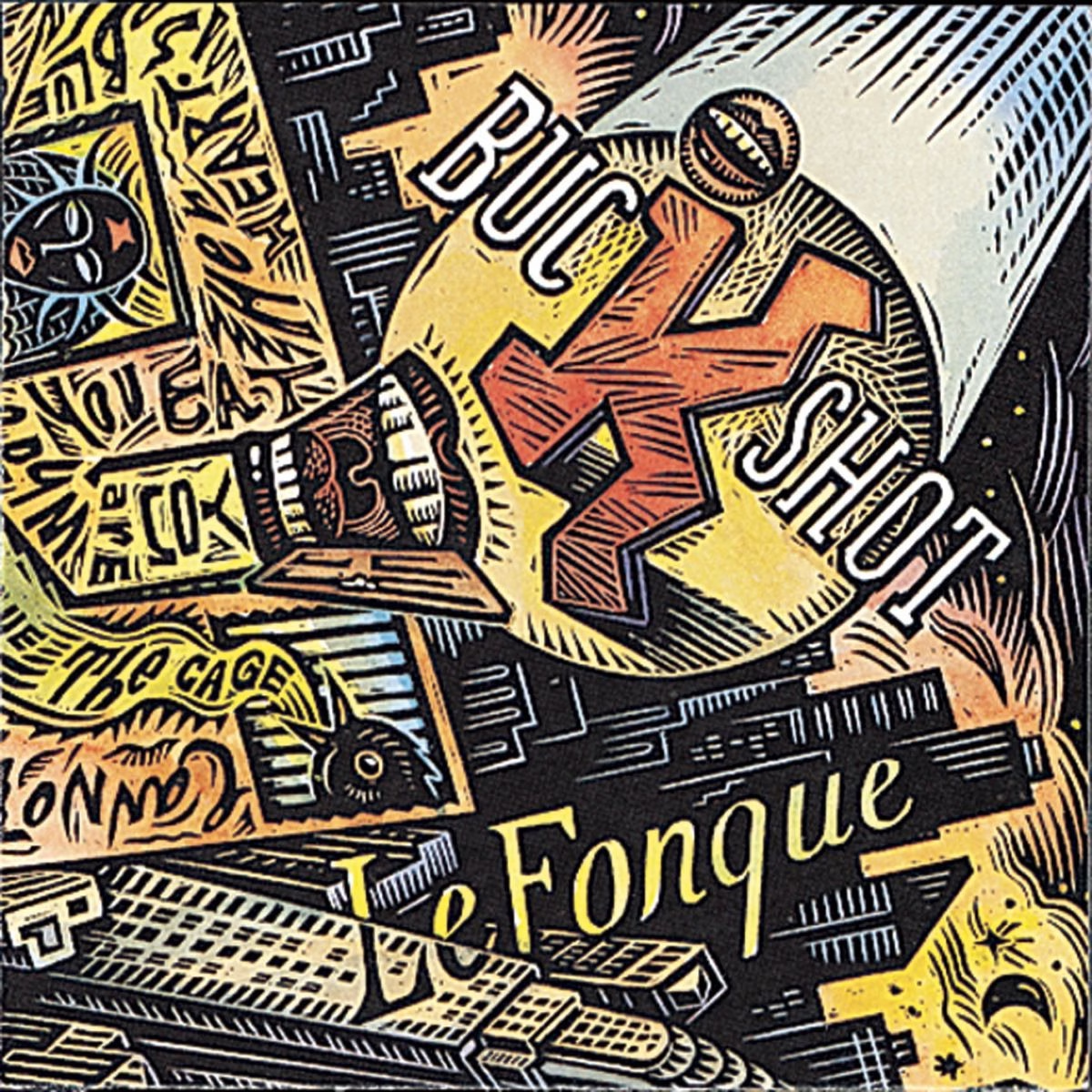
The eclectic spirit of the record is perfectly reflected in its distinctive artwork. Moving away from traditional, “serious” jazz portraits, the cover features a colorful, comic-like illustration by artist Mary Flock Lempa, paired with raw street photography inside the booklet by the legendary Danny Clinch. In line with Branford’s push for complete anonymity and escape from jazz snobbery, his name is entirely absent from the front cover—relegated to a tiny note reading ”Produced by B. Marsalis”. The overall design, crafted by Arnold Levine and Jim DeBarros, feels like a street collage and a graffiti poster, making it the ideal visual equivalent to the album’s urban soundscape.
Conclusion
Buckshot LeFonque (1994) is a liberating album. At a time when purists like Wynton Marsalis and Stanley Crouch were trying to enclose jazz in a glass display case and ban electric instruments, rap, and fusion, Branford released a project bursting with life, rebellion, and supreme musicianship.
For anyone who loves Jazz Rap, Acid Jazz, or simply unrestrained creativity, this album feels like a breath of fresh jazz club air laden with cigarette smoke. It proves that fusion doesn’t have to be sterile pretentiousness or a cheap compromise, but rather an exciting, eclectic, and above all fun dialogue between genres. It is a genuine crime that Buckshot LeFonque isn’t in everyone’s regular music rotation today.