Leak Bros – “Waterworld”
Author: RAProgram
The Architects and Underground Lore
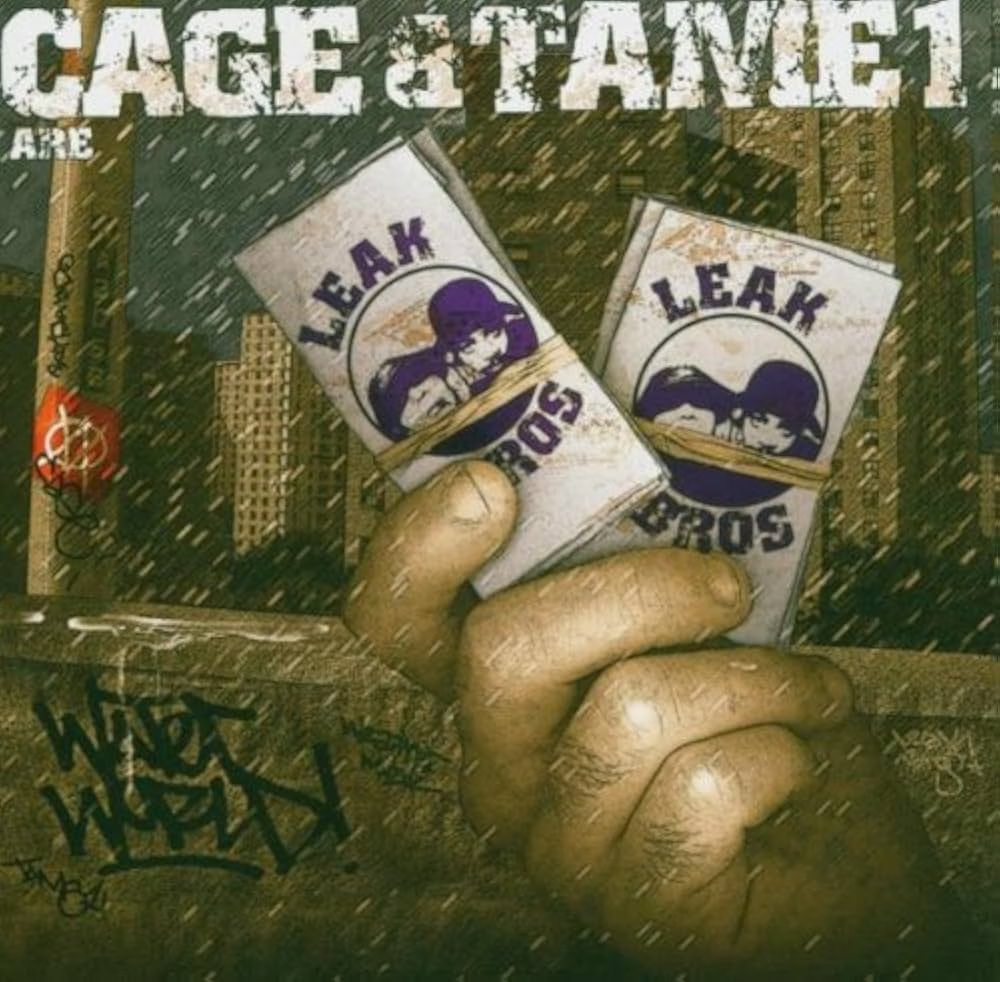
Released on July 13, 2004, Waterworld stands as the definitive, and only, collaborative studio album from this exceptional duo. To truly respect the weight of this record, you have to understand the real-world trauma behind the men who created it. Cage (Chris Palko) is an East Coast independent hip-hop institution whose entire catalog is shaped by profound personal scars. The son of an American soldier dishonorably discharged for running and using heroin, his childhood was defined by severe domestic abuse. It peaked when his father held him and his mother hostage with a shotgun during a police standoff. Instead of prison, Cage’s mother begged a judge to send him to Stoney Lodge, a mental institution in Upstate NY. There, as an undiagnosed bipolar teenager, he became a test patient for a then-new drug called Prozac, leading to severe suicidal spirals. Yet Cage flipped the script, using his time in the institution to break his mind down and rebuild it into one of the most vicious, sharpest lyrical weapons the independent scene has ever witnessed.
On the other flank stood the late, great Tame One (R.I.P. March 20, 1970 – November 6, 2022), a New Jersey legend who commanded absolute respect across the culture. As one half of the iconic 90s duo The Artifacts, Tame defined the Golden Era’s graffiti-rap subculture with timeless anthems like “Wrong Side of Da Tracks.” Tame wasn’t just an elite technician with one of the most natural, fluid rhythms in hip-hop history; he was a mentor who laid the blueprint for subsequent superstars like Redman. His style combined pure street presence with a narrative depth that very few could match bar-for-bar.
With Waterworld, the Leak Bros created a highly distinctive, independent hip-hop concept album entirely dedicated to the theme of PCP abuse. The duo framed the project loosely around a bizarre, hallucinatory theme park dedicated to the drug, stepping into the personas of fictional “leak fiends” navigating a paranoid landscape of drug-induced delusions. Every single track focuses on the substance, constantly referencing street names like “water,” “wet,” and “purple rain” while detailing the act of dipping cigarettes and blunts into the chemical. Tame One famously likened the final product to a much darker, completely “dusted” version of Method Man and Redman’s classic collaborative album, Blackout!.
Behind the scenes, this album was born out of a unique mix of artistic brotherhood and industry friction. By 2004, their label, Eastern Conference Records, was completely falling apart, leaving its artists scrambling to get out. Cage and Tame were locked down under tight, legally binding contracts. The two had actually been wanting to cook up a collaborative album for a long time purely out of mutual respect, and the label’s collapse forced their hand. They aligned under the banner of the Leak Bros and used their contractual obligations as an opportunity, dropping a record so radical, intense, and unapologetically dark that the label had no choice but to sign off on their release.
While the mainstream was playing in pristine, corporate environments, this masterpiece was forged in the trenches. The bulk of the heavy lifting was recorded in Manhattan at the legendary studio The Muthafuckin’ Spot On Lexington, engineered by DJ Mighty Mi. Tame’s solo cut, however, was captured at the infamous Torture Chamber Studios in Newark, NJ—a grim, subterranean lab legendary for its thick layers of smoke, hardcore graffiti art, and the raw, unfiltered energy of the local scene.
A Guided Tour Through the Theme Park: Track by Track
1. “PCP Ward (Intro)” (Prod. DJ Mighty Mi)
This isn’t your standard, disposable intro—it’s an immediate psychological shift. Mighty Mi sets the scene with a cold, rhythmic dripping sound that instantly locks you inside a sterile isolation room. The atmosphere creates an eerie, claustrophobic tension that pulls you straight into the hallucinatory trip ahead, establishing a clear visual and audio identity for the rest of the project.
2. “Got Wet” (Prod. Camu Tao) ft. Yak Ballz
The proper introduction to the album’s concept, and it’s a flat-out underground classic. The late Camu Tao anchors the track with a menacing, distorted guitar loop and a heavy drum pattern, while Yak Ballz steps up to deliver a hauntingly melodic, bleak hook that shadows the entire beat. The hook says it all:
“And we can see death through a dipped cigarette”
It serves as the grim thesis statement for the whole album—a literal window into the darkest sides of addiction. Cage clocks in with unfiltered verses about his fighter-pilot grandfather and his bipolar diagnoses, while Tame showcases his elite graffiti roots, comparing his leaking flows to bad paint control on a messy wall. You need to hear this just to witness the flawless chemistry between the three.
3. “Waterworld” (Prod. Camu Tao)
The title track operates like a twisted advertisement for a theme park where the patrons are actually prisoners of their own vice. Sonically, it feels like a choir of lost souls chanting over an abandoned carousel. Camu Tao drops the sub-bass into a muddy, liquid crawl, while Cage and Tame trade bars with ridiculous mic presence, overlapping their cadences right in the pocket. It’s a masterclass in independent rap styling.
4. “See Thru” (Prod. Mondee)
The emotional apex of the record, peeling back the horror of what happens when the hallucinations settle and the paranoia turns permanent. Mondee constructs a masterful backdrop using a dirty, heavy synth loop that nods to Roger Troutman’s talkbox era. Cage uses stark imagery to personify Death, but Tame One steals the show with a legendary 16-bar narrative detailing a visit to an ex-girlfriend locked away in a psych ward after abusing the drug. When Tame’s voice strains as he watches her through five inches of visitation glass, it hits you right in the chest. It’s raw storytelling at its finest.
5. “G.O.D.” (Prod. J-Zone)
The acronym reveals the drive—Gimme One Dip—capturing that relentless, frantic street-level chase for the next hit. J-Zone cooks up a frantic, off-kilter rhythm, layering hi-hats and unusual bass tones into a beautiful mess. Cage spits with an unsettling, transparent self-loathing (“The secret to my failure is easier than being sober”), while Tame balances the scales with dark, animated wit. The velocity of the track forces you to stay sharp just to catch the internal rhyme schemes.
6. “Gimmesumdeath” (Prod. RJD2)
A pristine holy grail of independent production. RJD2 pairs a gorgeous, intricate string sample from a Japanese Enka singer with a highly complex drum arrangement. Lyrically, the duo uses this cinematic canvas to dissect escapism, arguing why going out on your own terms on the streets beats fading away in a sterile hospital bed. The contrast between the beautiful, warm production and the harsh lyricism is incredible.
7. “Follow The Liters” (Prod. Grimace)
A brilliant, dusted play on the old-school hip-hop format “Follow the Leader,” flipping it to track the liquid measurements of the drug. Grimace builds a tense rhythm accented by a careening, pitched-up Pink Floyd guitar solo. Tame brings absolute cartoonish absurdity to the mic, claiming he used the drug once and missed lunch because the high lasted six months, while Cage looks back at his early days storing jars of the chemical in a Burger King freezer. It’s an infectious, surreal trip.
8. “DEAD” (Prod. DJ Mighty Mi, Co-prod. Camu Tao)
Easily one of the most unsettling concepts ever committed to wax: a track written entirely from the perspective of two corpses lying on a metal slab during the embalming process. Mighty Mi lays down funeral organs and sampled weeping taken straight from a Japanese horror flick soundtrack. Cage completely commands the atmosphere with a flatline, deadpan delivery, dropping his immortal line: “Rather be dead than the guy who raps about how great he is.” It’s a flawless piece of dark bravado.
9. “Druggie Fresh” (Prod. Kool Mellow Max 165)
Cut inside the grim walls of Newark’s Torture Chamber, this is Tame One flying completely solo. Over a skeletal, hypnotic boom-bap break driven by clanging church bells, Tame delivers a loose, heavily intoxicated, yet brilliant deconstruction of Doug E. Fresh and Slick Rick’s classic “La Di Da Di.” Watching the veteran weaponize his old-school 1985 foundations into a gritty, modern addiction chronicle is pure gold for anyone who actually studies the genre.
10. “Delerium” (Prod. Camu Tao)
Camu Tao returns with an aggressive, industrial-leaning soundscape that mirrors the frantic headspace of acute chemical delirium. Amidst the sonic chaos, Cage and Tame step up the hostility, turning their elite verbal velocity against industry fakes who pretend to live a dark lifestyle without ever stepping foot in the shadows. The raw energy coming off this track is immense.
11. “Stargate” (Prod. DJ Mighty Mi)
A definitive solo tour de force from Cage. Opening with a direct, calculated nod to Nirvana’s “Something in the Way,” Mighty Mi scores the track with a driving, synthesizer-fueled nightmare inspired by Giorgio Moroder. Cage uses the space to chart his existence from birth, through his institutionalization at Stoney Lodge, and his ongoing war with his own mind. He pulls power directly out of the abyss, peaking with a defiant, classic declaration of survival: “Gun in my face, don’t expect me to panic / I gave up on suicide, y’all have to take me off this planet.”
12. “Submerged” (Prod. El-P)
The end of the line, executive produced by the Company Flow general himself, El-P. He laces the duo with a paranoid sub-bass, skittering vocal chops, and ambient cricket noises, creating the sensation of being followed across an empty field at night. Tame steps in with sharp cultural references, while Cage layers the track with dense internal rhymes and a slick nod to the post-hardcore outfit Glassjaw (“Jarhead but ain’t got no Glassjaw like Warner Brothers”). It’s a heavy, dystopian ride that anchors the closing act of the theme park.
13. “Outro (Angel Dust)” (Prod. Emz)
The ride ends exactly where it should, setting a historical mirror against the modern street epidemic. Producer Emz keeps it clean, looping the iconic, soulful hook from Gil Scott-Heron’s 1978 anti-drug classic “Angel Dust.” Hearing Gil’s vintage warning echoing through the independent landscape serves as the perfect, haunting epilog to the entire concept. The needle lifts, the smoke clears, and you’re left with the realization that you just sat through one of the most courageous, uncompromising documents in independent music history.
The Verdict
Waterworld isn’t background music; it is a profound, masterfully executed study of mental illness and chemical dependence. Cage brings the traumatic, hyper-vulnerable depth, while Tame One anchors the ship with a flawless, rhythmic execution. By rallying the absolute finest beat-makers of that indie era, the Leak Bros created a definitive underground classic. They dragged us down to the deep end, cut the oxygen, and proved that nobody leaves this specific park completely dry.
bars > numbers