J Dilla – “The Diary”: A Decade of the Vocal Testament
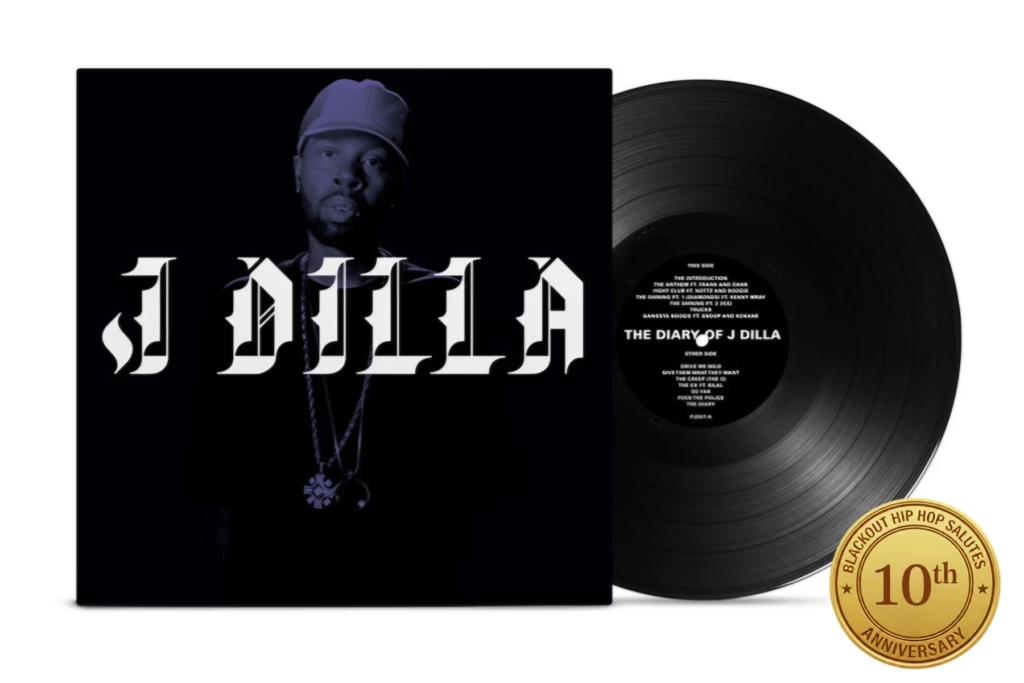
Today, April 15, 2026, marks exactly one decade since James Dewitt Yancey, better known as J Dilla, saw the release of The Diary. For those of us who have followed the Blackout story for decades, this album wasn’t just another posthumous release; it was the conclusion of a saga that spanned nearly 15 years. While we primarily hailed Dilla for his beats that redefined rhythm, The Diary offered us a glimpse into what he himself desired most at one point in his career – to be recognized as a formidable emcee.
The story of this album began back in 2001. Dilla was at his peak, signing a major label deal with MCA Records and receiving a budget to build his own studio in Detroit, famously known as “The Spaceship.” Instead of doing what any other producer would have done – dropping an album with his best instrumentals – Dilla decided to be a total maverick. He wanted to rap, and he commissioned his heroes and peers like Pete Rock, Madlib, Hi-Tek, and Nottz to handle the production.
However, the corporate heads at MCA didn’t understand the vision. The material was too raw for the mainstream at the time. The single “Fuck the Police,” recorded in 2001, became a victim of post-9/11 paranoia; the label feared an FBI backlash and shelved the song, forcing Dilla to release it independently through Up Above Records. When Wendy Goldstein, the A&R who signed him, left MCA, the album was officially shelved, leaving Dilla in limbo. This eventually pushed him back toward the independent sound and projects like Ruff Draft and the legendary Donuts.
After Dilla’s passing in 2006, the responsibility for his legacy fell to his mother, Ma Dukes, and creative director Eothen “Egon” Alapatt. The road to the 2016 release was anything but easy. Engineer Dave Cooley faced a task of true digital archaeology. The master recordings were locked in an obsolete format of the “Mezzo backup” software that no longer existed. Cooley literally searched through internet forums for people who still had the old hardware and software to “hack” into the sessions and extract Dilla’s vocals. This process took years, while legal battles with former managers over profit rights raged on in court, until the Pay Jay Productions imprint was revived and, in collaboration with Nas’s Mass Appeal Records, finally released the album on April 15, 2016.
Looking back, the tracks on The Diary carry that specific “dirty” Detroit vibe. “Trucks,” which samples Gary Numan, became a street anthem of sorts, while “The Anthem” featuring Frank n Dank showcased Dilla’s ability to flow over the most unconventional rhythms. The collaboration with Snoop Dogg and Kokane on “Gangsta Boogie” (produced by Hi-Tek) was Dilla’s tribute to the West Coast sound he always respected. Although some critics then and now argued that Dilla as a rapper wasn’t in the same league as Dilla the producer, one cannot deny the charisma and energy he radiated on the mic. He was aggressive, witty, and brutally honest.
A decade after its release, The Diary stands as an essential historical document. It fills a major gap in his career and shows us a man who wasn’t afraid to risk everything to be what he wanted, rather than what the industry expected of him. Today, when we listen to this album, we don’t just hear “lost tapes”; we hear the voice of a genius who, despite illness and system struggles, believed in his art until his last breath. Dilla always said he wanted this music to circulate, and ten years later, the Blackout crew and the entire hip-hop world continue to fulfill that wish.
Rest in Peace, James Yancey. Detroit’s finest son is still dictating the tempo.