35 Years of Prince Rakeem’s Debut EP
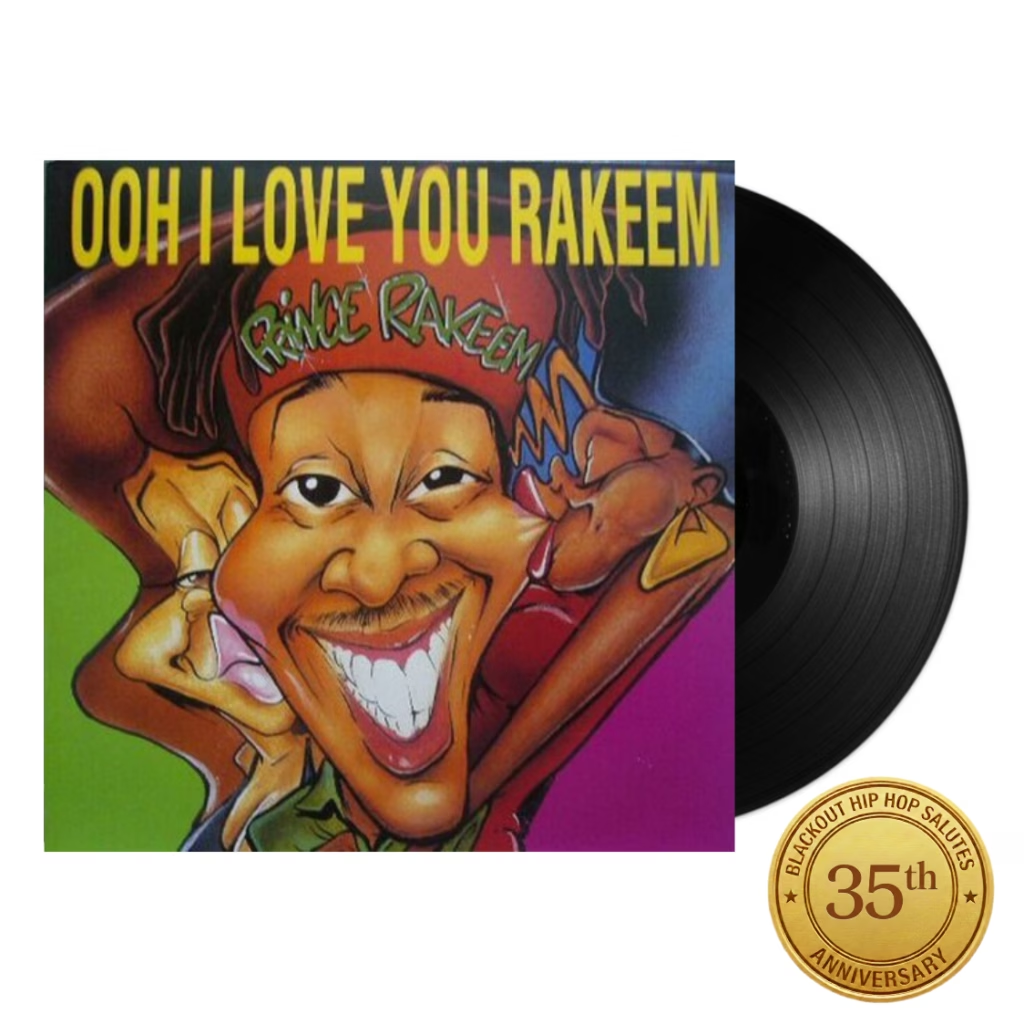
On this day, July 1, 1991, hip-hop history bore witness to a peculiar release that, despite its massive commercial failure, would shift the trajectory of the entire culture forever. We are talking about the EP Ooh I Love You Rakeem, released under Tommy Boy Records by a young artist named Prince Rakeem – the man whom the world now knows as the RZA, the mastermind and abbot of the Wu-Tang Clan. Exactly 35 years later, we do not look back at this EP as a golden era masterpiece, but rather as the reality check that forced Robert Diggs to reinvent the rules of the music industry.
The Forced Lover-Rap and a Marketing Mismatch
Back in 1991, Tommy Boy Records relied on a rigid marketing strategy for new talent: fund a cheap music video, drop one single, and see if it moves the needle. With the highly lucrative “lover-rap” lane dominated by acts like Heavy D, the label’s A&R team tried to mold Prince Rakeem into a suave ladies’ man.
The result was a cringe-worthy music video featuring Rakeem rapping off-key in a tuxedo surrounded by models. However, underneath that commercial coat, Rakeem’s raw skill was undeniable. Tracks like the self-produced “Deadly Venoms” and his collaboration with Easy Mo Bee on the B-side cut “Sexcapades” showed a gritty, technically sharp MC who was far from a pop artist.
Sampling Nightmares and the Single’s Demise
The final blow to the project came when Tommy Boy’s legal department failed to clear the sample for the original version of the title track, which leaned heavily on Deniece Williams’ 1976 soul classic “Free”. Rakeem was forced to quickly remix the song, resulting in the “Baggin’ Ladies Mix“. This version stripped away the warm, melodic soul loop, leaving a lackluster beat that ultimately tanked on the charts.
Consequently, Tommy Boy dropped Rakeem from the roster. But this major setback only fueled Diggs’ ambition.
Out of the Ashes, the Wu-Tang Clan Emerges
Almost simultaneously, his cousin Gary Grice (GZA/The Genius) suffered a similar fate with Cold Chillin’ Records. Embittered but determined, the cousins retreated to Staten Island with a unified goal: to bypass traditional label gatekeepers.
RZA designed his legendary “five-year plan” and gathered his crew to form the Wu-Tang Clan. When they independent-pressed “Protect Ya Neck” in late 1992, they secured a ground-breaking deal with Loud Records that allowed individual members to sign solo deals with competing labels – a decentralized strategy that revolutionized the industry. Had Ooh I Love You Rakeem been a success, RZA might have remained in the pop-rap machine. Instead, its failure paved the way for the raw, dusty Shaolin sound that redefined hip-hop.