35 Years of A Tribe Called Quest’s The Low End Theory
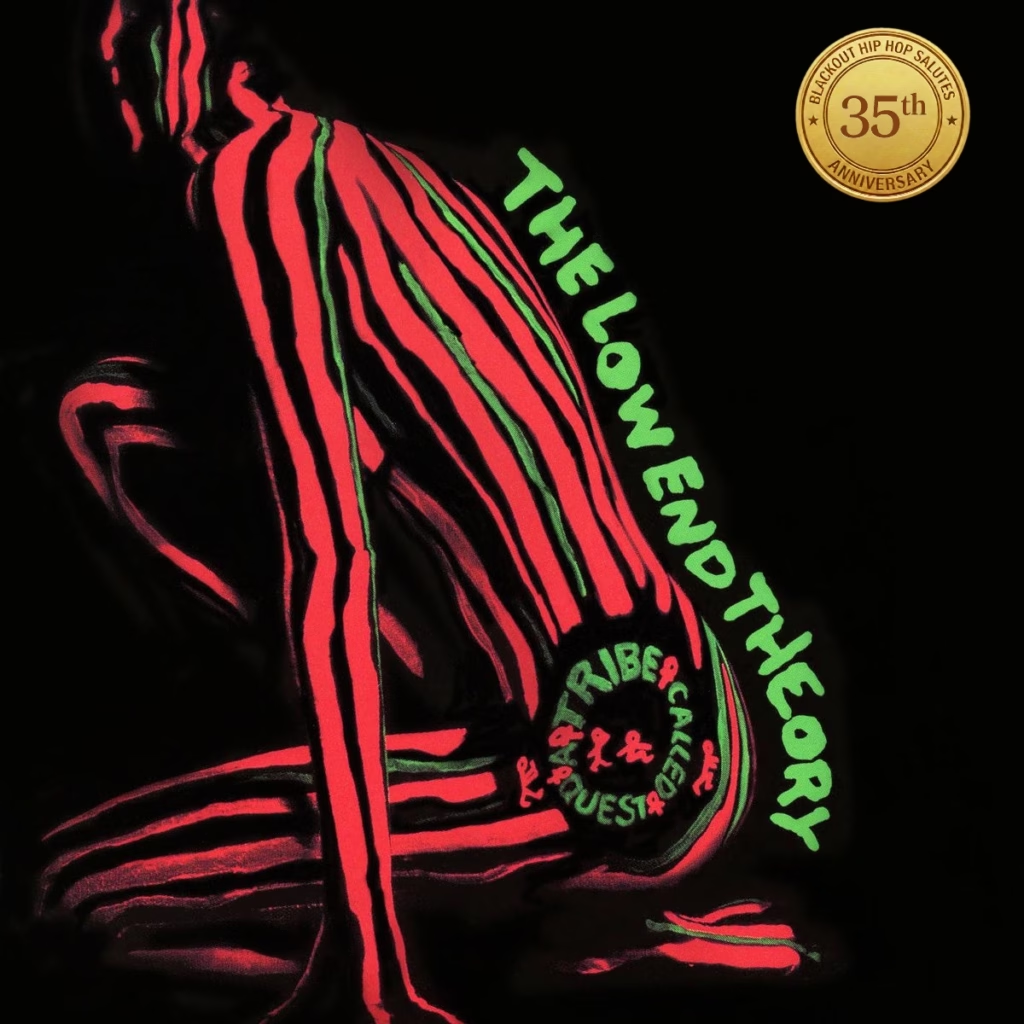
On this day, September 24, 1991, Jive Records unleashed The Low End Theory, the sophomore full-length effort from A Tribe Called Quest. While mainstream music history frequently commemorates that specific Tuesday for the explosion of alternative rock through Nirvana’s Nevermind and the Red Hot Chili Peppers, hip hop heads witnessed an equally monumental turning point. Stepping away from the breezy, eclectic collages of their 1990 debut People’s Instinctive Travels, Tribe returned with a stripped-down, focused aesthetic that became the gold standard for boom bap.
Low-End Architecture and Battery Studios Precision
The title of the album was never just a clever catchphrase; it served as a technical mission statement for the entire recording process. Inspired by the raw low-end drive of N.W.A’s Straight Outta Compton, Q-Tip wanted that exact heavy bounce in the chest, but without leaning on West Coast synthesizers or aggressive gangsta tropes. Instead, he dug into jazz crates and paired them with dusty breaks. Working at Battery Studios in Manhattan behind an analog Neve 8068 console, Q-Tip and recording engineer Bob Power achieved what few in hip hop had accomplished. In an era prior to digital noise-reduction tools, Power manually cleaned vinyl clicks and placed the kicks and bass firmly down the center of the stereo field with minimal reverb, resulting in an intimate, punchy, and warm acoustic profile.
Sampling on this record was elevated into nuanced composition. Rather than relying on simple looping phrases, Tip constructed intricate micro-arrangements. On the opener “Excursions,” he lifted an Art Blakey bass motif from “A Chant for Bu,” cleverly transposing a 3/4 jazz waltz into a synchronized 4/4 hip hop groove. On “Buggin’ Out,” the group stacked two separate drum breaks, while jazz maestro Ron Carter stepped into the studio to lay down live upright bass on “Verses from the Abstract,” accepting the gig under the condition of zero vulgarity. His acoustic playing brought an organic dynamic that no sampler of the era could replicate. Crucial outside contributions rounded out the tracklist: Skeff Anselm produced “Show Business” and “Everything Is Fair”, while Pete Rock constructed the foundational rhythm track for “Jazz (We’ve Got)”.
Lyrical Chemistry: The Abstract Meets the Five-Foot Assassin
Beyond the sonic architecture, The Low End Theory cemented Phife Dawg‘s breakthrough as a premier emcee. Having played a relatively minor role on the first LP, Malik Taylor stepped into the spotlight with biting humor, sharp sports references, and street-level charisma. Playing directly against Q-Tip’s smooth, esoteric delivery as “The Abstract,” the vocal balance between the two emcees was seamless. This chemistry carried classics like “Check the Rhime,” while Phife handled solo duties on “Butter” with effortless swagger.
The lyrical content moved easily from laid-back banter to sharp critique. On “The Infamous Date Rape,” Tribe addressed sexual consent and acquaintance assault at a time when such discussions were virtually absent from hip hop. On “Show Business”—rebuilt after their original concept “Georgie Porgie” was rejected by the label—the group linked with Lord Jamar, Sadat X, and Diamond D to call out industry exploitation, immortalizing “industry rule number 4080”. Finally, the closing posse cut “Scenario” alongside Leaders of the New School closed the album with unmatched momentum, famously launching the solo career of Busta Rhymes.
Legacy and Enduring Impact
The Low End Theory quickly earned the coveted 5-mic rating from The Source, achieved platinum certification, and fundamentally altered the genre’s trajectory. Dr. Dre famously credited the sonic balance and bottom-end clarity of the album as the direct inspiration behind his production on The Chronic. Furthermore, its jazz-rap synthesis provided the foundation for the Soulquarians, The Roots, and modern descendants like Kendrick Lamar.
Thirty-five years later, and two years after the group’s induction into the Rock and Roll Hall of Fame in 2024, The Low End Theory remains completely immune to aging. The bass still hits, the cadence remains immaculate, and the theory remains timeless.