Ghostface Killah: 25 Years of “Bulletproof Wallets”
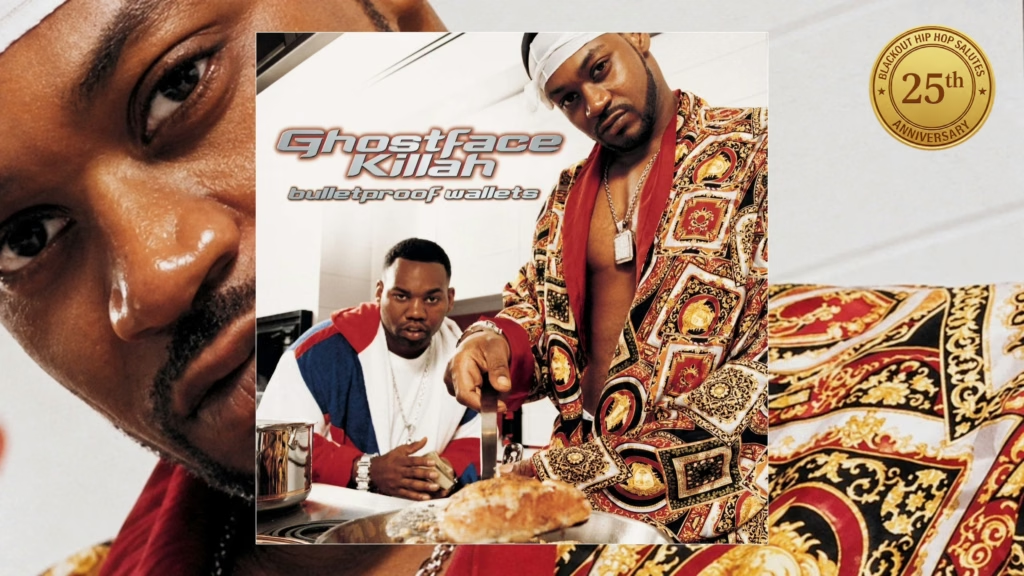
On this day, November 20, 2001, one of the most vivid storytellers in New York rap history, Ghostface Killah of the Wu-Tang Clan, released his third solo studio album, Bulletproof Wallets, via Starks Enterprises and Epic Records. Twenty-five years later, the record occupies a fascinating transitional space in his catalog, bridging the manic, sample-dense sprawl of 2000’s Supreme Clientele and the warmer, soul-soaked elegance that would later define The Pretty Toney Album (2004). While his 1996 debut Ironman played like a gritty Staten Island crime thriller, Bulletproof Wallets revealed Tony Starks in a looser, more romantic, and flamboyant mood without sacrificing a shred of his trademark stream-of-consciousness intensity. Within the broader Wu-Tang solo timeline of 2001, it arrived right after RZA’s Digital Bullet and ahead of GZA’s Legend of the Liquid Sword the following year.
Soulful Ambitions, Sample Clearances, and Wu-Tang Roots
Recorded throughout 2001, Bulletproof Wallets arrived at a moment when Ghostface Killah was widely regarded as one of the sharpest, most inventive lyricists on the East Coast. Still, the road to retail release was anything but smooth. Navigating major-label sample clearance hurdles at Sony/Epic forced several alterations and omissions from the original tracklist—most notably cutting fan-favorite tracks like “The Sun” (whose RZA beat reportedly couldn’t be cleared because RZA forgot the source sample), “Good Times”, and “The Watch”, as well as altering the original beat for “Flowers”. Even with those compromises, the resulting 16-track, 46-minute-and-38-second LP maintained a tight pace and unmistakable Wu-Tang DNA, blending street-corner narratives with early-2000s R&B polish.
From the opening “Intro – Stairway to Heaven”, produced by PLX around a lush O’Jays sample, the album signals a grander, cinematic tone. It immediately shifts into gear on “Maxine”, a cautionary street tale featuring longtime sparring partner Raekwon over a taut, funky RZA backdrop built from J.J. Johnson’s „Harlem Clavinette”. On the very next track, “Flowers”, Method Man and Superb join Ghost and Raekwon as RZA flips Bob James’ classic „Take Me to the Mardi Gras” into one of the album’s most kinetic posse cuts, followed by the Harold Melvin & the Blue Notes-sampling “Teddy Skit”.
Singles, R&B Crossovers, and High-Caliber Guests
The album’s biggest commercial push came from lead single “Never Be the Same Again”, released on September 4, 2001. Produced by LILZ and PLX and featuring Raekwon alongside Bad Boy R&B crooner Carl Thomas, this candid tale of infidelity and divorce gave Ghostface rare radio accessibility while keeping his eccentric slang front and center, and the track was later included on his greatest hits compilation Shaolin’s Finest. Second single “Ghost Showers” (issued November 22, 2001) kept that upbeat momentum rolling: producers Chris Liggio and Tally Galbreth sampled Dr. Buzzard’s Original Savannah Band’s „Sunshower”, while Madame Majestic delivered a soaring hook that made the track an enduring party staple.
Elsewhere, that soulful, relationship-driven thread continues on “Walking Through the Darkness” with frequent Wu-Tang vocalist Tekitha—where RZA builds dramatic tension around Bobby Womack’s „Across 110th Street”—before moving through the Ann Peebles-sampling “Jealousy (Skit)” and onto the penultimate “Love Session” featuring Ruff Endz over Underdawgz production. Even when leaning squarely into smooth R&B territory, Ghostface injects his offbeat humor and hyper-specific imagery, turning everyday romantic drama into vivid New York vignettes.
The Alchemist, Mathematics, and Pure Storytelling
What keeps Bulletproof Wallets firmly anchored in hardcore New York hip-hop is the sharp production diversity across its second half. Alongside RZA’s contributions, Wu-Tang DJ and producer Mathematics and rising California beatsmith The Alchemist step up with standout beats. Mathematics delivers classic Shaolin grit on “Theodore” (featuring Trife and Twiz, sampling Blood, Sweat & Tears’ „40,000 Headmen”) and on the hard-hitting “Strawberry” alongside Killarmy standout Killa Sin, built around David Porter’s „Storm in the Summertime”.
Meanwhile, The Alchemist contributes three memorable cuts that inject crisp, menacing boom-bap energy into the tracklist. On the surreal and darkly comedic “The Forest” (sampling The Wonderful World of Disney), Ghostface reimagines classic cartoon characters in gritty street scenarios, while “The Juks” (featuring Trife and Superb over Chucho Avellanet’s „Dos Amores Desiguales”) showcases one of his most praised verses about ambition and survival. Alchemist closes out the album on a punchy note with “Street Chemistry”, teaming Trife with Sunz of Man’s Prodigal Sunn. Additional highlights include Carlos “6 July” Broady‘s lavish, Michael Jackson-sampling “The Hilton” with Raekwon, plus Rsonist of The Heatmakerz on the brisk Donny Hathaway-sampling “Ice (Interlude)”.
Chart Performance, Critical Praise, and 25-Year Legacy
Upon its November 2001 release, Bulletproof Wallets debuted and peaked at number 34 on the US Billboard 200 and climbed to number two on the Top R&B/Hip-Hop Albums chart (finishing at number 90 on the 2002 year-end R&B/Hip-Hop tally), moving 76,000 copies in its opening week on its way to 297,000 units sold in the US and serving as Ghostface Killah’s final studio album for Epic Records before his move to Def Jam. While it did not match the commercial heights of its predecessor, critics responded warmly: Vibe awarded it 4.5 out of 5, Spin gave it 8/10, The Village Voice (Robert Christgau) graded it an A−, NME scored it 7/10, and The New Rolling Stone Album Guide rated it 4.5 out of 5. AllMusic’s John Bush noted it functioned almost like a party album compared to typical Wu-Tang gloom, while Rolling Stone‘s Pat Blashill praised how Ghostface came across like a tough yet fatally vulnerable anti-hero on tracks like “The Juks”, and PopMatters’ Mark Desrosiers observed that while the album did not quite match the peering-into-the-abyss street insanity of Ironman, it came remarkably close and delivered plenty of raw energy.
A quarter-century later, Bulletproof Wallets remains an essential chapter in understanding how the Wu-Tang Clan’s solo output evolved into the new millennium. Despite behind-the-scenes sample clearances and label friction, the album proved Ghostface Killah could carry a stylistically adventurous, personality-driven LP on his own terms—and quietly laid the blueprint for the prolific, critically acclaimed solo run that followed throughout the 2000s.