The Sugarhill Gang: 45 Years of “8th Wonder”
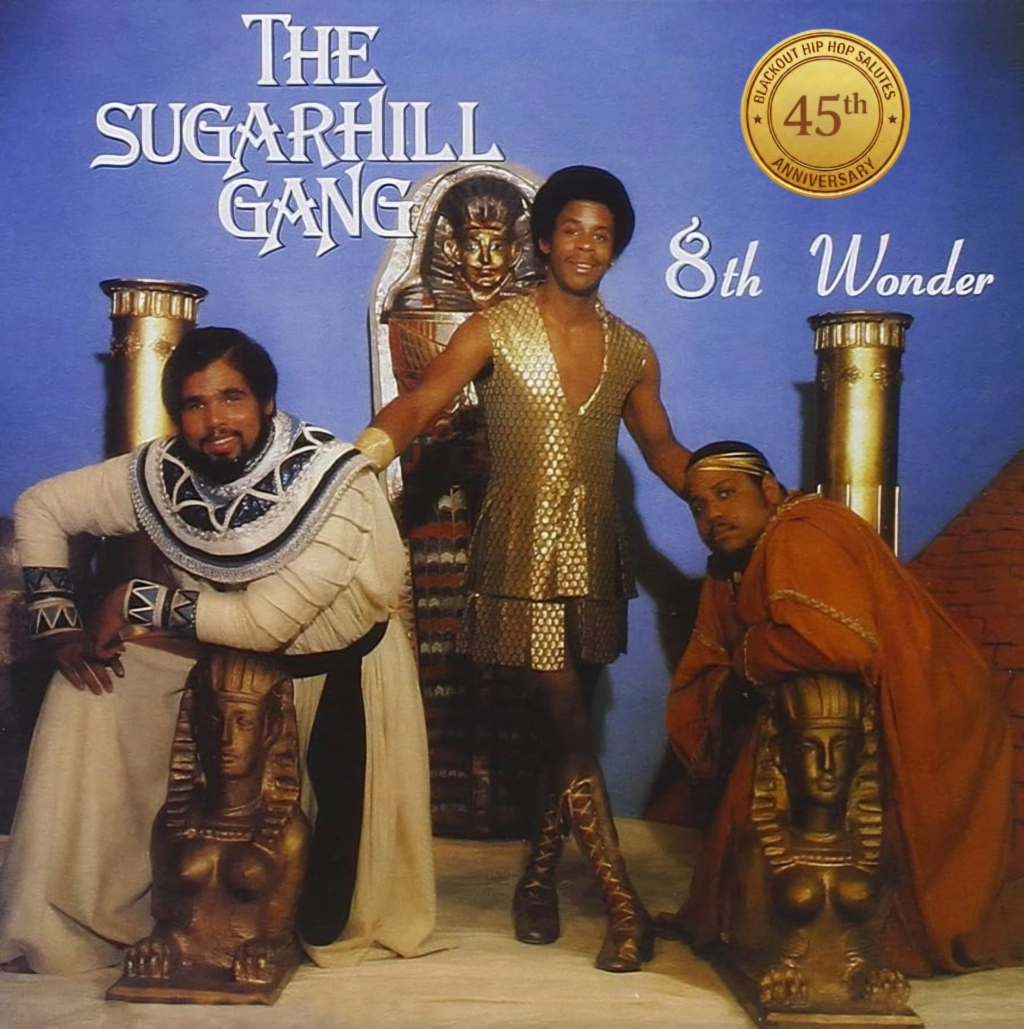
On this day, November 24, 1981, pioneering New Jersey trio The Sugarhill Gang released their second studio album, 8th Wonder, on the trailblazing label Sugar Hill Records. Forty-five years later, the record stands as a vivid historical snapshot of the transitional era when rap music was moving from Bronx and Harlem block parties onto vinyl LPs and international airwaves. While their 1980 self-titled debut Sugarhill Gang made history behind the breakthrough smash “Rapper’s Delight”—the first rap single to crack the Billboard Hot 100 Top 40—8th Wonder carried the pressure of proving that Wonder Mike, Big Bank Hank, and Master Gee could sustain a cohesive second act while hip-hop was still inventing its album-length blueprint.
Sylvia Robinson’s Blueprint and the Sugar Hill Studio Sound
Once again steering the ship behind the boards was label co-founder and visionary producer Sylvia Robinson, working alongside James Cullimore and Joey Robinson. Long before drum-machine programming and digital samplers dominated production, Sugar Hill Records relied on an airtight house band of live session musicians recreating infectious funk and disco grooves in real time. Recorded across 1980 and 1981, 8th Wonder refined that live-band formula into a tighter, punchier party sound tailored specifically for club floors and roller rinks.
Clocking in at 44 minutes and 24 seconds across just seven sprawling tracks, the LP mirrors the pacing of an old-school DJ set rather than a conventional pop album. Instead of rushing through three-minute radio edits, Wonder Mike, Big Bank Hank, and Master Gee stretch out with lengthy, back-and-forth vocal routines, braggadocious crowd-pleasers, and rhythmic call-and-response hooks backed by heavy basslines, crisp horns, and early synthesizer flourishes that bridged late-seventies funk with eighties electro-rap. Driven by Sugar Hill’s powerhouse session players—featuring future Tackhead and Living Colour standouts like bassist Doug Wimbish, guitarist Skip McDonald, and drummer Keith LeBlanc—the instrumentation gave every track an organic, kinetic warmth.
“Apache” — The Party Anthem That Outlived Decades
Without question, the album’s defining centerpiece—and the single issued right in November 1981—is the iconic “Apache” (often remembered by its refrain “Apache (Jump On It)”). Originally penned by British songwriter Jerry Lordan in the late 1950s and popularized as a guitar instrumental by The Shadows and Jørgen Ingmann, the track was forever transformed in 1973 when Michael Viner’s Incredible Bongo Band recorded a percussion-heavy funk version featuring drummer Jim Gordon’s legendary bongo break—a groove so foundational to b-boys and DJs that historians frequently dub it “hip-hop’s national anthem.”
Recording at Sweet Mountain Studios in Englewood, New Jersey, The Sugarhill Gang adapted the Incredible Bongo Band arrangement, layering playful Western tropes, infectious “Jump on it!” chants, and high-spirited verses from all three MCs over the relentless percussion. Although “Apache” peaked at number 53 on the US Billboard Hot 100 (alongside number 13 on the R&B chart and number 51 on the Dance chart in 1982), its cultural footprint dwarfed its chart numbers. From 1980s breakdance battles and its unforgettable dance routine on The Fresh Prince of Bel-Air to packed sports arenas—including the WNBA’s Minnesota Lynx adopting the track as their unofficial victory anthem in 2007 and inviting the group to perform it at halftime during their Finals debut—the six-minute jam became one of the most recognizable anthems in popular music.
The Title Track and a Historic “Showdown” with the Bronx
Preceding the album in 1980 (backed with “Sugar Hill Groove”), the title single “8th Wonder” offered an early preview of the trio’s sharper groove. Built around elements of Johnnie Taylor’s “Ever Ready” and 7th Wonder’s “Daisy Lady,” the track climbed to number 15 on Billboard’s Hot Soul Singles chart, number 38 on the Disco Top 100, and number 82 on the Hot 100. Featured in the landmark 1983 hip-hop documentary Style Wars, its bouncy rhythm and vocal snippets were later sampled by a who’s who of hip-hop royalty, including Grandmaster Flash and the Furious Five, Public Enemy, Beastie Boys, A Tribe Called Quest, and Busta Rhymes.
Another standout moment arrives on track five, “Showdown”, which pairs The Sugarhill Gang with their celebrated labelmates Grandmaster Flash and the Furious Five. At a time when Bronx street pioneers often viewed the Englewood-assembled trio with skepticism, putting both crews on the same wax created a spirited, friendly mic battle showcasing two distinct sides of early rap’s evolution. Rounding out the compact tracklist are the eight-minute opening funk workout “Funk Box”, the slick groove “On the Money” (a straight-up soul and funk showcase highlighting the label’s house band), and energetic album closers “Giggalo” and “Hot Hot Summer Day”, while The Globe and Mail noted at the time that the group stuck to its signature formula of swaggering rhymes and party-ready bravado.
Chart Run, Critical Reception, and 45-Year Legacy
Even if 8th Wonder never replicated the unprecedented commercial shockwave of “Rapper’s Delight,” it held its own on the charts in early 1982, peaking at number 50 on the US Billboard 200 and reaching number 15 on the Top R&B/Hip-Hop Albums chart while scoring strong club and European followings. Contemporary and retrospective reviews framed it as a brisk, party-ready snapshot of its era: Robert Christgau awarded it a B, calling its vocal cuts “functional dance music,” while AllMusic’s Stephen Cook praised its steamy mix of go-go grooves, straight funk, and rapping—singling out “Funk Box” (noting shades of Prince) and “Hot Hot Summer Day” alongside the two hit singles.
Forty-five years after its release, 8th Wonder remains an essential milestone from the formative years when hip-hop was still figuring out how to translate park-jam energy onto vinyl albums. Without pretending to be a sweeping conceptual statement, it delivered two timeless floor-fillers—“8th Wonder” and “Apache”—and cemented The Sugarhill Gang‘s place as the genre’s first global ambassadors. By blending infectious live instrumentation with charismatic, accessible storytelling and sharp call-and-response hooks, the pioneering trio helped carry early New York hip-hop culture onto crowded dancefloors, club sound systems, and radios around the world.