35 Years Later: Def Jef and The Soul Food Journey
The September 1991 Landscape and Sophomore Intentions
September 1991 remains etched in crate-digging history as one of the most creatively saturated months the culture has ever witnessed. While record store shelves were buckling under monumental releases that defined the decade, Delicious Vinyl quietly issued Soul Food, the second and ultimately final studio outing from Def Jef. Even though digital archives and hip-hop trivia enthusiasts have long pinpointed September 22 as its commemorative date—while catalog records show the retail street date landed on Tuesday, September 3—this 35-year milestone is the right moment to revisit an LP that deserved far more spotlight than it received. Born Jeffrey Fortson, the MC never aimed for quick radio singles; after earning underground respect with 1989’s Just a Poet with Soul, he returned with an introspective, musically layered, and socially conscious project.
The Sonic Architecture: Live Instrumentation and Gritty Breaks
Rather than sticking to predictable drum patterns, Soul Food leaned heavily into warm funk, vintage soul, and the bubbling acid-jazz aesthetic. Operating through his Ain’t That A Groove production imprint, Fortson served as the chief sonic architect while curating an eclectic cast of collaborators. The track “Brand New Heavy Freestyle” brought in London’s acid-jazz outfit The Brand New Heavies, documenting one of hip-hop’s earliest organic cross-Atlantic linkups between a live jazz-funk rhythm section and a stateside MC. DJ Mark The 45 King supplied his signature rough breaks on “Soul Provider” and “Don’t Sleep (Open Your Eyes)“, while label heads Matt Dike and Michael Ross contributed to the laid-back West Coast cut “Cali’s All That“, featuring Tone Lōc’s trademark gravely delivery.
The standout joint across the thirteen tracks remains the lead single “Here We Go Again“. Built on Ray Felix’s live bass grooves and Scott Mayo’s saxophone lines, the song dealt honestly with the psychological loop of a toxic relationship. The accompanying video earned heavy rotation on Yo! MTV Raps, steering the single to a respectable number 24 spot on the Billboard Hot Rap Singles chart in October 1991.
Conscious Rhymes and That Iconic Artwork
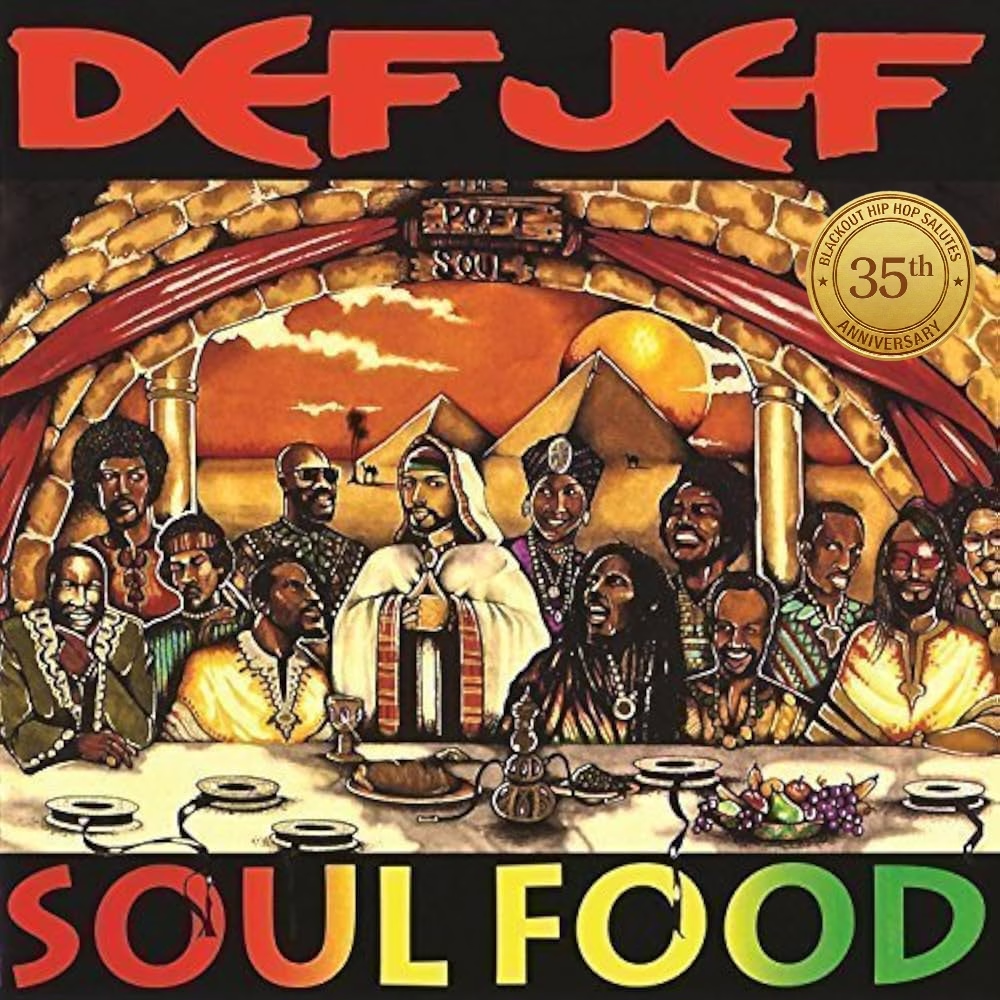
Lyrically, the album stood firm on black consciousness and social critique. On “God Complex“, Jef borrowed the framework of Gil Scott-Heron to address systemic oppression, while the title track “Soul Food” paired him with Boiwundah of Funkytown Pros for an articulate breakdown of street realities. Just as striking was the LP’s visual presentation. Conceptualized by Jef and illustrated by Thellus, the cover art served up a hip-hop rendition of Leonardo da Vinci’s The Last Supper. Def Jef occupies the center seat, flanked by musical architects including Marvin Gaye, Bob Marley, Jimi Hendrix, James Brown, and Aretha Franklin. Sitting in the place of Judas was Lionel Richie—a direct, unapologetic commentary on him leaving behind the raw funk of the Commodores for safe crossover pop.
Retiring the Mic to Work Behind the Boards
The press praised the effort at the time; Gil Griffin of The Washington Post noted that Jef’s rhetoric and delivery rivaled the skills of KRS-One and Chuck D, while Robert Christgau gave the record a nod in his Consumer Guide. However, the fall of 1991 saw gangsta rap tighten its grip on both coasts, rapidly pushing poetic and jazz-infused styles into commercial margins. Soul Food struggled to move large unit counts, prompting Fortson to step away from the mic permanently.
Yet that pivot opened doors to an equally impactful career. Leveraging his engineering chops, Fortson transitioned into a high-demand studio technician and producer throughout the nineties, working on records by 2Pac, Nas, Snoop Dogg, Boss, and Bone Thugs-N-Harmony, as well as scoring a platinum plaque for Shaquille O’Neal’s “(I Know I Got) Skillz” before moving into television composing. Thirty-five years down the road, Soul Food doesn’t need to be labeled an earth-shattering masterpiece to earn respect; it stands on its own merits as a heartfelt, musically rich record that gave heads real food for thought.