25 Years of “The Best Part”: J-Live and the Triumph Over the Industry
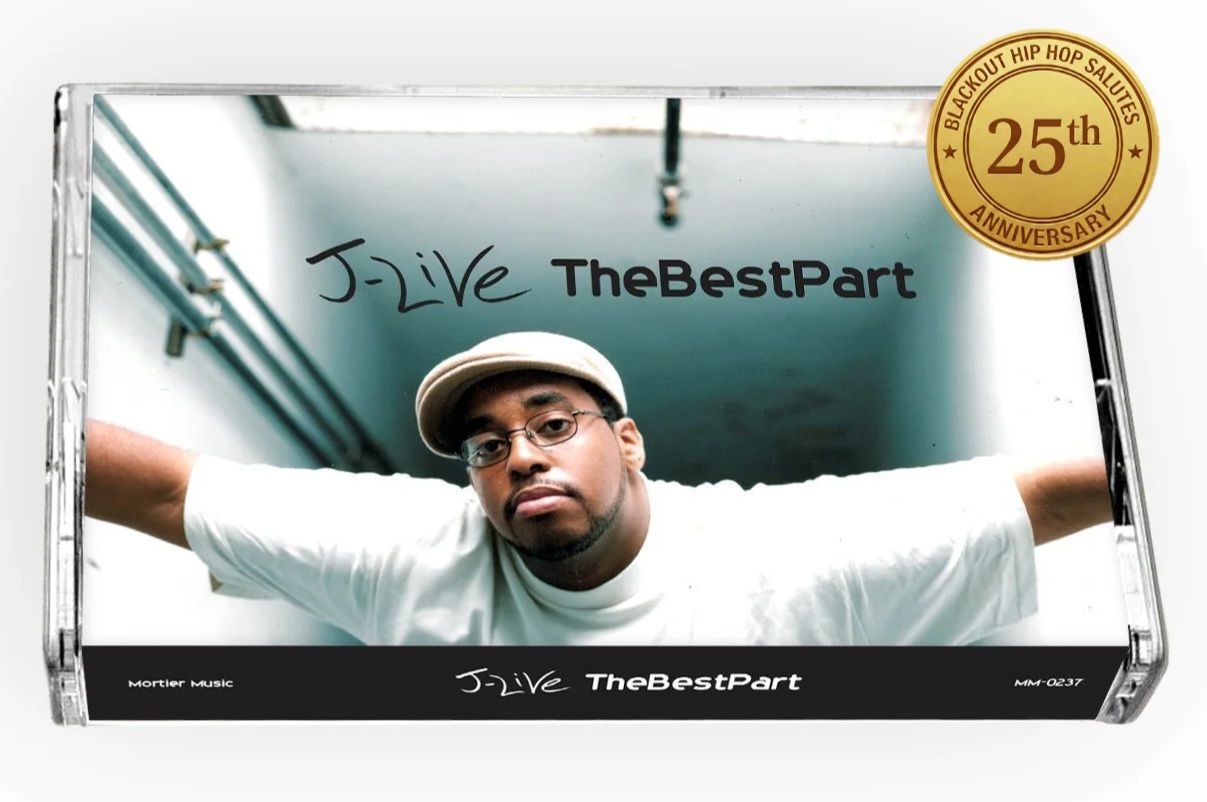
As you drop the needle on the 2026 silver anniversary reissue of The Best Part today, May 1st, the sound resonating from the speakers carries more than just the essence of jazz and boom-bap—it carries the weight of one of the most complex sagas in independent hip-hop history . Jean-Jacques Cadet, better known as J-Live, officially released this album exactly a quarter-century ago, but the journey to that moment was anything but ordinary.
In the mid-nineties, J-Live was a fresh face from Brooklyn, featured in The Source magazine’s “Unsigned Hype” column. While he spent his days teaching English in Brownsville and Bushwick schools, he spent his nights carving out lyrics that would become the pillars of the “backpacker” era . Work on the album began as early as 1995 on Raw Shack Records, but a series of setbacks followed that would have broken most artists . The project shuffled from Payday to London Records, eventually ending up “shelved” due to corporate mergers between Universal and Warner .
What was supposed to be a 1999 debut became the most famous bootleg of its time . Fans swapped tracks on Napster, and the material’s quality was so high that rumors swirled suggesting Live himself leaked the recordings to maintain buzz while legally hamstrung by bad contracts. Ultimately, J-Live did the only right thing: he founded his own label, Triple Threat Productions, and finally gave the world the official version on May 1, 2001 .
What makes The Best Part immortal is a production lineup that reads like a “Dream Team” of that era. DJ Premier, Pete Rock, and Prince Paul left their marks, alongside then-rising visionaries like 88-Keys, DJ Spinna, and Grap Luva.
Premier’s work on the title track “The Best Part” is a masterclass in the craft, but the song “Don’t Play” (prod. 88-Keys) is where you truly grasp J-Live’s genius. 88-Keys sampled Brazilian singer Rosinha De Valenca in a way that makes her sound like she’s chanting Live’s name—a technical detail still discussed in production circles today.
Lyrically, Live brought pedagogical precision to rap. In “Wax Paper” (prod. Prince Paul), he uses personification to tell a heist story where the characters are actually a turntable and a needle. On “Them That’s Not,” he demonstrates technical superiority by shifting his flow in perfect sync with the beat’s acceleration and deceleration. His style is clean, intellectual, and almost entirely devoid of profanity, yet it possesses an edge that hits social anomalies dead center, as seen in the metaphorical “Vampire Hunter J“.
The Best Part is not just an album; it’s a lesson in integrity. J-Live described the process best in the album’s prologue: “This album has been built, robbed, destroyed, rebuilt… patiently awaited, and appreciated long before you got your hands on this slim little package” .
Today, in an era dominated by instant consumption, J-Live’s model of independence looks smarter than ever. He owns his masters, and the 2026 silver vinyl reissue only confirms that quality art does not age . For us at Blackout, The Best Part remains a reminder that understanding is, indeed, the best part.