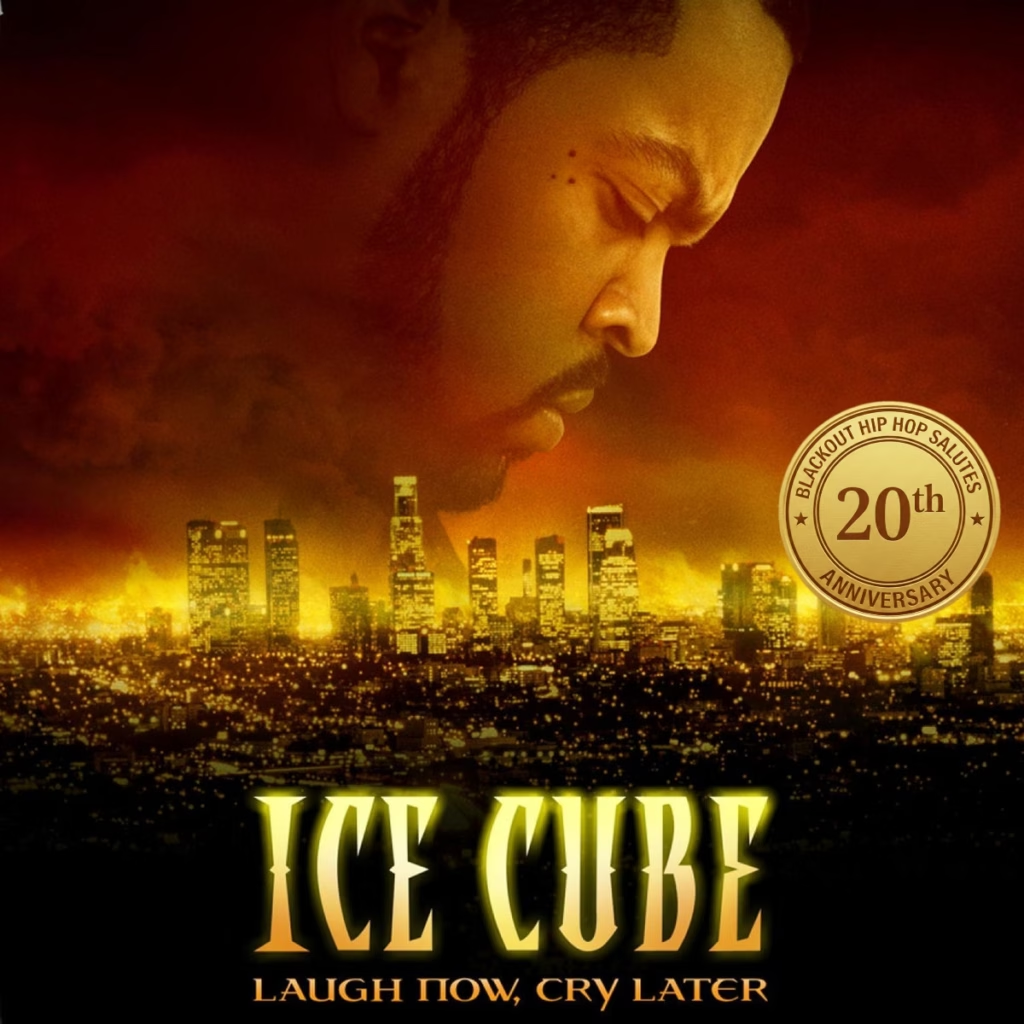
20 Years of Ice Cube’s “Laugh Now, Cry Later”
Defying Ageism in a Young Man’s Game
In 2006, Ice Cube was at a major career crossroads. Having spent the previous six years away from the microphone to focus on his Hollywood movie projects—starring in blockbuster hits like Barbershop —many heads in the hip-hop community wondered if the N.W.A. veteran still had that fire in his belly. The mid-2000s rap landscape had undergone a massive shift; Southern crunk, ringtone rap, and glossy club bangers dominated the airwaves, while the elder statesmen of the genre were routinely dismissed as relics. In a 2006 interview with Jet magazine, Cube addressed this ageism head-on, arguing that the rap audience was maturing alongside its pioneers and that the culture desperately needed veterans to provide reality checks. It was within this climate that Laugh Now, Cry Later was conceived —not as a desperate grab for mainstream pop charts, but as a calculated demonstration of veteran supremacy, proving that a 37-year-old O.G. could still make waves.
The Independent Play: The Lench Mob Blueprint
What makes the album a landmark release isn’t just the music, but the business blueprint it established. Laugh Now, Cry Later marked Cube’s official transition into the independent arena, released entirely through his resurrected imprint, Lench Mob Records. After leaving Priority Records , Cube revived the label and secured a strategic manufacturing and distribution deal with Virgin Records and EMI. At a time when corporate oversight stifled many mainstream acts, Cube retained full ownership of his masters and showed the industry how to run an independent campaign. The gamble paid off. The album debuted at No. 4 on the Billboard 200, moving 144,000 copies in its first week. By August 2006, the RIAA certified it Gold for shipping over 500,000 units —a massive commercial feat for an independent project in that era.
Voice of the Ghetto: “Why We Thugs” and Social Critiques
Musically, the record successfully walks the tightrope between street-level sermons and the heavy-hitting club sounds of the era. Nowhere is this better shown than on the lead single, “Why We Thugs,” produced by Scott Storch. Driven by Storch’s aggressive synth loops and snapping hand-clap snares , the track served as Cube’s modern-day autopsy of the American ghetto. With potent lines like “They give us guns and drugs / Then wonder why in the fuck we thugs” , Cube proved his socio-political pen remained as sharp as ever. He dismantled the systemic traps laid out for inner-city youth, reminding listeners that “thug life” was a product of institutional design rather than simple lifestyle choices. The music video, co-starring comedian Mike Epps, added a touch of dark humor while emphasizing these universal street realities.
Intergenerational Friction: “Child Support” and Legacy
One of the album’s most glaring standouts is “Child Support“. Produced by Hallway Productionz, the track functions as a scathing open letter to the new crop of gangsta rappers who flooded the scene in the mid-2000s. Positioning himself as the undisputed patriarch of reality rap, Cube spits harsh truths over a thumping beat that samples Biggie’s classic “Kick in the Door“. Snarls like “Read your test results, are you the father? / I looked at his bitch ass told him don’t bother” put the industry’s copycats in their place. Cube expressed deep frustration with artists who commodified street violence for purely aesthetic and commercial purposes, devoid of any genuine message or political consciousness. It was vintage, unfiltered Cube, reclaiming his throne and reminding the new school who birthed their style.
From Crunk Club Anthems to Soulful Tributes
To stay competitive on the airwaves, Cube adapted to the dominant sounds of the era, which led to the creation of “Go to Church” featuring Snoop Dogg and Lil Jon. Produced by Lil Jon , the track is a high-octane crunk-West Coast hybrid, powered by Jon’s trademark vocal hype and a club-ready rhythm. While it was a solid commercial success, peaking at No. 25 on the Hot Rap Songs chart , it stood in stark contrast to the emotional core of the album: “Growin’ Up“. Over a soulful, nostalgic Minnie Riperton sample engineered by Laylaw & D-Mac , Cube pays tribute to his late N.W.A. bandmate, Eazy-E. Recalling the painful image of seeing his former partner in a casket, Cube offers a heartfelt thank you for the life lessons Eazy bestowed , showing rare vulnerability and remorse.
The Flaws: Bloat, Filler, and Pacing Issues
Looking at the album objectively, Laugh Now, Cry Later does suffer from the typical bloat that plagued major rap releases of the mid-2000s. Clocking in at over 64 minutes across 20 tracks , there is a fair share of filler that disrupts the pacing. Tracks like “Click Clack – Get Back” feel formulaic and redundant , while “You Gotta Lotta That” featuring Snoop Dogg feels like an artificial attempt to manufacture another club crossover hit, lacking organic chemistry. Additionally, the production palette is highly eclectic; while Scott Storch and Bud’da delivered excellent West Coast street backdrops on tracks like “Chrome & Paint” , some of the southern crunk deviations disrupted the classic cohesive California vibe that fans of the O.G. Westside Connection sound typically craved.
Polarized Reception and an Enduring Legacy
Critical reception at the time was highly polarized, resulting in a mixed Metacritic score of 59 out of 100. While AllMusic’s David Jeffries (granting it 3.5 out of 5 stars) and RapReviews praised Cube’s ability to age gracefully , indie darling Pitchfork was notoriously brutal, slapping the album with a dismal 3.8 out of 10 and calling it “completely tapped of inspiration”. However, hindsight has proven Pitchfork’s critique to be overly cynical. Laugh Now, Cry Later proved to be Cube’s most consistent and enjoyable full-length effort of his late-career run. More importantly, it laid the groundwork for his subsequent independent trilogy , proving that legendary artists could bypass the corporate machine and thrive. Two decades later, this album stands as a monument to the moment a West Coast icon showed the world that the old guard could still throw hands.