10 Years of “1992”: The Game’s Return to the Nineties
Today, October 14, 2026, marks exactly a decade since The Game dropped his eighth studio album, “1992,” released independently via Blood Money and eOne Music. In the fast-paced hip-hop world, 10 years is a lifetime, but this project still holds up as one of the most focused and cohesive albums in the later stages of the West Coast veteran’s career. While it didn’t hit the multi-platinum, mainstream heights of his iconic debut “The Documentary,” the album delivered exactly what core fans reading blackouthiphop.com needed: a raw sound, sharp storytelling, and a direct trip back to the era when West Coast rap was unapologetically shifting the culture.
Back to ’90s Compton
The title “1992” is no coincidence. The Game used this project as his personal time machine, taking listeners back to a year that drastically defined his life and the streets of Los Angeles. That was the year of the massive L.A. Riots following the acquittal of the officers who beat Rodney King, the era of the original “Dream Team,” and the time when a 12-year-old Jayceon Taylor was first being introduced to the harsh street realities and gang culture of Compton. The opening track “Savage Lifestyle” hits straight at the core of those riots; using a dark Marvin Gaye sample, Game channels the atmosphere of chaos, looting, and despair with absolutely no filter.
The Soundscape: BongoByTheWay and the (Almost) “No Features” Rule
When first announcing the project, Game confidently claimed it would strictly follow a “no features” rule, letting him carry the entire weight of the album with executive production handled by BongoByTheWay. Bongo masterfully blended boom-bap aesthetics with gritty G-Funk samples, giving the album a signature Golden Age vibe. Even though commercial tracks featuring R&B singers like Jeremih (“All Eyez“) and Jason Derulo (“Baby You“) were eventually added to secure radio presence and commercial balance, the core of the album stayed incredibly true to its underground roots. Beyond the raw bangers, the album offers deeper introspection. The song “Young Niggas” features an emotional piano loop and backing vocals by singer Sonyae Elise, where Game masterfully narrates the tragic consequences of street violence and childhood friendships ruined over gang colors. Producers like The Chemists Create and veterans Cool & Dre added the necessary sonic depth, ensuring the beats stayed firmly “in the pocket”. An interesting behind-the-scenes fact is that New York hip-hop legend Nas practically acted as an informal A&R for the project, listening to demos daily and advising Game on his direction.
Visual Identity: The Magic of Joe Cool
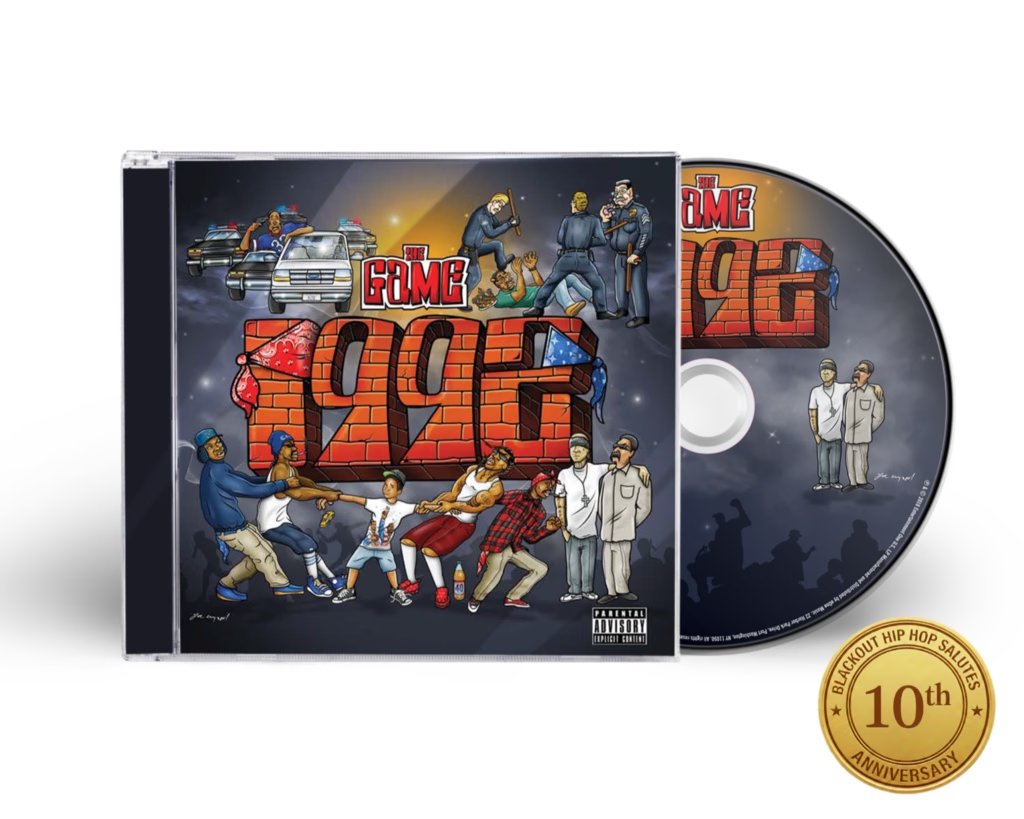
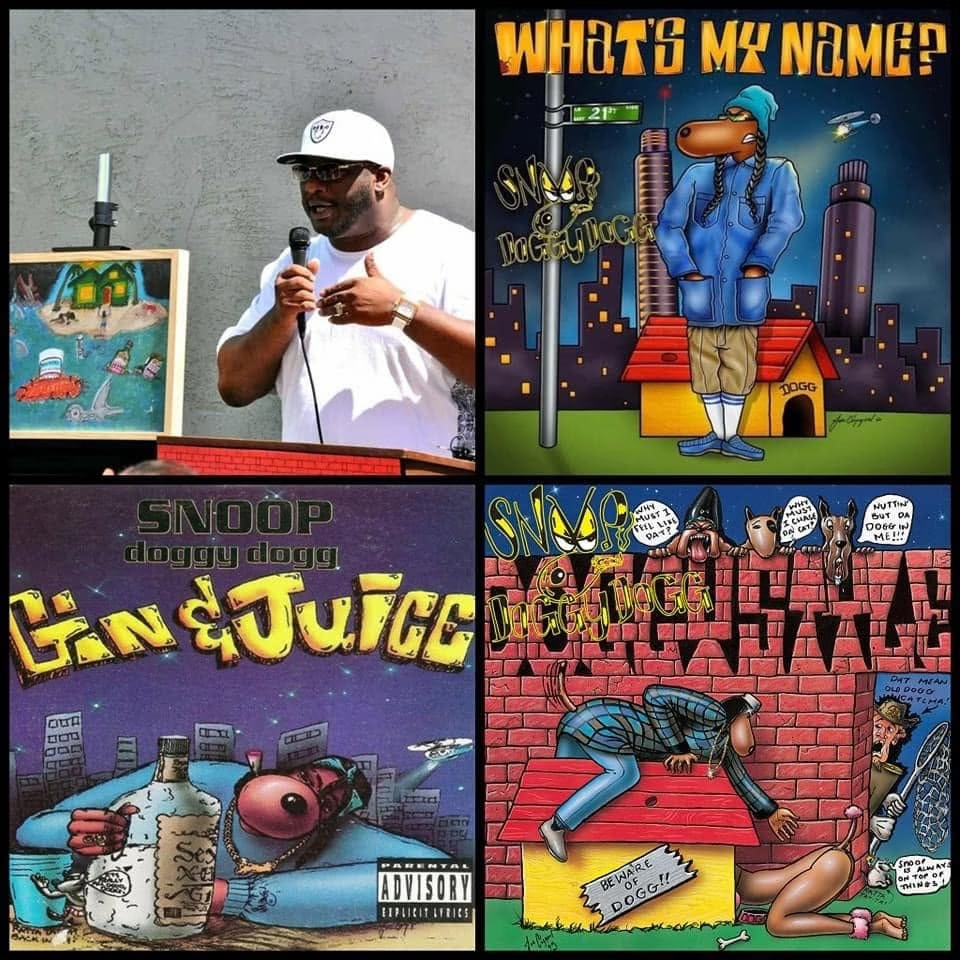
In hip-hop culture, the cover art always tells half the story before you even press play. For “1992,” Game made a brilliant move by bringing in the renowned illustrator Darryl Daniel , better known in the industry as Joe Cool. If that comic-book style looks familiar, it’s because Joe Cool is the genius behind the legendary cover for Snoop Dogg’s 1993 classic “Doggystyle”. The artwork for “1992” is packed with historical details: from the infamous police chase of O.J. Simpson‘s white Ford Bronco, to the riots, and a young Game standing in the middle of it all, perfectly mirroring the album’s thematic direction.
Beef, Diss Tracks, and Commercial Success
It wouldn’t be a true The Game rollout without some controversy and beef. The release of the album was heavily overshadowed in the media by his intense feud with Meek Mill. The track “92 Bars” served as a brutal, six-minute diss with no hook aimed straight at the Philly spitter. While Meek’s response (assisted by Beanie Sigel and Omelly) came quick, Game immediately fired back with the infamous “Pest Control” remix, cementing his reputation as someone you really shouldn’t test on the mic. The clash culminated when The Game shot the music video for “Pest Control” directly on the streets of Brooklyn and Baltimore, proving to everyone he had a valid “hood pass” on the East Coast and wasn’t afraid of confrontation.
As for the actual numbers, “1992” sold around 32,000 equivalent units in its first week (with an impressive 25,000 being pure physical and digital sales) and debuted at a solid No. 4 on the national Billboard 200 chart. While this was a noticeable drop from the 95,000 units his massive “The Documentary 2” project pushed a year prior, this independent release still managed to easily snag the No. 1 spot on the Top R&B/Hip-Hop, Top Rap, and Independent albums charts. The high percentage of “pure” sales proved that Game still held a very loyal, older fanbase that actually buys music.
Conclusion
Today, ten years later, “1992” stands as an objective reminder of Game’s lyrical abilities and incredible longevity in the rap game. Without leaning heavily on a roster of superstar features and passing trends, he delivered a tight, cohesive project that relies more on authentic substance than cheap hype. Real hip-hop heads will always gladly revisit this album when they need that undeniable, gritty West Coast sound full of nostalgia.