Jadakiss: 25 Years of Kiss Tha Game Goodbye
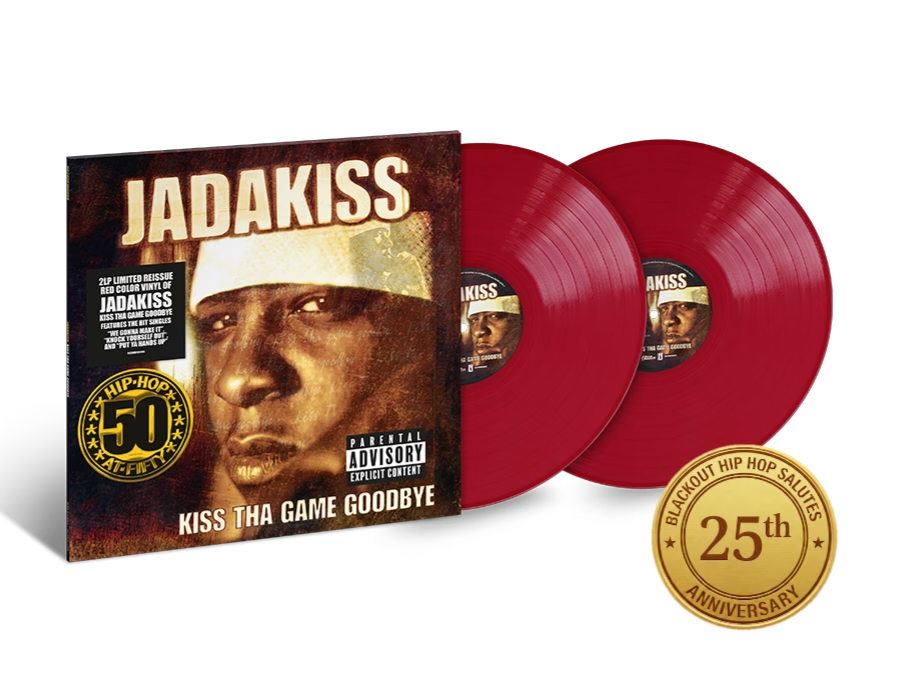
On this day, we mark exactly 25 years since Jason Phillips, better known as Jadakiss, released his debut solo album Kiss Tha Game Goodbye. Dropped on August 7, 2001, this project was one of the most anticipated releases in the East Coast hip-hop community. After years of building a fierce reputation as a standout member of The LOX and destroying street freestyles, Jada finally stepped into the spotlight as a lead solo artist under Ruff Ryders and Interscope Records. Spanning over 76 minutes across 21 tracks and executive produced by Joaquin “Waah” Dean, Darrin Dean, and Jay “Icepick” Jackson, this album served as a major test for his career trajectory.
From Bad Boy to Ruff Ryders: The Path to a Solo Debut
Jadakiss began his career as part of the trio The LOX alongside Styles P and Sheek Louch on Bad Boy Entertainment. While they achieved solid commercial success with their debut Money, Power & Respect, the Yonkers group grew deeply frustrated with the “shiny suit” pop direction pushed by Puff Daddy. Following their public “Let The LOX Go” campaign, they secured a deal with Ruff Ryders, where their hardcore, gritty street sound was fully embraced.
Kiss Tha Game Goodbye was initially scheduled for release in April 2000. However, sample clearance issues and label negotiations delayed the project by more than sixteen months. The expectations were high, as hip-hop fans and critics wanted to see if the street lyricist could hold down a full solo project and transition into a mainstream powerhouse.
Production Powerhouse and Street Anthems
The production credits on the album read like a dream team of early 2000s rap royalty. Beats were crafted by elite producers including The Alchemist, DJ Premier, The Neptunes, Timbaland, Just Blaze, Chucky Thompson, and Ruff Ryders mainstay Swizz Beatz. The lead street single “We Gonna Make It,” featuring Styles P and produced by The Alchemist, immediately became a classic anthem. Built around a sample of Samuel Jonathan Johnson’s “My Music,” the track remains one of the most iconic New York rap anthems of its time. The song famously carried industry drama, as The Alchemist had originally sold the beat to West Coast lyricist Ras Kass for his song “Home Sweet Home“, but due to payment issues with Priority Records, the instrumental was ultimately re-sold to Ruff Ryders.
Beyond that anthem, the album delivered a major club single in “Knock Yourself Out,” featuring Pharrell Williams and produced by The Neptunes, alongside hard-nosed tracks like “Put Ya Hands Up” and the DJ Premier-produced “None of Y’all Betta” featuring The LOX. The guest feature list was equally heavy, including Nas on “Show Discipline,” DMX on “Uh-Hunh!,” Snoop Dogg on “Cruisin’,” plus smooth vocal appearances from Nate Dogg and Carl Thomas.
Commercial Numbers and Initial Critical Pushback
Commercially, the album delivered strong opening results. It debuted at #5 on the US Billboard 200, selling 204,000 copies in its first week, and peaked at #2 on the Top R&B/Hip-Hop Albums chart. By September 2001, it achieved RIAA Gold certification, eventually selling close to 880,000 copies in the US by 2004.
However, music critics at the time were somewhat mixed. The primary criticism centered on the album’s bloated length and the corporate push to balance conflicting genres. Labels wanted crossover pop-R&B records for radio, while core fans expected nothing less than pure, uncompromising boom-bap street rap.
The Legacy 25 Years Later
Looking back 25 years later, Kiss Tha Game Goodbye stands as an essential document of a transitional era in hip-hop history. It captures the exact moment when street-level lyricists were forced to navigate between raw credibility and corporate label expectations. Jadakiss proved beyond doubt that he possessed one of the most distinct voices and razor-sharp punchline abilities in rap history, paving the way for his chart-topping follow-up Kiss of Death in 2004. Today, tracks like “We Gonna Make It” still bang in the speakers, serving as a reminder of a legendary period in New York hip-hop.