40 Years of On Fire: The Birth of the Hip Hop Band
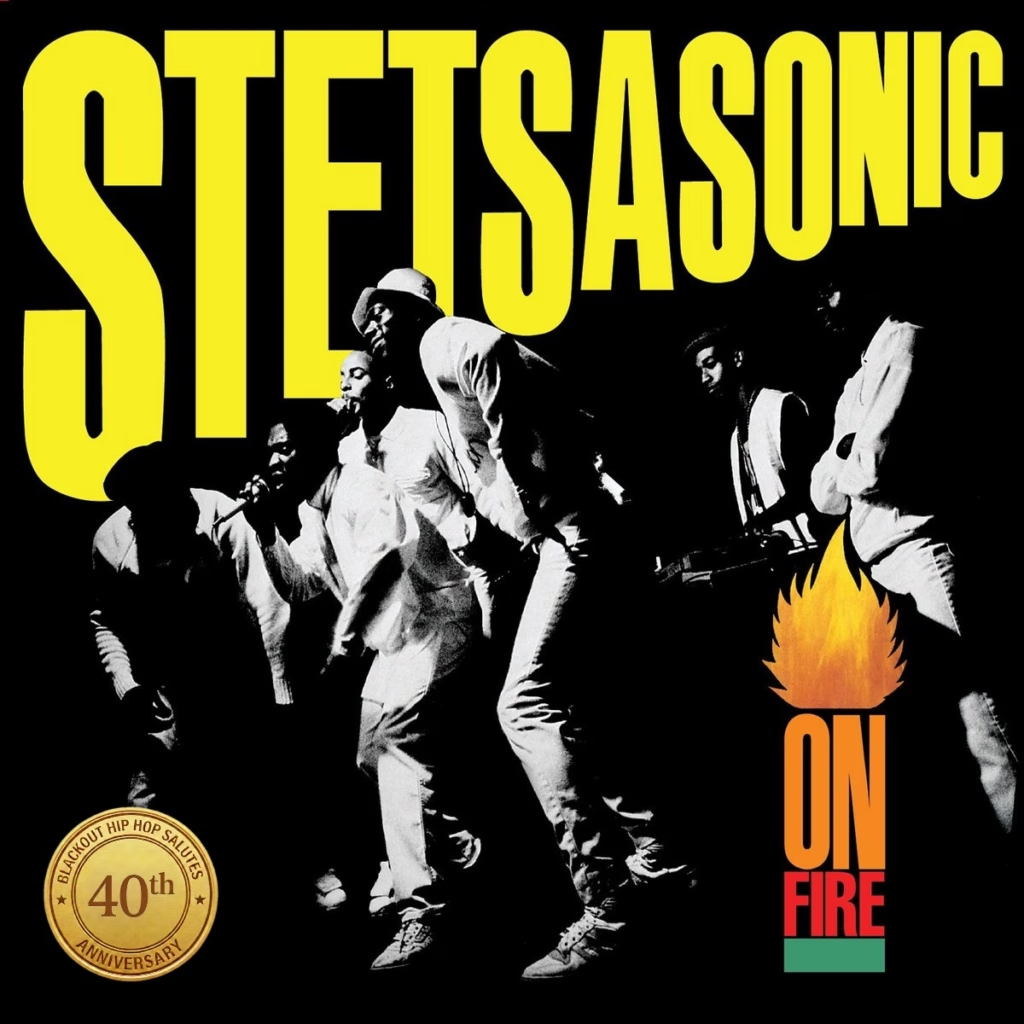
Today, October 15, 2026, hip hop culture celebrates exactly four decades since one of the most pivotal moments in its history. On this day in 1986, the Brooklyn collective Stetsasonic dropped their debut album On Fire on Tommy Boy Records, backed by the distribution muscle of Warner Bros. In an era where the scene was heavily dominated by sparse drum machine productions and early sampling techniques, Stetsasonic brought a completely different flavor to the table. They weren’t just another standard rap group; they were officially the very first hip hop band.
From Street Corners to the “Stetsa Nation”
The roots of this iconic project trace back to the streets of Brooklyn. The crew originally operated as a trio called “The Stetsasonic 3 MC’s,” consisting of Daddy-O, Delite, and Crown Supreme. But Daddy-O had a grander vision. Inspired by Afrika Bambaataa’s Universal Zulu Nation, he conceptualized a local movement dubbed “Stetsa Nation” to recruit raw talent from their neighborhood. Through this organic recruitment process, the group expanded into a powerhouse seven-piece band. The new lineup featured DBC on keyboards, beatbox pioneer Wise (known as The Human Mix Machine), drummer Bobby Simmons, and an incredibly talented teenage DJ named Prince Paul. They also recruited Frukwan to complete the vocal frontline, chosen specifically for a distinct vocal “whine” that perfectly complemented the crew’s aggressive rhyming style.
How Tommy Boy Won the Bid
The road to recording On Fire was paved through the competitive New York radio contest circuit. Managed at the time by Fly Ty, the group entered a rap battle competition hosted by legendary radio personality Mr. Magic. Stetsasonic tore through the competition and secured second place. Interestingly, they were offered the first-place prize—a recording contract with the legendary Sugarhill Records—but flat-out turned it down because they felt Sugarhill’s “disco-rap” aesthetic was outdated. Instead, they gladly accepted the runner-up prize: a deal with the cutting-edge independent label Tommy Boy. It was there that label founder Tom Silverman actually taught the hardcore battle-rappers how to structure a traditional song and craft a catchy “hook”.
The Raw, Sample-Free Sound
What truly makes On Fire a masterpiece is its production methodology. The album features literally zero conventional loops or samples. The group strictly relied on live instrumentation. Former drummer Bobby Simmons later clarified that traditional drum programming was only utilized on two tracks: “My Rhyme” and their pre-album debut single “Just Say Stet“. Everything else was banged out live on instruments and early drum pads. Because the band didn’t have a dedicated guitar player, a teenage Prince Paul would crate-dig for isolated guitar sounds on vinyl and rhythmically scratch them live, effectively turning his turntable into a “rhythm guitar”.
A legendary production anecdote surrounds the title track, “On Fire“. While working on the Roland TR-808 drum machine, Prince Paul accidentally sped up the hi-hat programming, creating a chaotic “mistake”. Realizing that the frantic hi-hats sounded insanely dope, he quickly recorded the pattern onto a cassette tape, as the 808 lacked the ability to save external memory. That rapid-fire cymbal rhythm eerily foreshadowed modern trap and drum and bass beats, with Paul proudly challenging hip hop historians to find anyone manipulating an 808 like that prior to 1986. Thanks to the track’s heavy bottom-end, “On Fire” unexpectedly became a massive anthem in Miami, where artists like Luke Campbell from 2 Live Crew confirmed that local crowds were obsessed with the booming bass.
An Enduring Legacy
While the album peaked at a respectable number 32 on the Billboard Top R&B/Hip-Hop Albums chart, its true impact cannot be quantified by sales numbers alone. In 1998, The Source magazine cemented its classic status by placing On Fire on their prestigious list of the 100 Best Rap Albums of all time. The project laid the direct foundation for the jazz-rap subgenre, proving once and for all that MCs and live musicians could share the same stage with equal authority.
This philosophy deeply inspired future generations; legendary live hip hop acts like The Roots have frequently cited Stetsasonic as the conceptual godfathers of their live-band format. The album also served as a launchpad for incredible solo careers. Prince Paul went on to become one of the most innovative producers on the planet with De La Soul and his Gravediggaz project, while Daddy-O produced certified classics for artists like Audio Two and Queen Latifah. Four decades after it first dropped, On Fire remains an authentic monument to street-level innovation—a record that pushed boundaries and proved that hip hop was a living, breathing musical force.