Erick Sermon: 25 Years of the Landmark Album Music
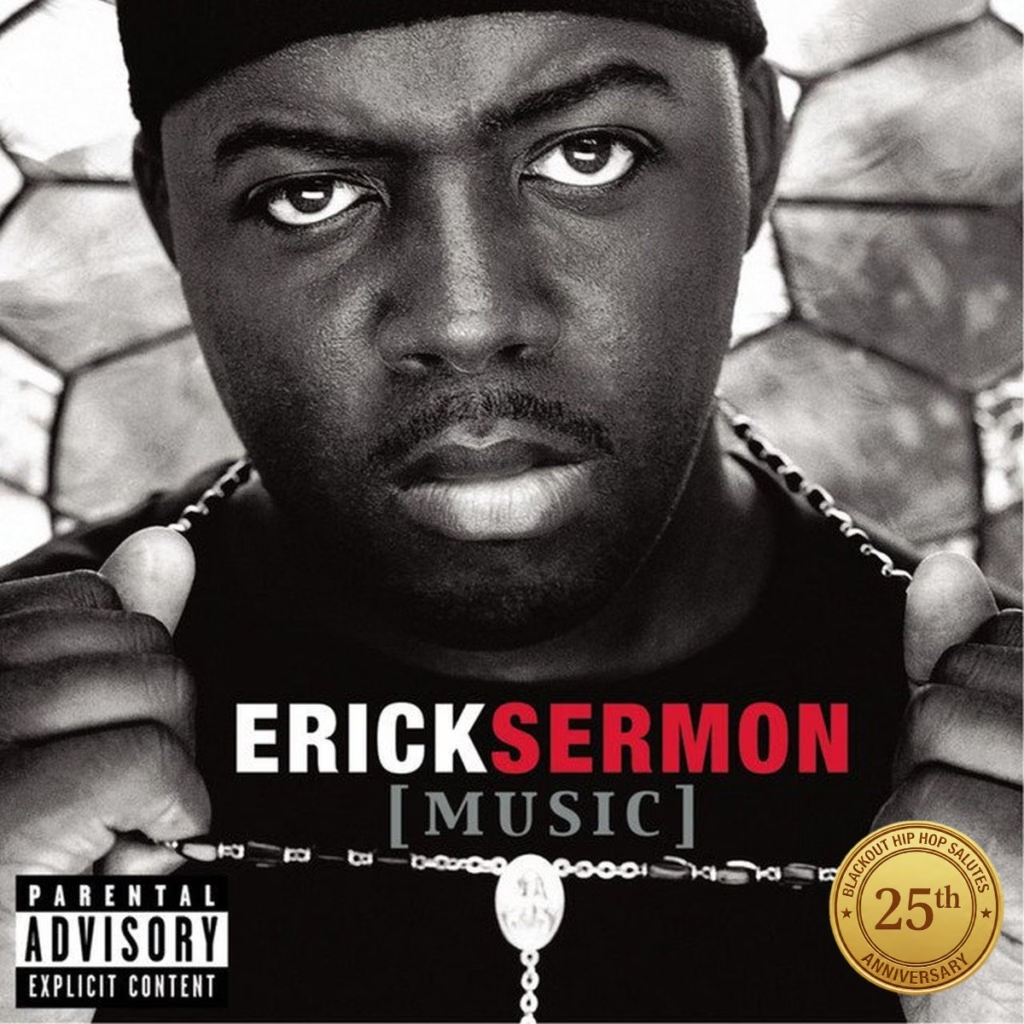
On this day, October 30, 2001, legendary East Coast producer, MC, and hip-hop pioneer Erick Sermon released his fourth official solo studio album, Music. The project marked his major-label debut on J Records, the label founded by iconic music industry visionary Clive Davis. Exactly twenty-five years later, this landmark release endures not only as the undisputed creative and commercial pinnacle of Sermon’s solo recording career, but also as a timeless masterclass in how vintage soul archives and classic P-Funk fundamentals can be seamlessly integrated into modern boom-bap without sacrificing an ounce of street credibility.
A Fresh Chapter on J Records and Discovering Marvin Gaye’s Vault
At the dawn of the new millennium, following renewed creative friction within the legendary duo EPMD — the group that alongside partner PMD and turntablist DJ Scratch defined East Coast hip-hop through foundational classics such as Strictly Business, Unfinished Business, Business as Usual (Blackout hip-hop post), and Business Never Personal — hip-hop purists wondered what musical direction the man known as The Green-Eyed Bandit would explore next. After solid solo ventures including No Pressure (1993), Double or Nothing (1995), and Def Squad Presents Erick Onasis (2000), Sermon accepted a personal invitation from Clive Davis to join his newly launched imprint J Records. Davis recognized Sermon’s dual brilliance as both an elite beatmaker and a charismatic frontline MC, granting him full artistic autonomy and major-label distribution for Def Squad Records.
The turning point for the entire album occurred when Erick Sermon secured rare archival studio tapes featuring unreleased vocal stems from soul immortal Marvin Gaye, recorded in Ostend, Belgium, shortly before his tragic death during the sessions for “Turn On Some Music.” Rather than treating the vocal as an incidental loop, Sermon meticulously arranged a rich, sun-drenched funk rhythm around Gaye’s voice. The title track, „Music”, originally debuted on the soundtrack for the film What’s the Worst That Could Happen? before exploding into a worldwide radio smash. It soared to number 22 on the Billboard Hot 100, reached number two on the Hot R&B/Hip-Hop Songs chart, and earned a prestigious Grammy nomination, creating a magnificent generational bridge between Motown soul and East Coast hip-hop.
The Sonic Mastery of the Funk Lord: Basslines Built for Speakers
From a production perspective, Music is an unmitigated triumph of Sermon’s heavy-bottomed musical doctrine. Erick Sermon produced fifteen of the sixteen songs himself, prioritizing thunderous analog basslines, warm Rhodes chords, and crisp, head-nodding drum programming crafted on his MPC. His mastery of filtered bass frequencies influenced an entire generation of producers—from Dr. Dre on the West Coast to Just Blaze and Kanye West in New York—solidifying his legacy as The Funk Lord. The sole outside production contribution came courtesy of longtime Def Squad family member Rockwilder, who supplied an explosive, kinetic party beat for „It’s Nuttin’”, featuring sharp lyrical contributions from emerging proteges Khari and Daytona.
The album’s second single, the infectious anthem „I’m Hot”, captured Sermon in his most effortlessly charismatic form. Built around a rumbling funk groove and an undeniable vocal chant, Erick Sermon delivered his relaxed, confident cadence, creating a nightclub staple that sounded completely authentic to his hardcore roots while conquering mainstream airwaves.
The record also showcases impressive stylistic range across its tracklist. On „Ain’t No Future…2001”, Sermon pays homage to MC Breed’s 1991 classic, showing that his production chops could adapt West Coast G-funk sensibilities with natural ease. On „Genius E Dub”, featuring labelmate Olivia (prior to her later tenure with G-Unit), he provides a sleek, melodic R&B crossover bounce, while hard-edged cuts like „Come Thru” and the commanding „The Sermon” reinforce his foundational reputation as a rugged East Coast battle lyricist. Interludes throughout the record also touch upon Sermon’s resilience after surviving a near-fatal fall and car crash earlier that year, imbuing the album with a palpable celebratory spirit.
Lyrical Chemistry, Def Squad Loyalty, and All-Star Collaborations
On the microphone, Erick Sermon anchors the album with the easygoing confidence that has characterized his career since 1988. His distinctive, slurred baritone delivery and impeccable sense of timing glide over the heavy basslines with total authority. Sermon has never positioned himself as an overtly technical lyricist; instead, his strength resides in memorable one-liners, unshakeable charisma, and an authentic reverence for the culture that shines through on every verse.
The guest lineup was assembled with deep respect for rap lineage. At the center of the project is his beloved Def Squad collective. On the explosive posse cut „Now Whut’s Up”, Sermon reunites with brothers-in-rhyme Redman and Keith Murray, alongside vocalist Sy Scott, recapturing the electrifying camaraderie that defined their 1998 group album El Niño. Murray also returns to trade verses with Murder Inc. representative Cadillac Tah on the gritty street cut „Up Them Thangs”.
The undisputed lyrical centerpiece of the album, however, is the monumental collaboration „Do-Re-Mi”. For this track, Erick Sermon orchestrated an extraordinary summit between two titans from entirely different regional traditions: Queens legend LL Cool J and Houston storytelling monarch Scarface of the Geto Boys. The collision of these three commanding baritones over a menacing, stomping beat produced one of the most celebrated hardcore collaborations of the early 2000s, with each legend bringing peak lyrical form.
Critical Acclaim, Commercial Impact, and Quarter-Century Legacy
Upon its arrival in late October 2001, Music achieved both commercial triumph and widespread critical accolades. The album entered the Billboard 200 chart at number 33 and climbed to number eight on the Top R&B/Hip-Hop Albums chart, moving hundreds of thousands of copies to earn official Gold certification from the RIAA. The success of the project reestablished Sermon as a premier force on the charts, paving the way for his successful 2002 follow-up LP React, which spawned another massive worldwide anthem alongside Redman.
Critical consensus celebrated Sermon’s focused sonic architecture, praising his ability to deliver a cohesive record with zero filler that resonated equally in car stereos, street corners, and clubs. Twenty-five years after its debut, Music endures as an essential cornerstone of early-2000s rap history, cementing Erick Sermon as hip-hop’s eternal Funk Lord and a timeless architect of groove.