35 Years of the Valley: Terminator X & The Jeep Beets Power
35 Years of “Terminator X & the Valley of the Jeep Beets”: A Retrospective of the Sonic Assault
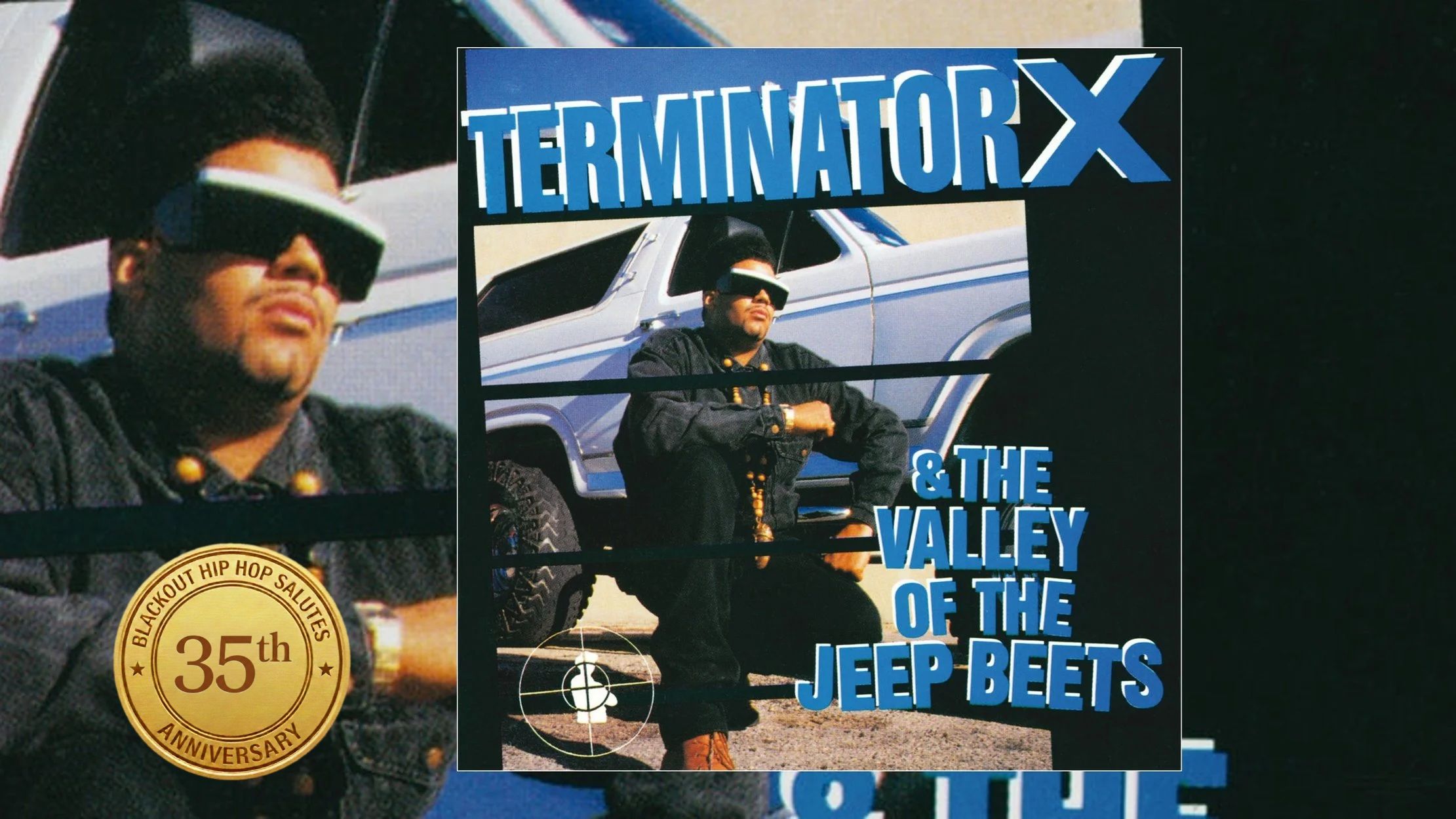
Today, May 7, 2026, marks exactly three and a half decades since Norman Rogers, better known to the world as Terminator X, unleashed his debut solo album, Terminator X & the Valley of the Jeep Beets. When this project hit the shelves in 1991 under Columbia and RAL (Rush Associated Labels), hip-hop was in the midst of its most creative transformation. DJs were still regarded as the backbone of the culture, and Terminator X, the “silent giant” of Public Enemy, decided to speak the only way he knew how – through the wheels of steel.
The “Valley” Concept and Jeep Culture
The album’s title was far from a random play on words. In the early ’90s, the Jeep (especially models like the Wrangler and Cherokee) became the ultimate status symbol in urban communities across America. But a Jeep wasn’t just a vehicle; it was a mobile soundstage. Terminator X recognized this and crafted an album specifically optimized for those massive, bass-heavy aftermarket systems. These were the famous “Jeep Beets” (a deliberate pun on beats).
The album is structured to emulate an underground radio broadcast heard late at night while cruising through the city. Hosts Jeff “Air” Foss and Wildman Steve, veterans of New York college stations WRHU and WBAU, guided listeners through a dense fog of samples and scratching, giving the record that raw “underground” vibe that is nearly impossible to replicate today.
The “Assault Technician” at Work
While the Bomb Squad (Hank and Keith Shocklee, Eric “Vietnam” Sadler) supervised and reduced the production, this was Norman’s show. In the liner notes, Chuck D famously described him as an “Assault Technician” – a man who attacks music in his own distinct way. Indeed, the album bursts with energy. The opening track “Buck Whylin’” is arguably the record’s strongest moment. Featuring fiery vocals from Chuck D and the recording debut of activist Sister Souljah, the track redefined what hardcore hip-hop meant. Sampling the gritty guitar riffs of the punk band Black Flag (“Rise Above”) proved that Terminator had no limits when digging for the perfect wax.
On the other hand, we had “Homey Don’t Play Dat,” the first single which eventually reached number one on the Billboard Hot Rap Singles chart. The track utilized a contagious James Brown loop and a title borrowed from the then-popular In Living Color sketch. The female duo Bonnie ‘N’ Clyde delivered a serviceable performance, but the true star was Terminator’s beat—thick, heavy, and ready to push any subwoofer to its limits.
Balancing Talent and Experimentation
Critics at the time were somewhat divided. While Rolling Stone gave it a high rating, praising its innovation, publications like Trouser Press argued that the guest emcees (such as Section 8 or The Interrogators) were merely average talents given a platform by the Terminator. However, from today’s perspective, it’s precisely that mix of anonymous voices that gave the album its authenticity. Songs like “Juvenile Delinquintz” tackled serious social issues surrounding education, while “Run That Go-Power Thang” by Spacey B. Experience was a deep dive into ’70s psychedelic soul that would still sound fresh today.
Technical Precision and Legacy
Technically, Terminator X cemented his status as a master of the “transformer” scratch on this album. His ability to use the turntable as a percussive, and even melodic instrument, was years ahead of its time. On instrumentals like “Vendetta… The Big Getback” and “High Priest Of Turbulence,” he literally “speaks with his hands.”
Following this release, Terminator’s career continued upward until 1994, when a serious motorcycle accident slowed his momentum. Although he released a solid follow-up, Super Bad, he eventually moved away from the industry. In 1999, he officially left Public Enemy, trading his turntables for an ostrich farm in North Carolina, where he still finds peace today.
This album remains a monument to an era where the DJ was the leader and bass was the only law. The Valley of the Jeep Beets might not be the most commercial album of the ’90s, but it is undoubtedly one of those that defined the sonic architecture of a generation. If you’re planning a drive today, you know exactly what needs to be pumping through your speakers.