35 Years of N.W.A’s Efil4zaggin: A Dark G-Funk Blueprint
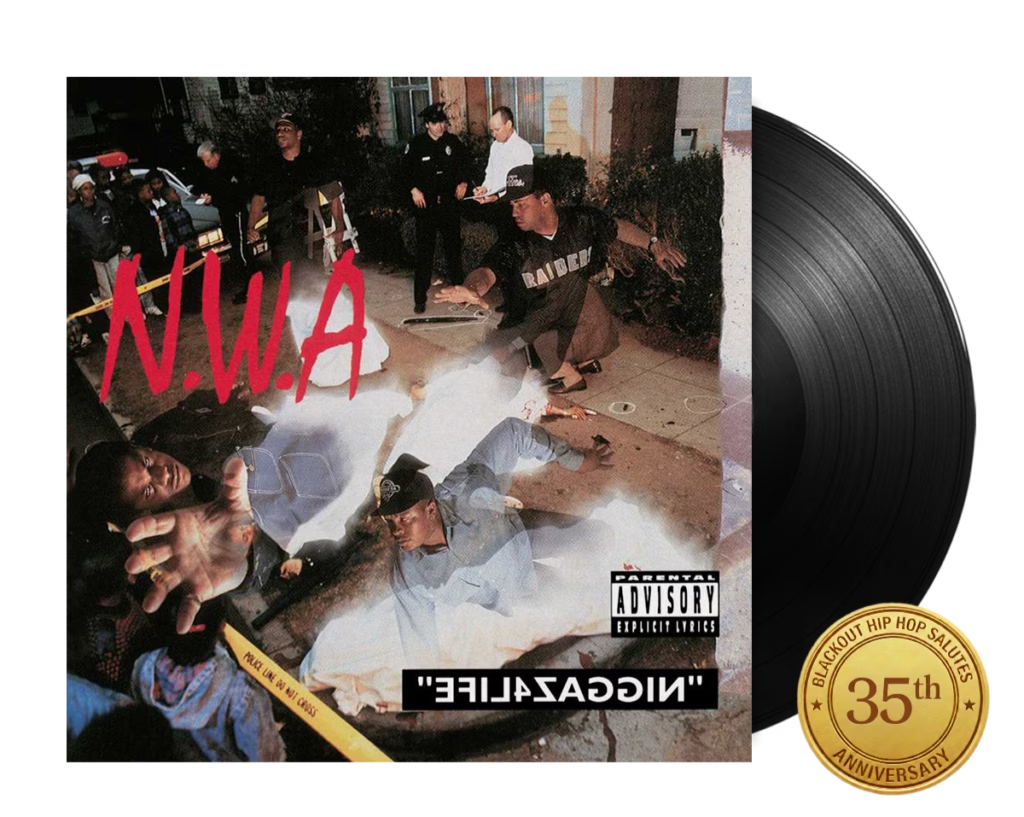
Thirty-Five Years of Sonic Revolution: How N.W.A’s “Efil4zaggin” Rewrote the Rulebook
Today marks exactly 35 years since the second and final studio album of the legendary group N.W.A, Efil4zaggin (stylized backwards as Niggaz4Life), was unleashed upon the world. Released on May 28, 1991, this album remains one of the most controversial, yet productionally significant records in hip-hop history. After Ice Cube left the camp in late 1989 due to royalty disputes, many heads doubted if the remaining four-piece could deliver heat that would match the legendary debut Straight Outta Compton. However, Dr. Dre, MC Ren, Eazy-E, and DJ Yella locked themselves in the studio, determined to prove that they were still “the world’s most dangerous group,” creating an LP that reshaped the entire music landscape.
The SoundScan Revolution and the Climb to the Top
The release of Efil4zaggin coincided with the debut of the Nielsen SoundScan system for electronic sales tracking, which completely disrupted the music industry. Until that point, Billboard’s charts relied on subjective retail reports and phone surveys, which often kept hardcore rap and heavy metal off the mainstream radar. With SoundScan, real point-of-sale data finally came to light.
The album debuted at number two and, by its second week on the charts (on June 22, 1991), rocketed to number one on the Billboard 200, selling 154,000 copies. It was the first hardcore rap album in history to claim the top spot, achieving this without radio play or MTV video rotation. This commercial breakthrough revealed the massive crossover appeal of street rap among suburban white youth, forcing major labels to start pumping millions of dollars into hip-hop acts.
Lyrical Warfare and the Architects in the Shadows
The departure of Ice Cube left a massive lyrical void, shifting the entire writing load onto MC Ren and affiliate member The D.O.C.. However, the situation was highly complicated as The D.O.C. had recently survived a horrific car accident that permanently damaged his vocal cords and stripped him of his voice. Unable to spit his own bars, he became a creative director and ghostwriter from the shadows.
The D.O.C. developed a custom rhythmic system—a visual code mapping out the flow, cadence, and timing of his lyrics, which helped Dr. Dre and Eazy-E deliver his verses with precision. Under his mentorship, Eazy-E’s flow on this project was notably more fluid, faster, and more confident than on his previous records. MC Ren stepped up as the primary emcee, delivering aggressive, rapid-fire bars without holding back.
However, the thematic focus of the album shifted radically. While the debut focused on political themes and police brutality, Efil4zaggin turned toward extreme shock-rap, early horrorcore aesthetics, and raw misogyny, drawing serious heat from the PMRC and mainstream critics. The album also served as a launchpad for shots at their former partner. In tracks like “Message to B.A.” and “Real Niggaz“, they attacked Ice Cube’s authenticity. Cube responded in brutal fashion with “No Vaseline” that fall, but N.W.A never fired back, as the group disbanded shortly after the album’s peak due to Dre’s dissatisfaction with financial distribution at Ruthless Records.
Sonic Redirection and Live Instrumentation
While the lyrics faced intense backlash, the production crafted by Dr. Dre and DJ Yella was pure sonic wizardry that paved the way for the G-Funk era. Dre made the bold move to steer away from standard crate-digging samples and bring live instruments into the studio. Bassist Colin Wolfe and guitarist Mike “Crazy Neck” Sims were brought in to translate Dre’s ideas into actual musical arrangements.
The process was highly collaborative: Wolfe and Sims would listen to vintage funk and soul records, and then play a similar groove live, altering a few notes to create a fresh loop and avoid legal action. This transition birthed a warmer, slower, and multi-layered sound featuring heavy basslines and melodic synthesizers, redefining the West Coast aesthetic.
Yet, this triumph also came with a quiet dispute over who actually invented the sound. Gregory Hutchinson, better known as Cold 187um of Above the Law, claims that he pioneered the term and the sound of G-Funk. Above the Law was signed to Ruthless Records, and Dre co-produced their debut. Cold 187um played Dre rough cuts from their upcoming Black Mafia Life album, which blended P-Funk samples with live synthesizers. The striking similarities suggest that Dre adapted this framework, perfecting it for his landmark solo debut The Chronic while Above the Law’s album was stalled due to legal delays.
The Transatlantic Obscenity Seizure
The raw nature of Efil4zaggin sparked intense moral panic, but the legal drama peaked across the Atlantic in the UK. In June 1991, Scotland Yard’s Obscene Publications Squad raided PolyGram’s distribution facility, seizing over twelve thousand copies of the album under the Obscene Publications Act. Fearing prosecution, major British retailers pulled the album from shelves.
Island Records decided to fight the charges in court, defending the album’s artistic merit and freedom of expression. Late that year, the court ruled in favor of the label, resulting in an acquittal that stood as a monumental victory for hip-hop and set a historic legal precedent against the censorship of popular music in the UK.
Re-evaluation 35 Years Later
Thirty-five years later, Efil4zaggin is no longer viewed through the lens of moral panic, but as a masterpiece of hip-hop engineering. Even though the graphic lyrics on the second half of the record remain hard to stomach, the sheer sonic power is undeniable. It stands as a monument to a transitional moment when rap transitioned from an underground phenomenon into a dominant commercial and cultural force. With all its flaws and strokes of genius, N.W.A’s final chapter remains essential listening for anyone trying to trace the roots of the modern West Coast sound.