30 Years of Basquiat: Streets, Canvas & Hip-Hop
Three Decades Since the Premiere: A Cinematic Monument to an Era On this day, August…
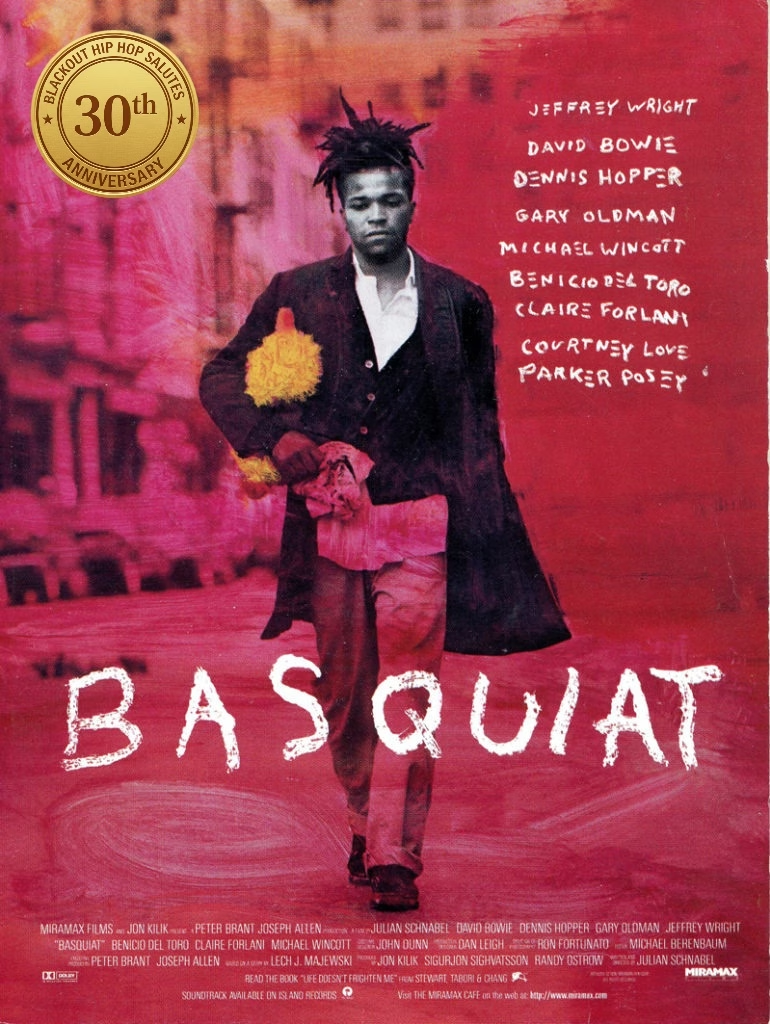
Three Decades Since the Premiere: A Cinematic Monument to an Era
On this day, August 9, exactly 30 years have passed since the biographical drama Basquiat hit theaters across the United States via Miramax Films. Directed by his contemporary and renowned painter Julian Schnabel, the film holds a unique place in cinema history as the first feature-length biopic about an American painter written and directed by a fellow artist from the same scene.
Starring Jeffrey Wright in his breakout lead role, the film delivered a deeply authentic and subtle performance. The stellar ensemble cast included David Bowie playing Andy Warhol, Gary Oldman, Benicio del Toro, Dennis Hopper, and Michael Wincott. Operating on a modest $3.3 million budget, the picture bypassed standard Hollywood biopic tropes in favor of a sensory, atmospheric dive into the 1980s Downtown New York art world—a time when the lines between street culture, music, and elite galleries were just beginning to blur.
SAMO©, the Streets, and the Early Hip-Hop Impulse
To truly understand Jean-Michel Basquiat’s weight within hip-hop culture, you have to look back at Lower Manhattan in the late 1970s and early 1980s. Before becoming a darling of high-end art dealers, Basquiat operated under the street tag SAMO© (“Same Old Shit“) alongside Al Diaz. Their graffiti wasn’t the traditional letter-style bombing done by B-boys and writers in the Bronx or Brooklyn, but rather cryptic, poetic, and socially conscious aphorisms sprayed on city walls.
Yet, that work shared the exact same core hip-hop ethos: claiming public space, speaking out against systemic neglect, and displaying raw street authenticity. Basquiat seamlessly translated that raw sidewalk energy onto canvas. Fusing human anatomy, African symbols, jazz references, and street grit, he created a visual syntax that mirrored what DJs and MCs were doing musically—sampling fragmented pieces of their environment and rebuilding them into a brand-new narrative.
“Beat Bop” and a Lasting Footprint in Rap History
For many film fans, it comes as a surprise that Basquiat’s connection to hip-hop wasn’t merely stylistic—he was a direct participant in early rap history. In 1983, Basquiat produced, arranged, and bankrolled the legendary single “Beat Bop” by MC duo Rammellzee and K-Rob. Pressed on his own Tartown Record Co. label in a limited run of roughly 500 test copies featuring his own black-and-white artwork, “Beat Bop” is widely considered one of the ultimate holy grails in vinyl culture today.
Clocking in at over ten minutes, the track delivered a sparse, experimental rhythm underpinned by a hypnotic bassline, violin riffs, and abstract stream-of-consciousness banter. The record pushed far past the commercial rap formulas of its era, and original copies with his artwork regularly fetch thousands of dollars on the collectors’ market.
On-Screen Portrayal: Navigating Street Roots and High Art
Schnabel’s 1996 film captures that precise tension—moving from sleeping in a cardboard box in Tompkins Square Park to international art stardom. The movie refrains from sugarcoating the reality; it highlights how art dealers and collectors approached a young Black street artist, frequently exoticizing him through the lens of a passing trend.
Wright’s performance shines through its restraint. He doesn’t play Basquiat as an outspoken rap star, but as a reflective observer and intellectual who absorbed street noise, club culture, and jazz records while painting in his studio. The film serves as a reminder that the downtown scene was an organic melting pot where punk, graffiti, early rap, and fine art shared the exact same lofts and energy.
The Three-Point Crown and Modern Rap Royalty
The most iconic symbol in Basquiat’s body of work—the three-point crown—carried a clear political statement: the elevation and coronation of Black figures who had been historically overlooked, from heavyweight boxing legends to jazz masters. Basquiat frequently placed the crown above his own signature as well, asserting his intellectual sovereignty in an industry that constantly questioned his place.
Thirty years after the film’s release, that crown motif remains a central emblem in rap culture. Top-tier lyricists like Jay-Z, Kendrick Lamar, Kanye West, and Nas consistently invoke Basquiat’s name and visual motifs in their music. On tracks like “Picasso Baby” and “Most Kingz“, Jay-Z references Basquiat not just as a flex of wealth, but as a symbol of artistic authority, endurance, and reclaiming Black cultural capital.
Three decades after Schnabel’s biopic arrived in theaters, Basquiat stands as a vital chronicle of how street-level creativity reshaped global visual culture, proving that a young artist with a spray can and a paintbrush could lay down a permanent blueprint for generations of hip-hop creators.