25 Years of Sticky Fingaz’s Black Trash LP
Introduction: When Rap Meets the Silver Screen
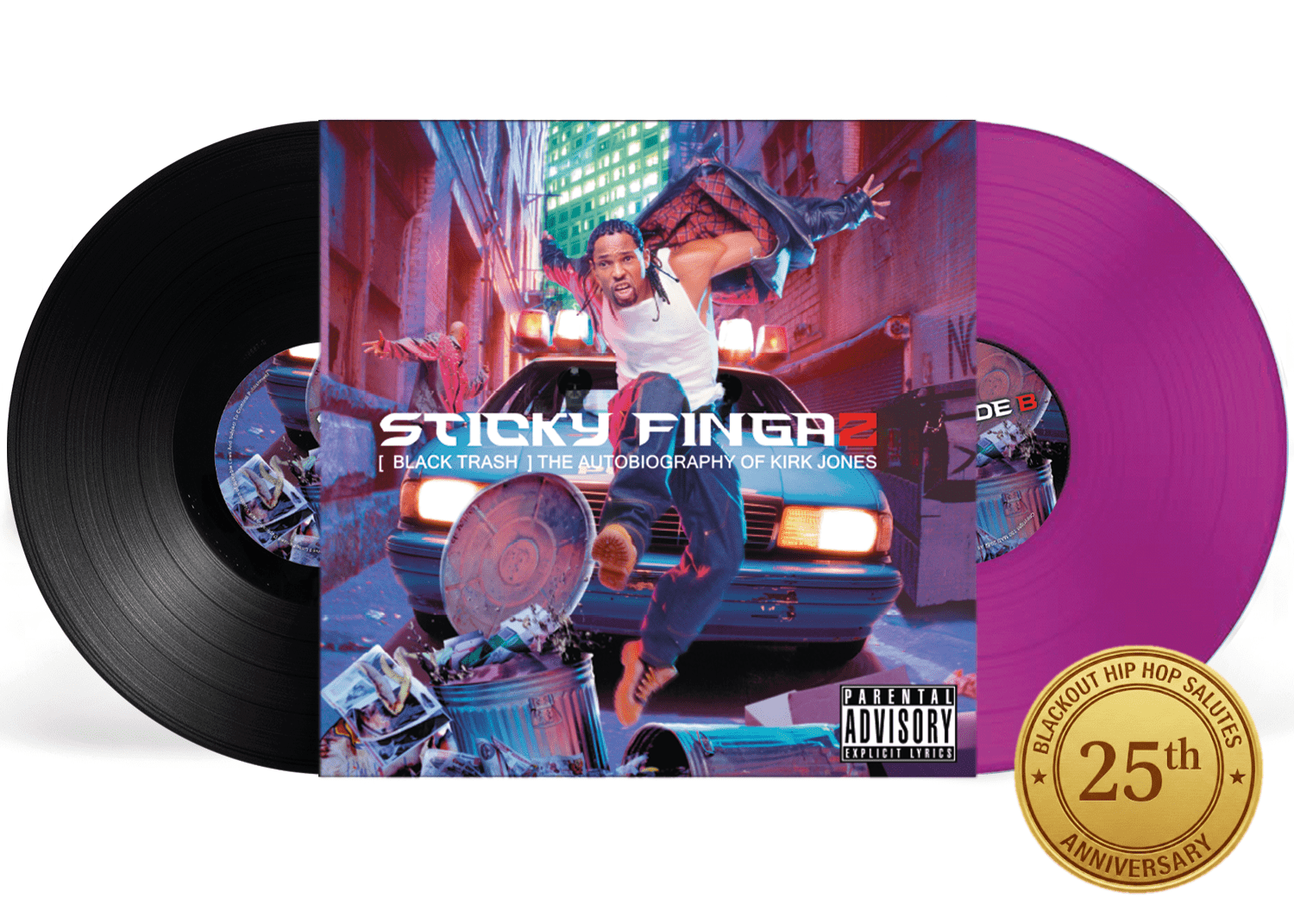
Exactly a quarter of a century has passed since Kirk Jones, better known as Sticky Fingaz from the iconic Brooklyn group Onyx, decided to give us his life story—well, a highly fictionalized and deeply dramatic version of it. On this very day, May 22, 2001, his debut solo album Black Trash: The Autobiography of Kirk Jones was officially released to the world. While it didn’t completely blow up the charts upon arrival, the project has steadily earned a legendary cult-classic status among true hip-hop heads. Unlike standard releases of that era that chased cheap club singles, Sticky crafted a sonic movie—a masterpiece in the form of a “hip-hopera” that, 25 years later, still sounds incredibly fresh, chaotic, and unmatched in its originality.
The Genesis: Escaping the Grip of Def Jam
The story behind the creation of this album is a movie in its own right and perfectly illustrates how the music industry operated at the turn of the millennium. Back in 1998, Sticky Fingaz was planning his solo debut under Def Jam, the label that had released Onyx’s multi-platinum records. However, the label only offered him a budget of $250,000, which Sticky felt was insulting for his cinematic vision. To free himself from the contract, he pulled a radical move: he filed for bankruptcy, packed his bags, and headed to Los Angeles to link up with Dr. Dre.
Out in Cali, Dre and Sticky hatched the idea of recording an album structured entirely like a movie script. The very first song they recorded was “Remember Me?“, which was initially intended for Dre’s 2001 album but eventually landed on Eminem‘s landmark The Marshall Mathers LP. Dre offered Sticky a $500,000 deal on Aftermath, but when Sticky returned to New York to help his close affiliate X1 secure a deal with Universal Records, the executives there offered him a whopping $800,000. Sticky signed with Universal and used the $300,000 difference to buy his mother the first house she ever owned. However, sample clearance issues, legal delays, and a 34-track advanced version leaking on the streets in November 2000 pushed the release date from Halloween 2000 to May 2001.
Narrative Architecture: The Life and Death of Kirk Jones
Black Trash follows the fictional protagonist Kirk Jones (Sticky’s actual government name), a convicted felon newly released from prison who struggles to adjust to life on the outside. The narrative is split into distinct dramatic phases that connect street violence, paranoia, and deep moral regret. Throughout the album, the plot is driven by intense skits and a recurring “conscience” interlude featuring actor Omar Epps.
Following the aggressive, high-energy opening tracks like “Come On” and “My Dogz Iz My Gunz” (which utilizes a brilliant dog-to-gun metaphor similar to Nas‘ “I Gave You Power“) , the album moves into sharp social satire like “Ghetto” featuring Petey Pablo and the highly provocative “What If I Was White“. Interestingly, Fred Durst of Limp Bizkit was originally supposed to feature on the latter track, but backed out after reading the controversial lyrics, paving the way for Eminem to deliver the infectious hook and intro.
The absolute crown jewel of the album is “State vs. Kirk Jones,” a brilliant track that reconstructs a full courtroom murder trial. It features one of the most creative guest lineups in rap history: Rah Digga plays the prosecutor, Canibus acts as the defense attorney, Redman plays the judge, while Superb, Scarred 4 Life, and Guess Who represent the jury and witnesses. Kirk Jones remains completely silent throughout the trial, emphasizing his helplessness in the face of the system. After a brief attempt at redemption on soul-stirring tracks like “Baby Brother” (featuring Dave Hollister) and “Sister I’m Sorry” (featuring Choclatt) , Kirk’s story ends tragically on “Wonderful World,” where he bleeds out on the street. Louis Armstrong’s estate only allowed the sample on the condition that Sticky sang the original positive lyrics word-for-word, resulting in a hauntingly dark and ironic contrast.
The Soundscape: Beats and Raw Energy
The sonic backdrop of the album is a stellar balance of dusty street loops and warm soul samples that establish a tense, theatrical atmosphere. Production duties were handled by some of the most prominent producers of the era—DJ Scratch, Rockwilder, Nottz, and Damon Elliott. DJ Scratch excels on the lead single “Get It Up” and the emotional “Baby Brother” , while Nottz constructs a perfect, slow-burning legal drama beat for the courtroom scene.
However, the album has a couple of minor missteps. “Money Talks” featuring Raekwon suffers from Rockwilder’s percussion, which sounds a bit dated for 2001, and heads have always criticized that the Wu-Tang legend was relegated to hook-duty instead of laying down a grimey storytelling verse. Additionally, it’s a shame that two tracks recorded with heavy metal icons Slipknot (including a metal version of “Oh My God” with Corey Taylor) were left on the cutting room floor, as they surely would have pushed the album’s unhinged energy even further.
Commercial Deficit and a Timeless Legacy
From a commercial standpoint, Black Trash didn’t reach the masses. It debuted at No. 44 on the Billboard 200 and No. 10 on the Top R&B/Hip-Hop Albums chart, primarily because Universal Records simply had no idea how to market such a dark, complex concept that lacked typical radio singles. Two years later, Sticky dropped his sophomore effort, Decade: “…but wait it gets worse”, which failed to replicate the artistic heights of his debut.
Yet, the artistic vision started here found its ultimate realization in 2009, when Sticky Fingaz wrote, directed, and starred in A Day in the Life—a groundbreaking rap opera film where every single line of dialogue is delivered in rhyme. It was basically Kirk Jones on steroids, proving that this misunderstood genius was years ahead of his peers. A quarter of a century later, Black Trash remains a monument of creative ambition, reminding us of an era when artists were brave enough to risk everything for their art.