20 Years of Busta Rhymes’ “The Big Bang”
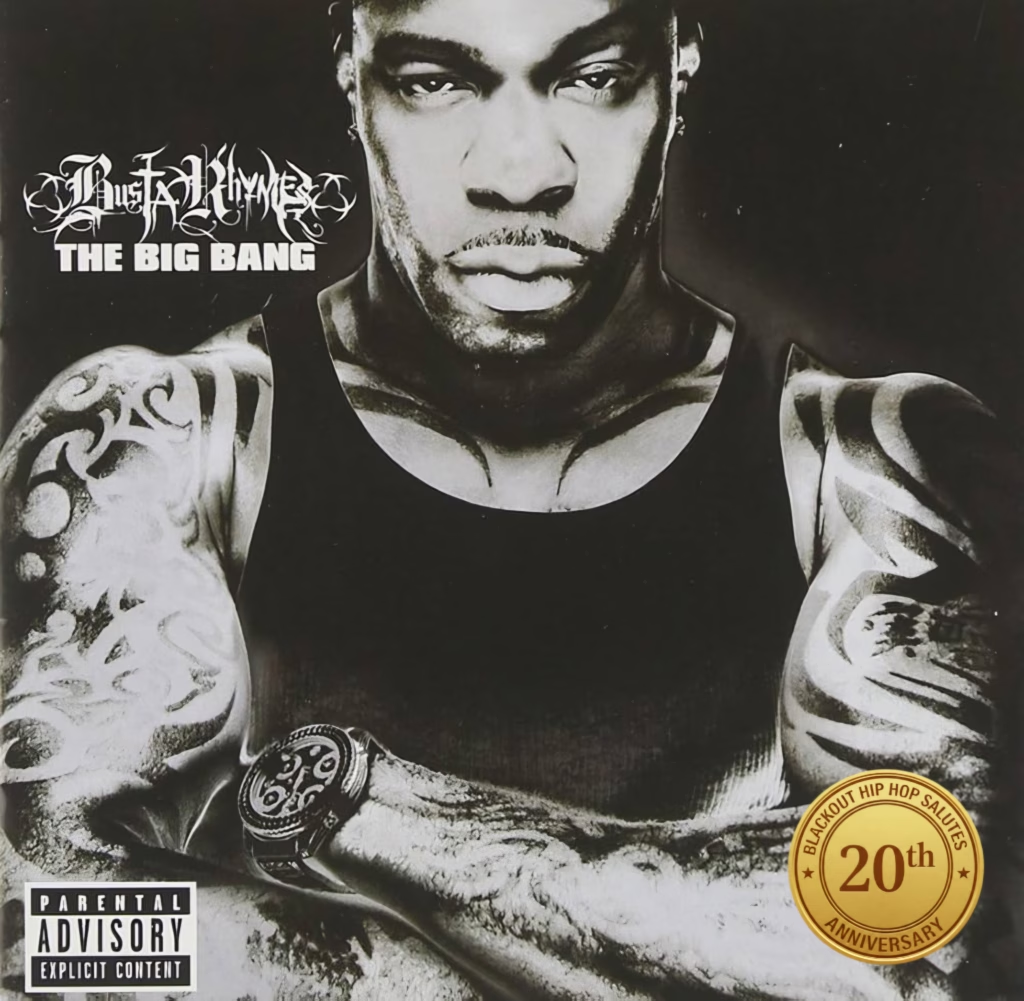
Twenty years ago, on June 13, 2006, Busta Rhymes dropped his highly anticipated seventh studio album, The Big Bang. Released under Dr. Dre’s Aftermath Entertainment, Flipmode, and Interscope Records, the project marked a defining but highly controversial milestone in the Brooklyn MC’s legendary career. Today, we look back at an album that offered both Busta’s commercial peak and a highly polarizing era of his musical journey.
A New Aesthetic and Aftermath Era
Before The Big Bang, Busta was famous for wild outfits, colorful videos, and his signature dreadlocks. His signing to Aftermath in 2004 triggered a massive aesthetic reboot. In November 2005, during a shoot at Cory Rooney’s barbershop on MTV’s The Shop, Busta cut his iconic dreads, transitioning to a short Caesar haircut and a muscular, street-centric physique. He swapped his animated “Dungeon Dragon” persona to prove he could stand next to street-rap heavyweights.
Sonic Architecture and Standout Tracks
Executive produced by Dr. Dre and Busta, the record boasted an elite roster of beatmakers. Swizz Beatz provided the minimalistic lead single “Touch It“, which brilliantly flipped Daft Punk’s “Technologic“. DJ Scratch delivered a timeless boom-bap anthem with “New York Shit“, honoring the city’s classic roots.
The production became cinematic on deeper cuts. On the Dr. Dre-produced “Legend of the Fall Offs“, Busta spat dark, horrorcore verses over a chilling beat constructed around the sounds of a shovel digging dirt and crickets chirping. J Dilla‘s “You Can’t Hold the Torch” reunited Busta and Q-Tip over a soulful Minnie Riperton “Inside My Love” sample.
Behind-the-Scenes Turmoil
The Big Bang was heavily shadowed by tragedies and leaks. The planned lead single, “I’ll Hurt You” featuring Eminem (produced by Scott Storch and Dr. Dre), leaked in 2005 and was completely scrapped.
More tragically, during the February 2006 video shoot for the “Touch It” remix, Busta’s personal bodyguard Israel Ramirez was fatally shot while protecting the rapper’s jewelry. The music video shoot was shut down, the murder remained unsolved, and it brought intense police scrutiny to the project. By 2008, internal conflicts with Interscope head Jimmy Iovine over delays led to Busta’s departure from Aftermath.
Commercial Triumph and Divided Critics
Commercially, it was a massive win. The album debuted at number one on the US Billboard 200, selling 209,000 copies in its first week—making it Busta’s first and only solo #1 album. Yet, critics were heavily divided. While some praised Busta’s maturity, Pitchfork’s Sean Fennessey panned it with a brutal 2.4/10, arguing Dre’s slow tempo beats suffocated Busta’s natural energy.
Two decades later, The Big Bang stands as a unique, high-budget street experiment that captured a rap titan trying to reinvent his legacy.