35 Years of Kool Moe Dee’s “Funke, Funke Wisdom”
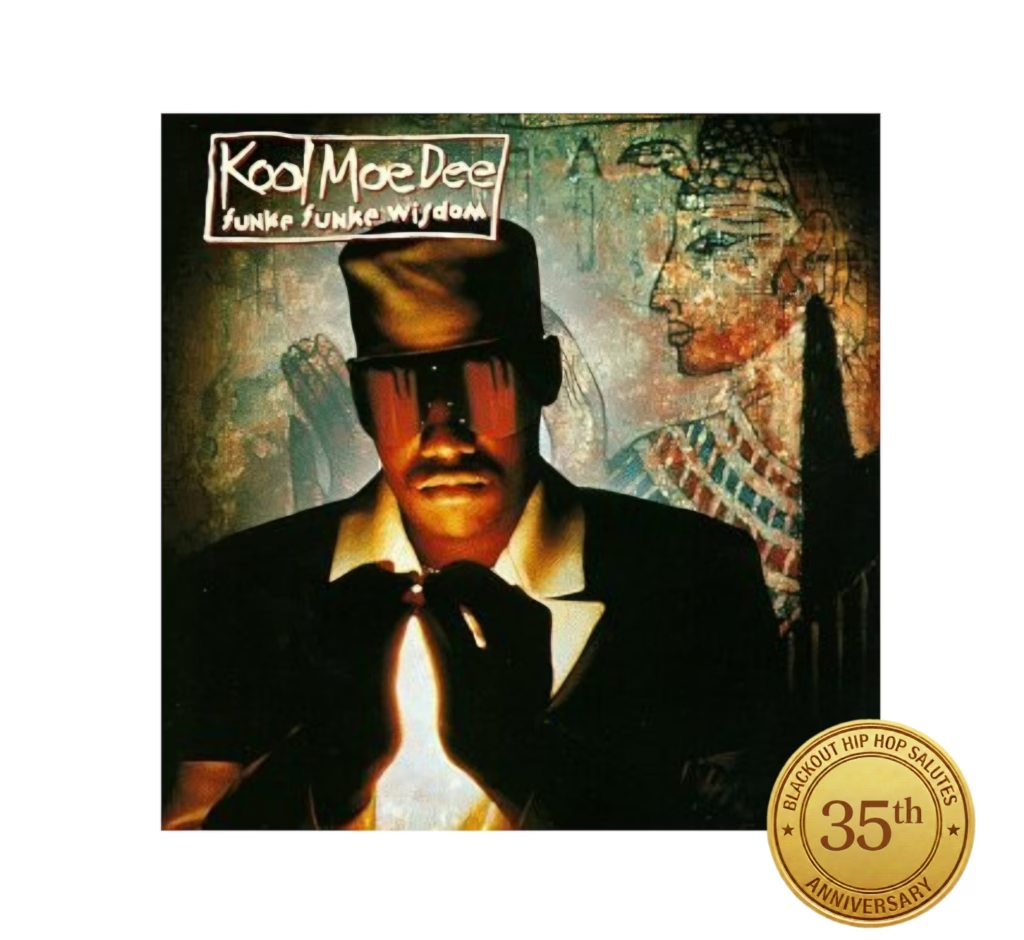
When looking back at hip-hop history, the transition period between the late 1980s and early 1990s was a true battle for survival for old-school pioneers. One of the most striking examples of this artistic and commercial crossroads is Mohandas DeWese, better known as Kool Moe Dee. On this day, exactly 35 years ago—on June 11, 1991—under the wing of Jive Records and RCA Records, he released his fourth studio album, Funke, Funke Wisdom. While this project has historically been noted as the beginning of his commercial decline, it stands today as a fascinating document of an era where conscious lyricism, New Jack Swing rhythms, and street energy collided.
A Formula from the Streets: Blending the Dance and the Message
Following the commercial disappointment of his 1990 EP God Made Me Funkee, Kool Moe Dee found himself in a tough spot. The rules of hip-hop were changing rapidly. The golden era brought the rise of aggressive gangsta rap and highly complex lyrical schemes of the new school, leaving the didactic, old-school style struggling to connect with younger listeners. To stay relevant, Moe Dee did something unusual for a veteran: he hit the pavement, asking young rap fans on the streets what they found hot.
The feedback was clear: listeners wanted heavy, danceable rhythms. He adjusted his approach, aiming to entertain first and use funk as a vessel to deliver his trademark serious messages. The sonic foundation of Funke, Funke Wisdom leaned heavily on funk staples like Sly and the Family Stone, Parliament, and James Brown, blended with the radio-friendly New Jack Swing beats dominating the charts at the time.
Production Architecture and Teddy Riley
To capture this sound, Moe Dee enlists a production team led by the legendary Teddy Riley, who already had a proven track record with him on hits like “Go See the Doctor“. Alongside Riley, production credits featured Dale Hogan, Keith Spencer, and Kool Moe Dee himself.
Riley’s signature fingerprints are most evident on the title track “Funke Wisdom,” where New Jack Swing grooves mesh with Moe Dee’s verses tackling the pitfalls of chasing money, the role of women in community progress, and the need for street-smart “funke wisdom” alongside book smarts. The lead single, “How Kool Can One Blackman Be,” brought a smoother, jazz-tinged groove, utilizing the same James Brown “Papa Don’t Take No Mess” loop that Biz Markie famously flipped for “Vapors”. Moe Dee delivers his bars with a calm, Rakim-like poise, helping the single peak at a respectable number nine on the Hot Rap Songs chart.
Dumbing Down the Flow vs. Lyrical Mastery
The album is filled with internal contradictions, highlighting the frustrations of an older emcee trying to adapt to a changing industry. On “Here We Go Again,” Moe Dee starts the track with a bitter warning, claiming he is deliberately “dumbing down” his flow because his “esoteric knowledge is a little too deep for the fans”. This defensive posture reappears on “Bad, Bad, Bad,” where over a tough, self-produced beat he admits to watering down his past rhymes just to get paid, while still demanding respect for helping to draft the blueprint for modern lyrical emcees.
Despite these bitter moments, the absolute peak of the album is the socially conscious anthem “Rise ‘N’ Shine,” featuring rap royalty Chuck D of Public Enemy and KRS-One of Boogie Down Productions. Over a straightforward beat, these three legends delivered an outstanding message of unity. Although KRS-One’s closing verse arguably steals the show, the collaboration was a major triumph, spending two weeks at number one on the Hot Rap Songs chart.
Boxing in the Studio: “Death Blow” and the LL Cool J Feud
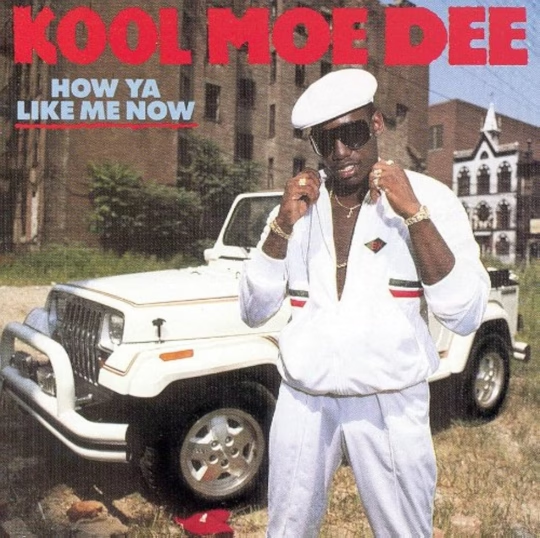
You cannot discuss this album without mentioning the final chapter of his legendary feud with LL Cool J. The rivalry, which started back in 1987 when the cover of How Ya Like Me Now showed LL’s signature red Kangol hat crushed under a Jeep tire, reached a boiling point after LL dropped the classic tracks “To Da Break O’ Dawn” and “Mama Said Knock You Out”. Moe Dee answered back with the six-minute diss track “Death Blow“.
In “Death Blow,” Moe Dee utilizes a boxing motif, directly mocking LL’s lyrics with lines like “if mama said knock me out come do it”. But despite his aggressive delivery and sharp pen, the track’s self-produced beat fell flat compared to Marley Marl’s production on LL’s hits. Even the accompanying music video, which directly parodied LL’s iconic black-and-white boxing ring visual, failed to capture the streets’ imagination. Critics rightly pointed out that “Death Blow” was a misstep, as its hostile nature directly clashed with the positive, communal messages Moe Dee preached on the rest of the album.
Commercial Impact and Historical Legacy
Despite the success of “Rise ‘N’ Shine,” overall album sales were a major disappointment, peaking at a modest #72 on the Billboard 200. Kool Moe Dee himself later called Funke, Funke Wisdom his worst album, marking it as the official turning point of his commercial decline. He parted ways with Jive Records in 1992, effectively ending his golden era solo run.
Still, looking back after 35 years, Funke, Funke Wisdom deserves its place in hip-hop lore. It is not a flawless masterpiece, but it remains a bold and honest effort by one of the genre’s founding fathers to bridge the old school with the modern era. For those who value the roots of rap history, this album serves as an essential lesson on how street wisdom fights against the turning tides of time.