20 Years Later: Masta Killa – Made in Brooklyn
Two Decades of “Made in Brooklyn”: Uncompromising East Coast Grit
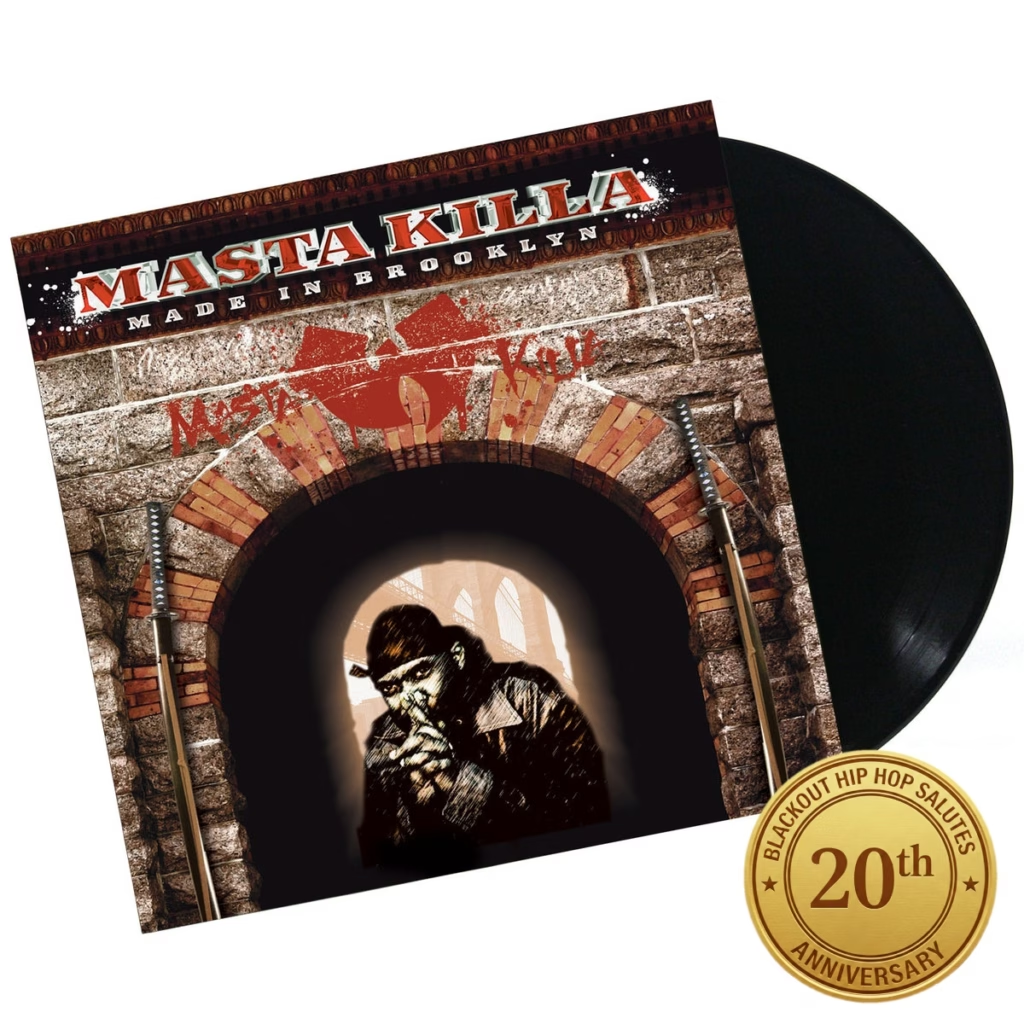
On this day, August 8, 2006, Wu-Tang Clan’s Masta Killa released his second studio album, Made in Brooklyn, through the independent label Nature Sounds. During a mid-2000s era when mainstream hip hop was heavily tilting toward polished radio tunes and commercial hooks, this project remained firmly rooted in traditional boom-bap. Twenty years later, Made in Brooklyn stands as a solid, raw street record that refused to chase fleeting industry trends.
Returning to Brooklyn Roots and Independence
Following the critical success of his 2004 debut No Said Date, Masta Killa entered his sophomore era with complete artistic freedom. Choosing to partner with Nature Sounds allowed him to bypass major label pressures and commercial compromise. Conceptually, the album served as an homage to his home borough, with roughly 75% of the material recorded directly in Brooklyn.
Instead of aiming for pop charts, Masta Killa focused on capturing the authentic atmosphere, borough swagger, and local mindset of his hometown. He maintained his trademark calm, deliberate, and methodical flow, ensuring every verse carried intention and weight.
Production Architecture Beyond RZA
The most notable departure from his debut was the absence of RZA on production duties. Masta Killa stepped into the role of sound curator himself, selecting underground beatmakers capable of preserving the signature Wu-Tang aesthetic.
Producer Bronze Nazareth handled a significant portion of the sonic backdrop, lacing key tracks like the lead single “Ringing Bells“, the moody “Nehanda & Cream“, and the head-nodding “Street Corner” with dramatic strings and heavy drums. The late MF Doom provided his distinct lo-fi sampling style on “E.N.Y. House“, while Pete Rock delivered a warm, soul-drenched loop for “Older Gods Part 2“. Brooklyn native P.F. Cuttin (of Blahzay Blahzay fame) contributed a hard-hitting beat for the single “It’s What It Is“.
Wu-Tang Synergy and Lyrical Alignment
While the title honors his home borough, Made in Brooklyn also functioned as a mini-reunion for the Wu-Tang Clan following the passing of Ol’ Dirty Bastard in 2004. Guest verses from all seven surviving original members were strategically distributed across the tracklist.
On “It’s What It Is“, Raekwon and Ghostface Killah bring their sharp street narratives, while “Iron God Chamber” finds RZA, Method Man, and U-God trading energetic verses over Whyz Ruler’s tense production. The standout track “Street Corner” pairs Masta Killa with GZA and Inspectah Deck for a display of pure East Coast lyricism. The project’s philosophical depth was further anchored by spoken word appearances from Five-Percent Nation elders.
Commercial Impact and Critical Reception
Commercially, the album achieved modest yet stable results for an independent release. Made in Brooklyn debuted at #176 on the US Billboard 200 chart, peaking at #45 on Top R&B/Hip-Hop Albums and #21 on Independent Albums. Critical reception was generally favorable, holding a 66/100 score on Metacritic. While some mainstream outlets noted that Masta Killa’s understated delivery was occasionally overshadowed by his more animated guests, underground hip hop media praised its consistency and adherence to raw boom-bap traditions.
Two decades after its initial drop, Made in Brooklyn remains a cohesive, mature, and authentic entry in the Wu-Tang solo catalog. It stands as a testament to an era when independent hip hop maintained its gritty identity without compromise.