Public Enemy – Apocalypse 91: 35 Years of a Heavy Classic
Introduction: The Landscape of October 1, 1991
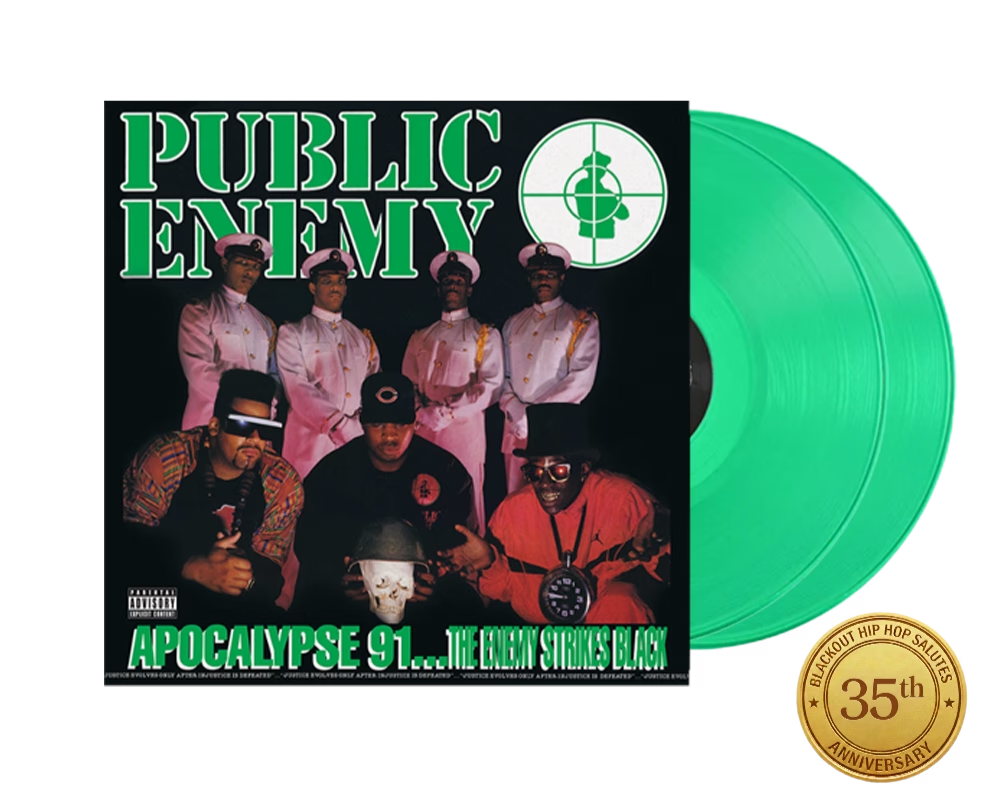
Exactly 35 years ago today, on October 1, 1991, Long Island hip hop icons Public Enemy released their fourth full-length studio effort, Apocalypse 91… The Enemy Strikes Black, through Def Jam Recordings and Columbia Records. Looking back from our current vantage point, the record arrived right in the eye of a massive musical hurricane. Just seven days prior, Nirvana had unleashed Nevermind, triggering the mainstream explosion of grunge and alternative rock. Meanwhile, within hip hop culture itself, the center of gravity was aggressively tilting toward the West Coast.
The rise of Los Angeles street rap, spearheaded by N.W.A and Ice Cube, brought a gritty urban realism that young heads were gravitating toward, steadily overshadowing the militant afrocentric rhetoric that Chuck D had spent years perfecting. Following back-to-back undisputed classics – It Takes a Nation of Millions to Hold Us Back (1988) and Fear of a Black Planet (1990) – the stakes were ridiculously high. Public Enemy needed to prove that their message still mattered in this shifting cultural climate, all while navigating mounting internal friction inside their own ranks.
Internal Friction and the Shift to The Ministers of Funk
Recording sessions at The Music Palace in Long Island between late 1990 and 1991 took place under substantial pressure. The group was still dealing with the fallout from Professor Griff’s controversial remarks, which resulted in his permanent exit, while hype-man Flavor Flav was struggling with legal issues and negative press coverage. Crucially, a significant transition occurred behind the mixing board. Primary producers The Bomb Squad, led by Hank Shocklee, stepped back into executive production roles, handing hands-on studio duties over to a new production crew known as The Imperial Grand Ministers of Funk.
Led by Gary G-Wiz and Stuart Robertz, with engineering assistance from Cerwin “C-Dawg” Depper and The JBL, the Ministers reshaped PE’s sonic architecture. Instead of the dense, layered noise collages that defined earlier records, they favored stripped-down, hard-hitting drum patterns and prominent low-end frequencies. Live instrumentation was incorporated to bolster the sound, including the Broadway Horns brass section, Al MacDowell‘s bass guitar, Fred Wells’ electric guitar, and Frank Able‘s keyboards. Mastered by Vlado Meller, the end product was a metallic, aggressive boom-bap that slammed through car speakers and provided Chuck D with an uncompromising platform. While some crate-digging purists felt the beats lacked the avant-garde complexity of previous releases, the raw, stripped aesthetic gave the record an undeniable physical punch.
Hard Bars: “Can’t Truss It” and Introspective Critique
Lyrically, Apocalypse 91 offered zero concessions to commercial radio trends. Chuck D delivered his bars with clear focus and unmatched authority. Lead single “Can’t Truss It” remains one of the sharpest historical dissertations in rap history. Riding a driving funk loop, Chuck draws a direct parallel between the transatlantic slave trade and modern corporate labor, arguing that systemic oppression simply updated its business model. Directed by Eric Meza, the accompanying video juxtaposed brutal historical slave footage with modern slaughterhouse scenes, prompting heavy broadcast restrictions from television networks. Despite the pushback, the single landed at number 50 on the Billboard Hot 100, climbed to number 9 on the Hot Soul Singles chart, and earned RIAA gold status.
Rather than solely aiming outward, the record also tackled difficult issues within the Black community. On “1 Million Bottlebags“, the group takes aim at alcohol companies targeting inner cities with cheap malt liquor, while directly criticizing those who willingly purchase their own pacification. Flavor Flav contributes a surprisingly serious message on “I Don’t Wanna Be Called Yo Niga“, challenging the normalization of racial slurs in everyday street slang. Meanwhile, “How to Kill a Radio Consultant” attacked corporate program directors who were corporatizing radio playlists and shutting out politically conscious hip hop.
The Arizona Controversy and the Metal Mashup
The project’s biggest political controversy came via “By the Time I Get to Arizona“. Written in direct response to Arizona lawmakers refusing to recognize a state holiday for civil rights icon Dr. Martin Luther King Jr., the song swapped peaceful protest for militant imagery. Sampling Mandrill‘s psychedelic funk, Chuck D spit pure fury. The video, directed by Eric Meza and Romeo Tiron, depicted PE’s security squad, the S1Ws, executing political leaders who blocked the holiday. The clip caused an uproar: Dr. King’s widow, Coretta Scott King, publicly condemned the violent depiction, and MTV pulled it from daytime rotation. However, the cultural and economic boycott gained massive traction—prompting the NFL to pull the Super Bowl from the state—and Arizona voters ultimately passed the holiday referendum in 1992.
On the opposite end of the sonic spectrum, the closing track “Bring tha Noize” delivered a groundbreaking crossover alongside thrash metal legends Anthrax. Reworking PE’s 1987 cut, guitarist Scott Ian and drummer Charlie Benante injected breakneck riffs and real percussion into Chuck D’s cadence. The track was no superficial label gimmick; it was an authentic collision between two intense youth movements. The co-headlining tour that followed brought rap and metal heads into the same mosh pits, effectively laying the groundwork for the 90s rap-metal surge spearheaded by bands like Rage Against the Machine.
Commercial Impact, Critical Verdict, and Pete Rock’s Blueprint
The aggressive nature of the record did not prevent commercial victory. Apocalypse 91… The Enemy Strikes Black debuted at number 4 on the Billboard 200 and topped the Top R&B/Hip-Hop Albums chart. Within two months of its October drop, on November 26, 1991, the RIAA certified the album Platinum for shipping one million units. The critical reception was equally enthusiastic: the LP took the number 2 spot in The Village Voice’s prestigious Pazz & Jop critics poll, trailing only Nirvana’s Nevermind. The Source awarded it a solid 4 Mics, Rolling Stone gave it 4 stars, Robert Christgau handed out an “A” grade, and the record earned a 1992 Grammy nomination for Best Rap Performance by a Duo or Group.
Beyond the original tracklist, single “Shut ‘Em Down” took on an entirely new life. While the original version was backed by an impactful Mark Pellington black-and-white video, it was the official remix by Pete Rock that made hip hop history. Pete Rock replaced the harsh industrial drums with warm soul horn loops and thick bass, creating a timeless anthem that set the standard for 90s East Coast boom-bap and influenced everyone from Nas to Black Moon.
Three and a Half Decades Later: The Legacy Stands
Thirty-five years down the road, Apocalypse 91 holds firm as the final statement of Public Enemy’s classic run. Retrospective critiques occasionally point out that the Ministers of Funk did not reach the dizzying avant-garde heights of Nation of Millions, and a couple of Flav’s solo joints felt less sharp than his previous work. Nevertheless, the album remains a heavyweight monument. Chuck D stood tall as a commanding orator, delivering thoughtful, hard-hitting rap music that helped reshape actual laws and sparked dialogues on corporate greed and historical memory. For true hip hop heads, this wax still bangs just as hard today.