Immortal Technique: 15 Years of The Martyr
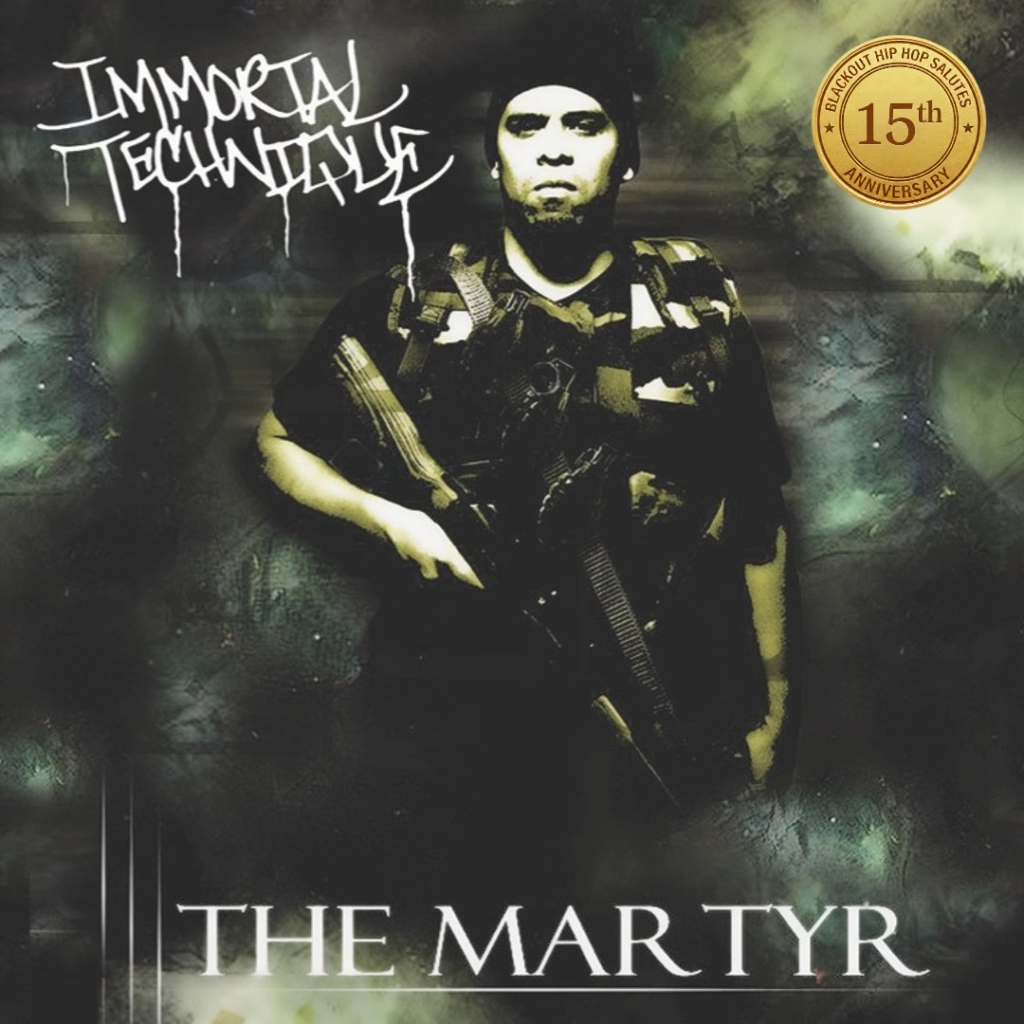
In late October 2011—specifically on October 27—Harlem underground rapper and activist Immortal Technique made a move that aligned with his reputation as one of the most fiercely independent figures in the music business, releasing his 16-track compilation album of previously unheard material, The Martyr, as a free digital download through his label Viper Records. Fifteen years later, the project stands as far more than a stopgap collection meant to hold fans over while he worked on his long-delayed LP The Middle Passage. Generating 200,000 downloads on its first day and surpassing one million downloads within its opening week, The Martyr demonstrated the power of a direct artist-to-listener model at a moment when digital distribution was reshaping independent hip-hop.
The 2011 Context: Occupy Wall Street and the Freedom of a Free Release
Understanding the impact of The Martyr in the autumn of 2011 requires looking at both the socio-political climate of New York City and the stage of career that Felipe Andres Coronel—born in Lima, Peru, and raised in Harlem—occupied at the time. After building a global cult following with underground staples Revolutionary Vol. 1(2001) and Revolutionary Vol. 2(2003), followed by the commercially successful 2008 release The 3rd World alongside DJ Green Lantern, three years had passed without a full-length project. As Technique continued recording tracks for his fourth studio effort, he accumulated a deep vault of songs that either didn’t fit the thematic arc of the upcoming album or carried sample clearance hurdles too steep for a traditional retail release.
Giving The Martyr away for free online—while urging listeners on the opening intro “Burn This” to duplicate the record for everyone they knew—accomplished two goals at once. First, the album arrived at the height of the Occupy Wall Street protests in Zuccotti Park, a moment when wealth inequality, corporate lobbying, and the military-industrial complex—subjects Technique had dissected on wax for a decade—dominated public conversation. Second, releasing the album as a non-commercial download freed his producers to flip massive, unmistakable rock, pop, and film soundtrack samples without major-label legal bottlenecks, which is also the main reason the full album remains absent from commercial streaming platforms today.
Uninhibited Production: From J Dilla and Southpaw to Flipping ABBA
The sonic backbone of The Martyr was handled by longtime collaborator Southpaw, who produced nine of the sixteen tracks on the project. Rather than relying on stripped-down underground loops, Southpaw leaned into cinematic, heavy-hitting arrangements built around famous melodic hooks. The title track, “The Martyr,” opens with dialogue from the 1998 historical drama Elizabeth before dropping into a brooding interpolation of “Eleanor Rigby” by The Beatles. That same crate-digging boldness drives the posse cut “Goonies Never Die” (which flips Dave Grusin’s main theme from the 1985 film The Goonies), “Eyes in the Sky” (built on the classic track by The Alan Parsons Project), and “Young Lords,” which transforms the iconic synth riff from Bon Jovi‘s “Runaway” into an urgent East Coast boom-bap backdrop.
Outside of Southpaw’s contributions, a select group of veteran beatmakers added crucial texture to the tracklist. German producer Shuko crafted the beat for the sharpest solo concept song on the record, the satirical “Rich Man’s World (1%).” Opening with the famous boardroom monologue from the 1976 film Network, the instrumental blends vocal and melodic loops from ABBA‘s “Money, Money, Money” and Pink Floyd‘s “Money” while Technique raps from the perspective of an untouchable Wall Street oligarch.
One of the most memorable musical moments in the first half of the record arrives on track five, “Toast to the Dead,” which rides a beat produced by the late Detroit legend J Dilla—flipping “Alpha” by Greek electronic composer Vangelis—paired with sharp vocal cuts on the chorus by DJ Green Lantern. Green Lantern also stepped behind the boards for “Angels & Demons,” anchoring the beat around Aerosmith‘s classic rock ballad “Dream On,” while Chicago production team The Molemen (backed by DJ DP-One on the turntables) supplied the rugged boom-bap foundation for “Mark of the Beast.”
Lyrical Focus, Political Speeches, and Heavyweight Guest Features
Lyrically, The Martyr finds Immortal Technique refining his approach compared to the raw shock tactics of his early twenties. His forceful, unmistakable cadence still cuts through the mix with militant precision, tackling historical revisionism, foreign intervention, Latin American revolutionary history, and the personal cost of political defiance. On the seven-and-a-half-minute centerpiece “Últimas Palabras,” where he switches effortlessly between English and Spanish verses, Technique connects street-level struggle with global resource wars before cutting the beat entirely for an extended spoken-word address. Looking at the record objectively, those moments also highlight its most common critique: for listeners who prioritize flow and musicality over ideology, the lengthy spoken interludes—including the archival lecture by historian Dr. John Henrik Clarke on “Conquerors”—can occasionally weigh down the pacing and blur the line between a rap record and a political rally.
What keeps the album engaging from front to back is a stacked roster of guest MCs who contributed verses to a free project with zero royalty payouts. The standout collaboration is “Civil War,” which unites Killer Mike, Brother Ali, and Public Enemy frontman Chuck D to examine sectarian and racial divisions among working-class communities. Equally potent is the hard-hitting posse cut “Black Vikings,” where Yonkers veteran Styles P, Philadelphia underground fixture Vinnie Paz, and Poison Pen trade aggressive bars over a sample of Alan Silvestri’s theme from Beowulf.
The supporting cast runs deep across the rest of the tracklist: political hip-hop duo Dead Prez and Bazaar Royale join in on “Angels & Demons,” Joell Ortiz, the late Pumpkinhead, CF, and Panama Alba salute Puerto Rican activist history on “Young Lords,” and longtime Stronghold and underground allies Diabolic, Swave Sevah, and Gomez trade battle verses on “Goonies Never Die.” The album closes with “Sign of the Times”—built around an acoustic guitar sample of “La Partida” by murdered Chilean folk singer and activist Víctor Jara—featuring verses from Cetan Wanbli, Lockjaw Nakai, and scholar Cornel West.
Critical Reception and Legacy Fifteen Years Later
Because The Martyr was assembled from recording sessions spanning several years, it naturally lacks the seamless sonic uniformity of a single-producer concept LP—a point noted in contemporaneous reviews by outlets like The Big Takeover. Even so, critics widely praised the strength of the songwriting and the generosity of the release. RapReviews awarded the project an 8.5 out of 10, applauding Technique’s bilingual intensity, sharp satire on tracks like “Rich Man’s World (1%),” and ability to rally top-tier lyricists for a free release, while HipHopSite gave it 4 out of 5 stars.
Fifteen years after its October 2011 release, The Martyr carries an added layer of historical weight: because the long-promised The Middle Passage has still yet to materialize, this compilation remains the last full-length project Immortal Technique has released to date. Offered as a no-strings-attached gift to the independent fanbase that funded his career outside the major-label system, The Martyr endures as a bold, sample-heavy time capsule of early-2010s political hip-hop.