40 Years of “Big & Beautiful”: The Fat Boys’ 1986 Triumph
40 Years of “Big & Beautiful”: Brooklyn’s Heavyweights at the Top of Their Game
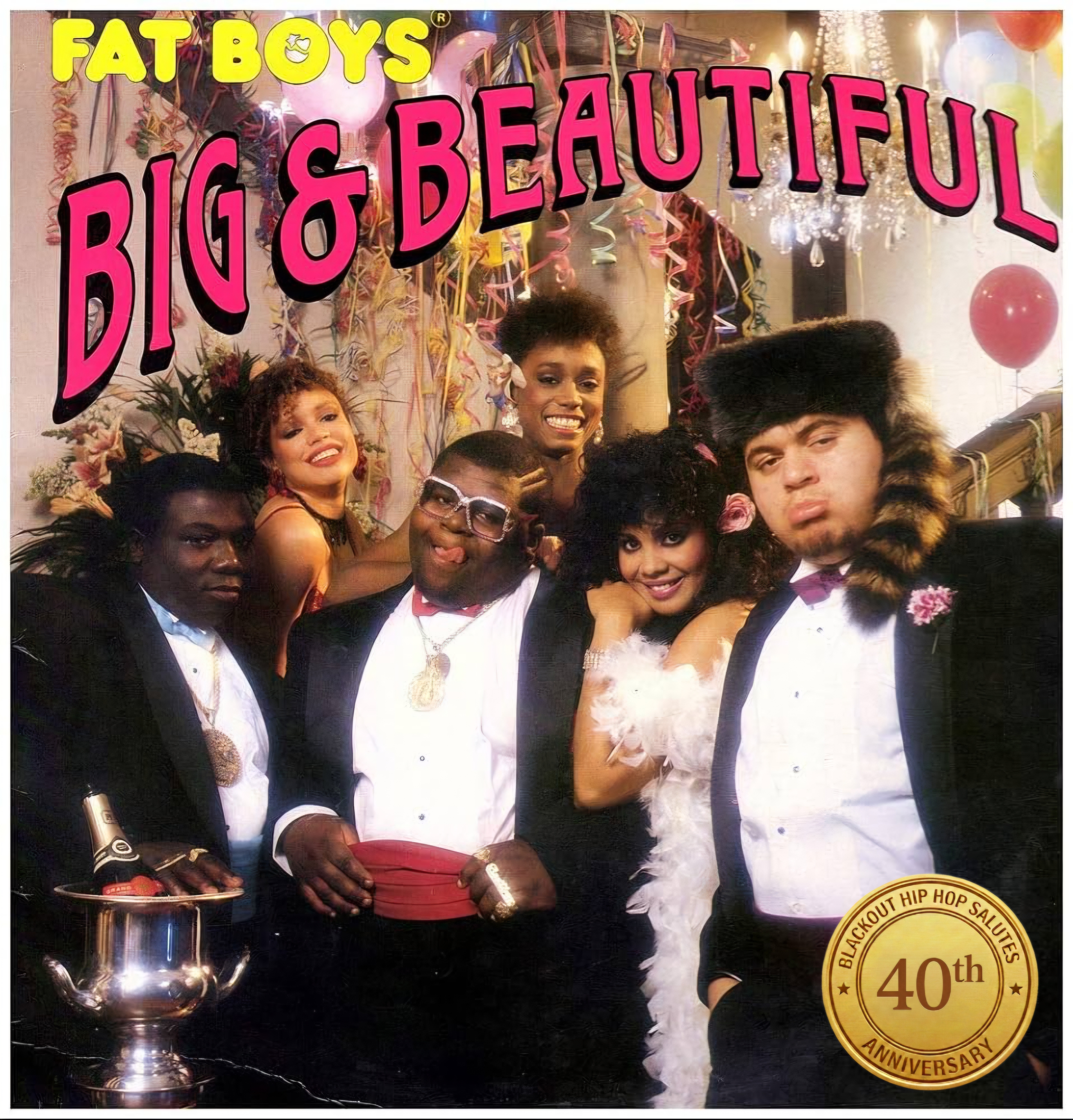
Today, May 6, 2026, marks exactly four decades since the Brooklyn trio Fat Boys dropped their third studio album, Big & Beautiful. Back in 1986, hip hop was at a major crossroads—the sound was getting harder, production was becoming more complex, and kids from the Bronx and Brooklyn were slowly but surely beginning to conquer MTV and charts worldwide. Mark “Prince Markie Dee” Morales, Damon “Kool Rock-Ski” Wimbley, and the incomparable Darren “Buff Love” Robinson proved with this project that they weren’t just a novelty act; they were serious players who knew how to package street credibility into a format the whole planet could digest.
Big & Beautiful was released through Sutra Records and is remembered as their final album for the independent label before they moved to major distribution. What sets this album apart from its predecessors produced by Kurtis Blow is the wider palette of collaborators and a more modern, “electro-hop” sound. Dave Ogrin took the lead behind the boards, with assistance from Fresh Gordon and the legendary Latin Rascals.
The Album Structure: Def Side and Stupid Def Side
The album was conceptually divided into two sides, dubbed the “Def Side” and the “Stupid Def Side,” a direct nod to the era’s slang where “stupid” actually meant something was incredibly good or extreme. Side A kicks off with a cover of James Brown’s classic, “Sex Machine.” While many at the time considered a rap version of a funk staple to be sacrilege, the Fat Boys delivered it with so much charisma that the song became an instant classic. Dave Ogrin managed to keep that recognizable groove but polished it with heavy 808 drums and Buff’s beatboxing.
The technical crown jewel of the album is undoubtedly “Breakdown,” produced by The Latin Rascals (Albert Cabrera and Tony Moran). These guys were masters of “tape editing”—a technique where tapes were literally cut with razor blades and spliced back together to create those wild, stuttering rhythms we now achieve with a single click in software. That sound was ahead of its time and perfectly suited the rapid-fire vocal styles of Markie Dee and Kool Rock-Ski.
Buff Love and the Human Rhythm Machine Revolution
When talking about the Fat Boys, we cannot skip the role of Darren Robinson. Buff Love was the heart of the group. In an era when samplers were still in their infancy, Buff was a walking rhythm machine. His track “Beat Box, Part III” on this album represents the peak of his discipline. He didn’t just make sounds; he breathed rhythm. His “double breathing” technique and ability to vokalize bass, snare, and hi-hat simultaneously opened doors for legends like Biz Markie and Doug E. Fresh. Buff proved that you don’t need expensive gear if you have the talent and the lungs to pull it off.
Crossover Success and the Miami Vice Era
In 1986, the Fat Boys were everywhere. Hip hop was still treated as a novelty back then, but this trio managed to break down barriers through humor. The music video for “Sex Machine” was directed by Zbigniew Rybczyński, an Academy Award winner and pioneer of HDTV technology. The visual style of the video, with its surreal effects and fast editing, was something MTV had never seen from a rap group before.
Beyond the music, the group excelled on the small screen that year. Their appearance in the cult series Miami Vice (episode “Florence Italy“), where they played three rapping drug dealers on a street corner, remains etched in the memory of fans. They were regular guests on Dick Clark’s American Bandstand and Don Cornelius’s Soul Train, which was a massive achievement for any hip hop act at the time.
Market Success and Legacy
The album reached #62 on the Billboard 200 and a high of #10 on the Top Black Albums chart. While it may have been somewhat overshadowed by its 1987 platinum successor Crushin’, Big & Beautiful laid the groundwork. It was the album that proved the Fat Boys could carry a full concept, not just a few hit singles. Recorded in legendary New York studios like D&D and Quad Recording, the production gave the album that specific “high-end” sound that still sounds crisp on quality systems today.
Now, 40 years later, hip hop has become a global superpower, but we often forget the pioneers who gave it a human face and a smile. The Fat Boys were more than just three big guys rapping about food; they were innovators, top-tier entertainers, and the architects of beatbox culture. Big & Beautiful stands as a monument to that time—a time when everything was new, exciting, and, above all, fun.
If you’re spinning this album today, pay attention to the details in the beats and Buff’s breath control. It still sounds “def,” it still sounds “stupid,” and it still sounds exactly the way it should—big and beautiful.