35 Years of Ain’t a Damn Thang Changed
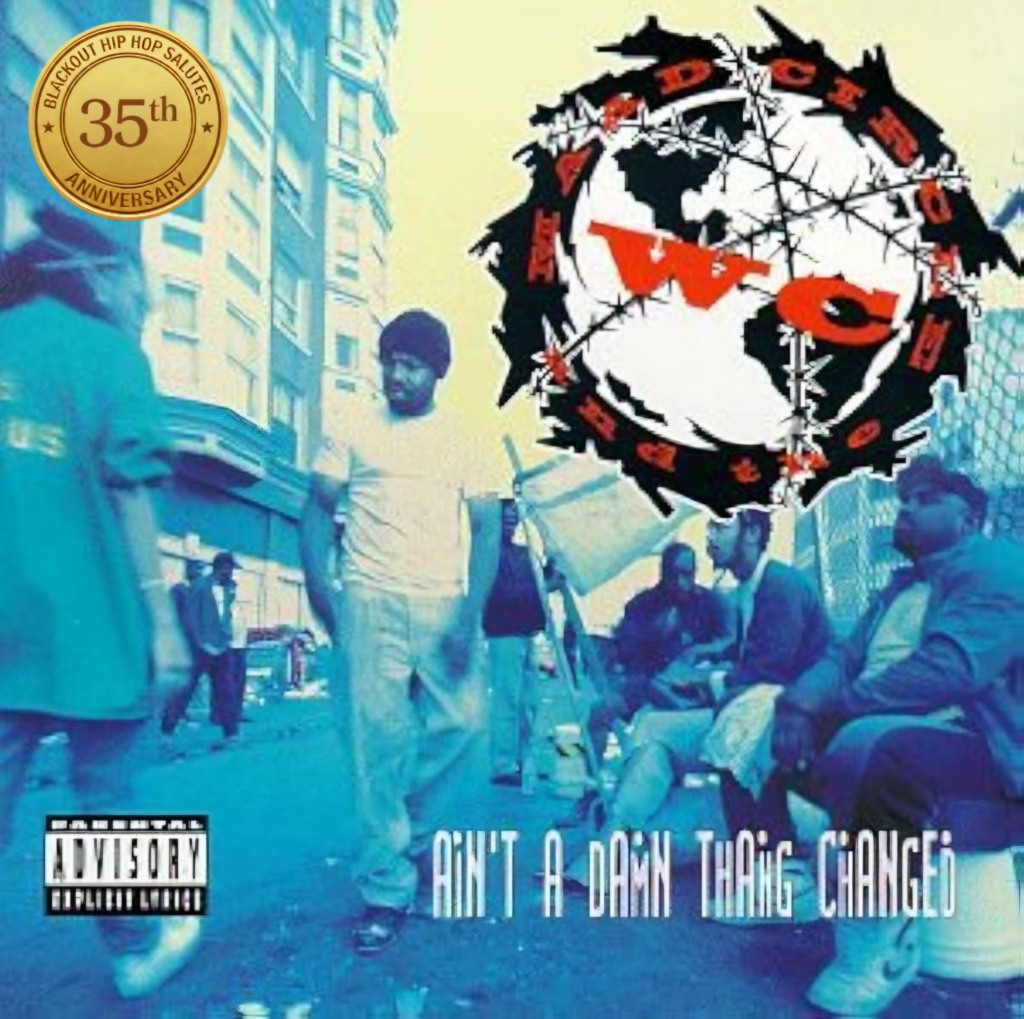
Retrospective: WC and the Maad Circle – Ain’t a Damn Thang Changed (1991)
Thirty-five years ago today, on September 17, 1991, independent label Priority Records released Ain’t a Damn Thang Changed, the debut studio album by WC and the Maad Circle. Three and a half decades later, the record stands as an authentic sonic document of pre-riot Los Angeles. Tracked at Paramount Recording Studios between October 1990 and June 1991, the album captured South Central’s rising tensions right between the police beating of Rodney King, the shooting of teenager Latasha Harlins, and constant neighborhood sweeps by the LAPD’s C.R.A.S.H. unit.
Group Origins and the Volatile Streets of 1991
Following the dissolution of Low Profile, his late-1980s duo with DJ Aladdin, William Calhoun Jr. (WC) set out to build a collective with a clear socio-political backbone. The group’s acronym was intentional: M.A.A.D. stood for the Minority Alliance of Anti-Discrimination. Alongside WC’s commanding rhyming and sharp street vision, the roster featured his brother and skilled turntablist DJ Crazy Toones (Lamar Calhoun), an energetic newcomer named Coolio (Artis Ivey Jr.), and Big Gee (Garland Celestine), who contributed backing vocals, ad-libs, and a prominent visual identity.
Heavy Funk and the Lench Mob Soundscape
Sonically, the album predates the polished, synthesizer-led G-funk wave that Dr. Dre brought to dominance a year later. Instead, the tracks rely on gritty, percussion-heavy P-Funk elements borrowed from George Clinton and Sly Stone, filtered through the aggressive aesthetic of Da Lench Mob. Beatmakers Sir Jinx and DJ Chilly Chill handled primary production duties alongside WC and Crazy Toones, while Ice Cube oversaw sample selection and album sequencing. Crazy Toones anchored the rhythm with tight scratches and cuts, while skits featuring a fictional grandmother (“Granny”) injected dark neighborhood comedy into the narrative.
Street Chronicles, Singles, and Classic Visuals
Lyrically, the record cuts straight into the realities of early-90s Los Angeles. Lead single “Dress Code” broke down institutional stereotyping, detailing how young Black men were profiled as criminals simply for wearing particular hats, sneakers, or loose clothing. The accompanying music video featured a notable early acting appearance by future filmmaker F. Gary Gray (Friday, Straight Outta Compton). The title cut “Ain’t a Damn Thang Changed” arrived with a visual celebrating regional solidarity, including cameos from Cypress Hill, Ice Cube, and Boo-Yaa T.R.I.B.E..
The record’s most compelling material went far deeper than standard radio fare: “Behind Closed Doors” walked listeners through brutality inside police lockups, while “Fuck My Daddy” offered an unvarnished personal confession dealing with parental abandonment and household violence. The posse cut “You Don’t Work, U Don’t Eat” brought in MC Eiht, Da Lench Mob’s J-Dee, and Ice Cube for an unapologetic debate on systemic poverty and street hustle.
Commercial Run, The Source Rating, and Cultural Impact
Ain’t a Damn Thang Changed was never destined to be a massive commercial pop crossover. It missed the Billboard 200, though it performed respectably on targeted charts, reaching #52 on the Top R&B/Hip-Hop Albums chart and #29 on the Top Heatseekers chart. The hip-hop press took notice, however; The Source praised its street realism and production by awarding it an impressive 4.5 mics.
Looking back across thirty-five years, the project left an indelible footprint on West Coast hip-hop. It launched Coolio into the spotlight, leading directly to his Tommy Boy solo career and multi-platinum fame with “Gangsta’s Paradise“. WC pushed ahead with the Maad Circle’s 1995 sophomore release Curb Servin’ before linking with Mack 10 and Ice Cube to form Westside Connection. Decades later, Kendrick Lamar paid homage to the collective through the title of his landmark album good kid, m.A.A.d city. While often overshadowed by flashier West Coast releases of the era, the Maad Circle’s debut remains a crucial snapshot of Los Angeles just months before the city exploded.