35 Years of a Classic: Mr. Scarface Is Back
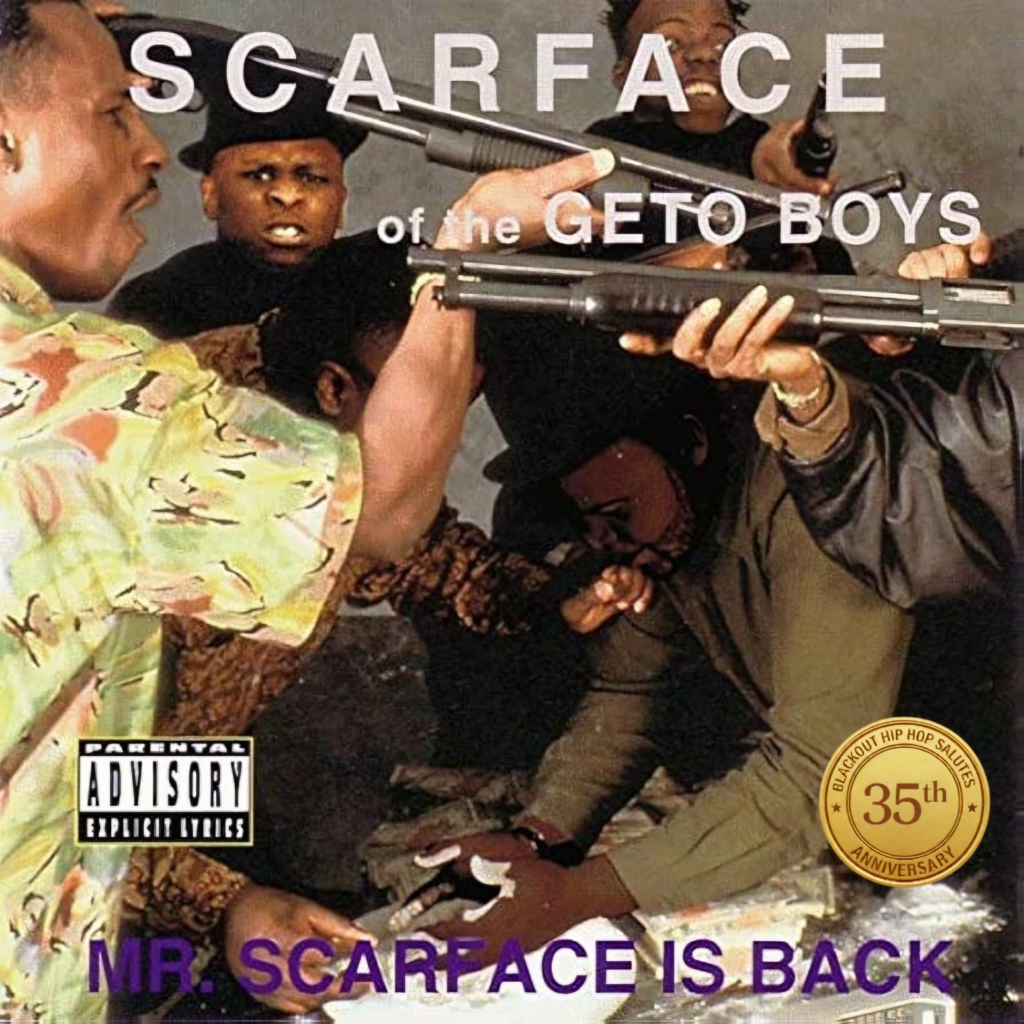
Exactly 35 years ago today, on October 8, 1991, the hip hop scene received one of the most pivotal projects from the “Third Coast“—the debut solo album by Brad Jordan, better known as Scarface, titled Mr. Scarface Is Back. Released through the independent label Rap-A-Lot Records with distribution by Priority Records, this project put Houston on the map and proved that the American South had serious lyricists. For the readers of blackouthiphop.com, this anniversary is the perfect moment to look back at the material that redefined street rap.
From Geto Boys to Solo Success
Prior to this release, Scarface had already built serious street cred as the standout MC of the controversial Geto Boys. His transition to a solo career was heavily catalyzed by the massive success of the hit single “Mind Playing Tricks on Me” in the summer of 1991. Interestingly enough, that track was originally planned as Scarface’s solo single, specifically designed for Mr. Scarface Is Back. However, label founder J. Prince recognized its immense commercial potential and decided to give it to the whole group to boost their collective popularity before dropping solo projects. This strategic move generated immense hype, ensuring the audience was more than ready for Face’s solo debut in October.
The Dark Sonic Landscape of Texas
The album’s production wasn’t handled by one big-name producer from the East or West Coast, but rather by Rap-A-Lot’s internal collective. The sonic backdrop was crafted by Crazy C, John Bido, Roland, Sam, and Scarface himself, with executive production by J. Prince and Cliff Blodget. The sound of the album is raw, atmospheric boom-bap backed by heavy Southern basslines. The sampling was top-tier, relying heavily on soul and funk classics, which quickly became the trademark of early Rap-A-Lot production.
Trauma Over Mere Bragging
What objectively separates Mr. Scarface Is Back from the sea of standard gangsta rap releases of that era is its incredible dose of introspection. In an era where rappers glorified violence and portrayed themselves as indestructible street superheroes, Scarface openly spoke about mental health, paranoia, and PTSD. On the track “Born Killer“, despite his impressively fast flow, he doesn’t rap about being invincible; instead, he explicitly mentions manic depression, suicidal thoughts, and prescription medication.
The best example of this approach is “Diary of a Madman“, where he uses a diary format to describe his battle with past demons, heavy alcoholism, and the intense guilt stemming from the street lifestyle. The track “Good Girl Gone Bad” offers a dark tale of revenge after a drug deal goes wrong, but it ends with an unexpected moral twist where the killer, overwhelmed by conscience, adopts his victim’s son, completely shattering the stereotype of the cold-blooded criminal. It’s also worth mentioning the track “I’m Dead“, which closes the album with a bizarre narrative told from the perspective of his own ghost.
Commercial Success and Impact
The album was supported by a few gritty singles, peaking with the track “A Minute to Pray and a Second to Die“. Built around a melancholic sample of the legendary Marvin Gaye, the song entered the Billboard charts (peaking at No. 69 on the Hot R&B Singles and No. 13 on the Rap chart), cementing his status as an elite storyteller. Despite a lack of massive mainstream media support, the album debuted at No. 51 on the Billboard 200, and by the spring of 1993, it was certified Gold with over half a million copies sold in the US.
Today, exactly 35 years later, Mr. Scarface Is Back serves as more than just a nostalgic time capsule. His narrative style and mafioso aesthetic provided direct inspiration for the later works of hip hop giants like Nas, Jay-Z, and Rick Ross. This record remains essential listening for anyone who wants to understand how the South found its authentic voice and how street rap gained its deeply human dimension.