25 Years of Anghellic: Tech N9ne Drops Anniversary Remaster
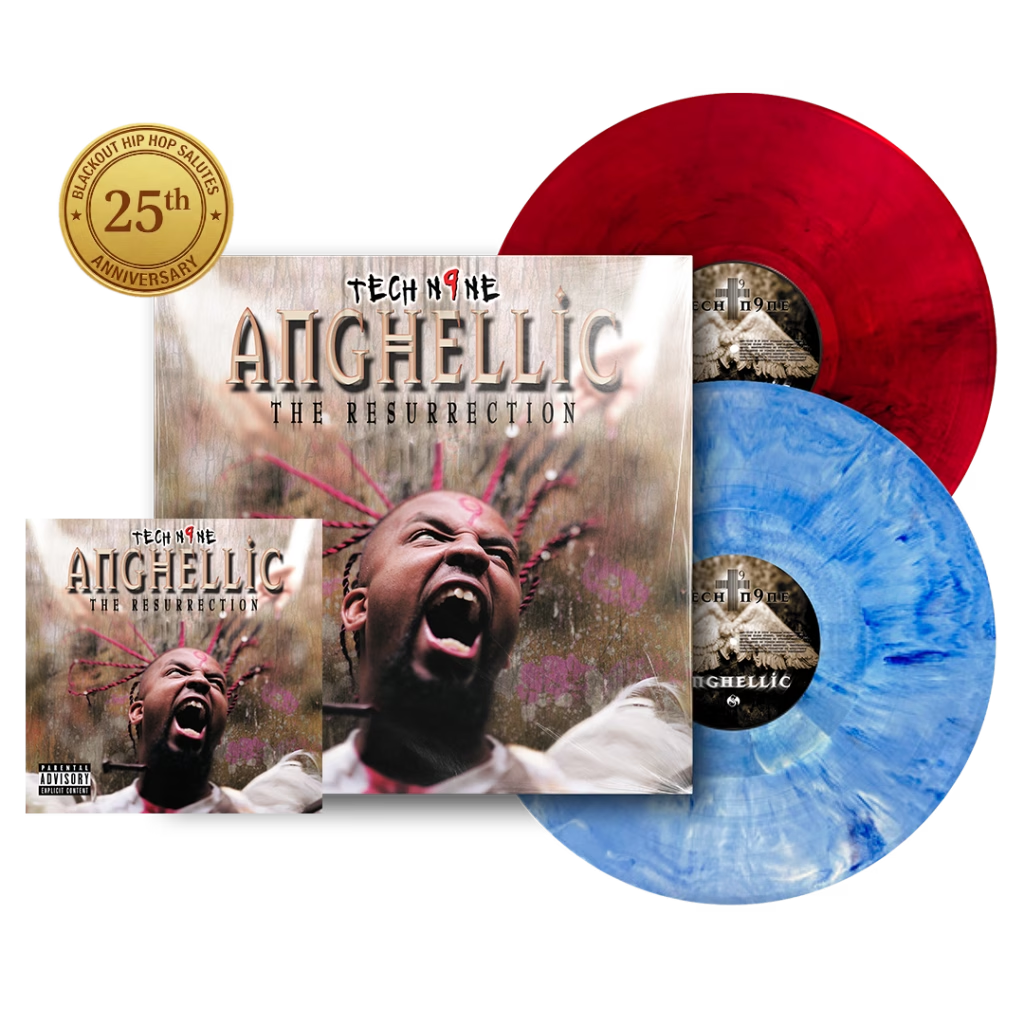
On this day, August 28, 2001, Kansas City emcee Tech N9ne (Aaron Yates) released his third studio album and first proper national debut, Anghellic. At a time when mainstream hip-hop was leaning heavily into polished radio formulas, Anghellic arrived as a raw, technically dense, and dark project that blended eccentric energy, rapid-fire flows, and uncompromising lyricism. Today, exactly 25 years to the day (August 28, 2026), Tech N9ne and Strange Music are commemorating this quarter-century milestone with the official release of Anghellic: The Resurrection (25th Anniversary Remaster). We take a look back at a record that not only defined Tech N9ne’s signature sonic print but also laid the groundwork for one of the most successful independent labels in rap history—Strange Music.
Kansas City’s Breakout Moment on the National Stage
Following years of navigating group lineups and deal situations with labels like Perspective and Qwest, Tech N9ne landed a distribution partnership through JCOR Entertainment and Interscope/Universal channels, giving him a platform to reach a nationwide audience. Anghellic represented his most ambitious body of work up to that point. Moving approximately 20,000 units in its first week, the album eventually peaked at #59 on the Billboard 200 and moved over 278,000 copies in the US—a notable milestone for an artist outside traditional hip-hop hubs like New York or Los Angeles.
Sonic Architecture: Dark Aesthetics, Fast Delivery, and Three-Act Structure
Sonically and conceptually, Anghellic was organized into three distinct sections: Hell, Purgatory, and Heaven. This three-act framework allowed Tech to lay bare his inner conflicts, substance struggles, and personal turmoil. Cuts like “Tormented” (which landed placement on the TV series Dark Angel) and “Suicide Letters” delivered a heavy, introspective mood, while joints like “Einstein” and “Sinister Tech” showcased his double-time “chopper” delivery and intricate bar structures.
The production setup—helmed by Don Juan, DJ Icy Roc Kravyn, King Tech, and Richie—blended hardcore hip-hop, horrorcore elements, and West Coast G-funk sensibilities. Sampling also played a central role: “Psycho Bitch” flipped John Carpenter‘s iconic Halloween piano motif, “Einstein” sampled Bobby Orlando’s electro-rap track, and “Twisted” featured talk-box work from Roger Troutman alongside Zapp & Roger samples.
Major Label Friction and the Birth of the “F.T.I.” Ethos
Despite initial momentum, tension quickly surfaced between Tech N9ne, his business partner Travis O’Guin, and JCOR Entertainment over marketing and distribution shortfalls. Realizing the major-label apparatus was constraining his artistic movement and failing to meet demands on the ground, Tech and Travis cut ties with the label. Crucially, they negotiated to retain full ownership of the album’s master recording rights—a move that changed everything.
That dispute sparked the “F.T.I.” (Fuck The Industry) mantra, transforming a frustration-driven phrase into a sustainable business doctrine. Bypassing traditional label channels, Strange Music built an independent structure centered on tireless touring, direct fan engagement, and internal merchandise production.
“Reparation” Evolution, 25th Anniversary Remaster, and Lasting Impact
Following the split with JCOR, the album was revamped and reissued as Anghellic: Reparation (2002/2003) under Strange Music. The reissue removed tracks like “Here I Come“, “P.R. 2K1“, and “This Life“, replacing them with “Devil Boy“, “Breathe“, and the crew anthem “F.T.I.” featuring Krizz Kaliko, Kutt Calhoun, and label affiliates. Reparation peaked at #46 on Billboard’s Top Independent Albums chart, cementing its status among underground heads.
Now, exactly 25 years after its original release, Strange Music drops Anghellic: The Resurrection (25th Anniversary Remaster). The anniversary drop features fully remastered audio and several limited-edition physical configurations—including the “God Complex“, “It’s Alive“, and “Stamina” packages, alongside variant-color vinyl and CD pressings.
Twenty-five years after its release, Anghellic stands as a defining document of early-2000s underground rap and proof that an artist can build a long-term career outside the major label machine. For listeners drawn to dark, complex, and technically sharp hip-hop, Anghellic remains a cornerstone project.