Geto Boys: 35 Years of “We Can’t Be Stopped”
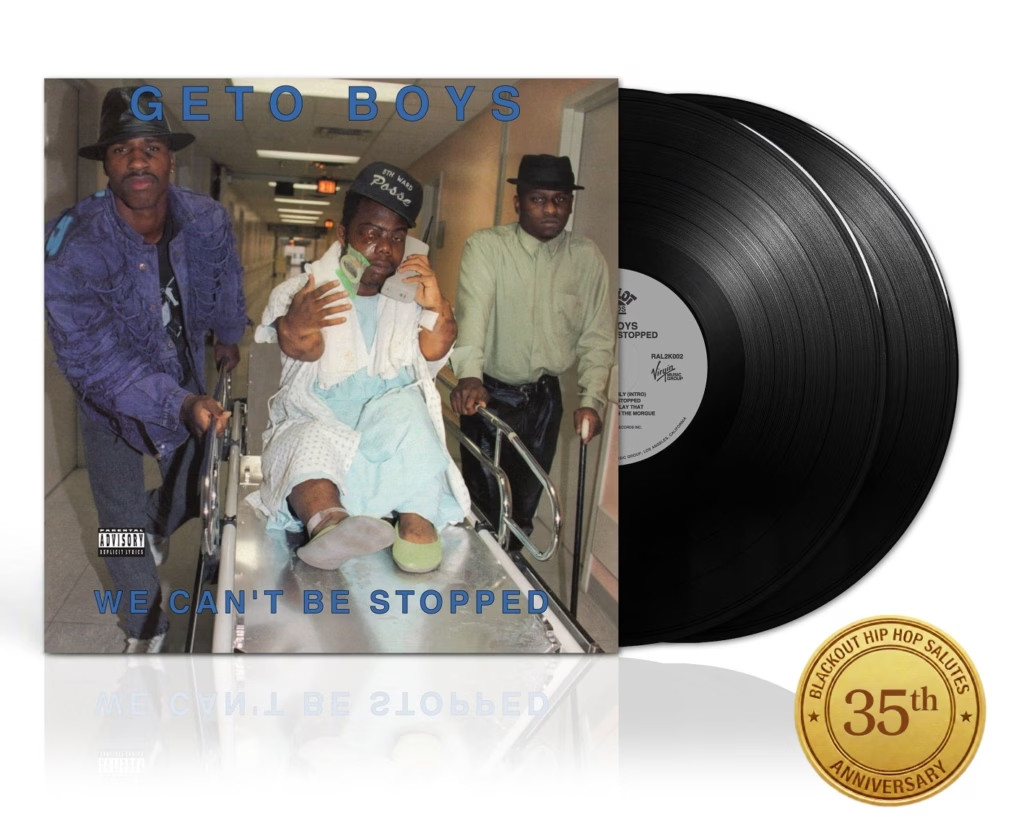
Exactly 35 years ago today – on July 9, 1991 – the Houston pioneers Geto Boys released their third studio album, We Can’t Be Stopped. Released on Rap-A-Lot Records and distributed by Priority Records, this classic record literally kicked the mainstream door wide open for Southern hip-hop. In an era dominated by both coasts, Scarface, Willie D, and Bushwick Bill proved that the South had an uncompromising story worthy of platinum status.
Institutional Censorship and the Road to Priority
Before recording, the Geto Boys faced severe institutional censorship. Geffen Records refused to distribute their previous self-titled project due to its graphic content. Rap-A-Lot founder James Prince was forced to secure a distribution deal with Priority Records, the legendary home of N.W.A. During recording at Jungle Style Studios, producer DJ Ready Red left the group due to financial disputes, leaving behind only a short vocal on the title track. Consequently, the Geto Boys officially became a trio, completing the album in a few weeks.
A Gruesome Photo in the Hallways of Ben Taub
The visual identity of the album cover remains one of the most notorious in music history. It features a heavily sedated Bushwick Bill on a gurney, wheeled through Houston’s Ben Taub Hospital by Scarface and Willie D. The photograph is entirely real – taken on June 19, 1991, after a drunken, PCP-fueled Bill was shot in his right eye during a struggle over a gun with his girlfriend. Believing the tragedy suited their raw aesthetic, they decided to use the aftermath for the cover, removing Bill’s bandage. While the shocking artwork boosted sales, Scarface later expressed deep regret for exploiting his friend’s trauma.
Introspection, Paranoia, and Social Commentary
Musically, the project blends raw street reality with poignant social commentary. The lead single, “Mind Playing Tricks on Me,” is a timeless masterpiece and one of the most influential hip-hop tracks of all time. Sampling Isaac Hayes’ “Hung Up on My Baby,” the song brought unprecedented vulnerability to the genre, addressing PTSD, paranoia, and mental illness within the street lifestyle. Elsewhere, tracks like “Fuck a War” deliver a sharp anti-war stance against the first Gulf War, with Bushwick Bill refusing to bleed for a country that oppresses him. Willie D injects raw cynicism in “I’m Not a Gentleman,” while “Trophy” explicitly calls out the music industry for ignoring street artists.
An Unstoppable Legacy
Thanks to the launch of Nielsen SoundScan in June 1991, which accurately tracked actual register sales, the massive street demand for Geto Boys could no longer be hidden. Despite receiving virtually no radio support, the album peaked at No. 24 on the Billboard 200 and was certified Platinum by early 1992. We Can’t Be Stopped cemented Houston and the South on the global hip-hop map, inspiring generations of independent regional artists to rep their hometowns proudly.