Celebrating 25 Years of Wu-Chronicles II
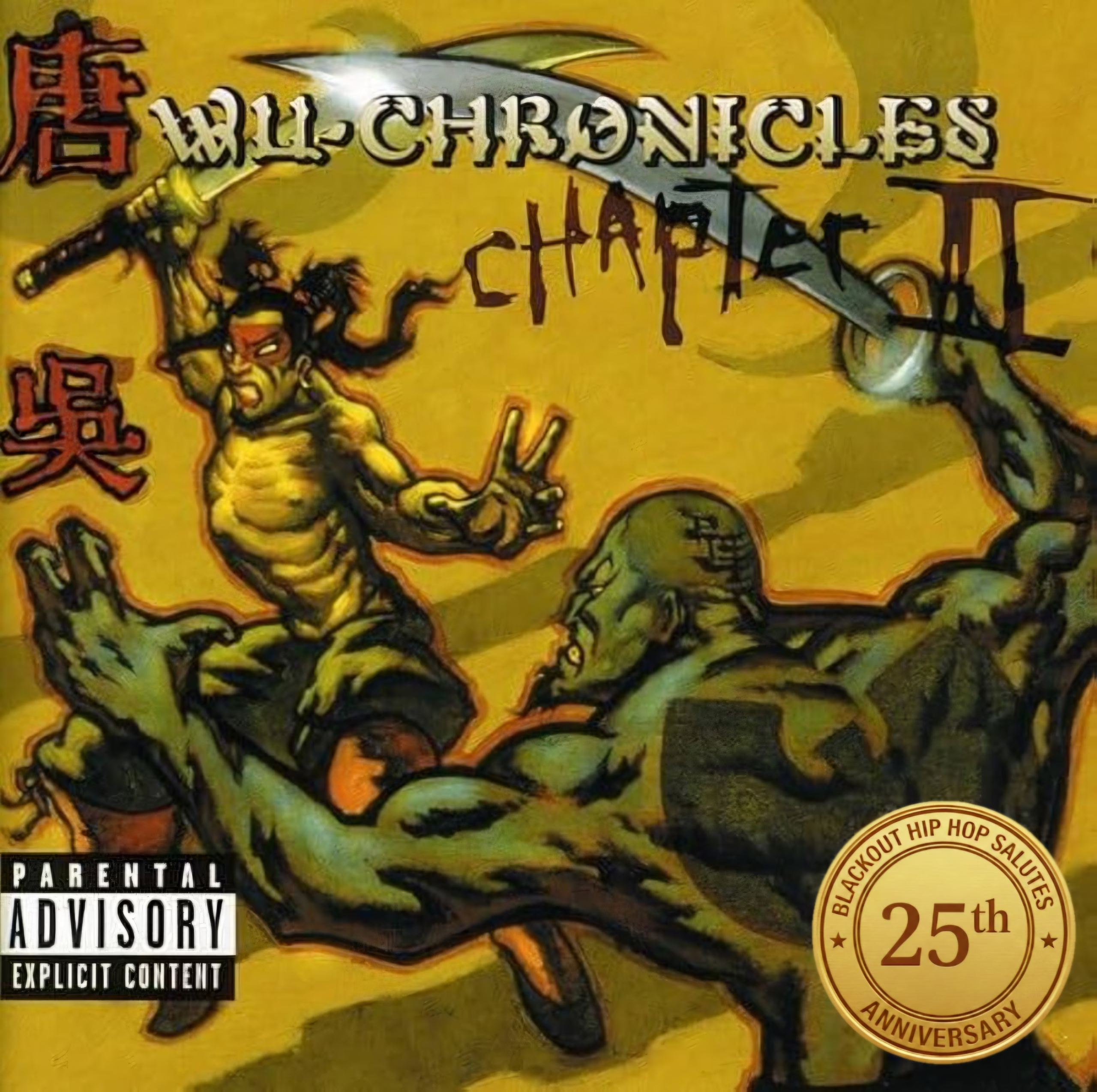
Today marks exactly 25 years since July 3, 2001, when Priority Records, in partnership with Wu-Tang Records, dropped the compilation album Wu-Chronicles: Chapter II. At a time when the Clan was churning out group and solo material at an unbelievable pace, this sequel to the successful 1999 compilation had a clear goal: to consolidate rare cuts, guest verses outside the immediate group, and soundtrack appearances. The result was a mixtape-style project that, a quarter century later, perfectly mirrors both the creative heights and the commercial oversaturation of the Wu empire.
Context of the Era and Curatorial Approach
The year 2001 was a transitional period for the Staten Island crew. Positioned between major collaborative studio albums The W (2000) and Iron Flag (2001), this compilation functioned as a strategic archival overview. Unlike the first volume, which was packed with certified club and street bangers like “4th Chamber” or “The What”, Chapter II offered a much deeper dive. Instead of a cohesive LP with a tight narrative, listeners got an eclectic mix of remixes and collaborations that fans back then struggled to find on original physical formats.
Standout Gems and Rare Collaborations
The true strength of this compilation lies in tracks that are certified hip-hop classics in their own right. Right out the gate, we get Gang Starr’s “Above the Clouds” featuring a legendary guest spot by Inspectah Deck, originally from the 1998 masterpiece Moment of Truth. His opening verse is pure street poetry, widely regarded as one of the best flows in hip-hop history. The historical weight of this track is amplified by the fact that a flood in RZA’s mother’s basement famously destroyed Deck’s early solo masters, forcing him to build his legendary status within the Clan through killer guest appearances like this.
Then there is the extended version of D’Angelo’s neo-soul anthem “Left & Right” featuring Method Man and Redman, originally from the landmark album Voodoo. D’Angelo originally recorded the song with Q-Tip but opted for the raw energy of Meth and Red, as their dynamic flow better matched the off-kilter, dragging groove of the album. The version on this compilation features an exclusive, extended vocal section between the 3:51 and 4:51 marks, making it a must-have for vinyl and CD collectors.
Another highlight is “Eyes a Bleed (RZA Remix)”, which masterfully blends Bounty Killer’s dancehall energy with Masta Killa‘s calm hardcore rap, originally released on Tommy Boy’s Big Blunts compilation in 1996. For heads who love raw mic skills, the “Wu-Tang Clan Live Freestyle” by GZA and Masta Killa from Sway & King Tech’s famous Wake Up Show serves as a great reminder of the era when credibility was earned live on the air.
An Objective Look: Flaws and Omissions
However, the album is not without its weak spots. Alongside the heavy hitters, too much space was given to secondary Wu-Tang affiliates. Tracks like “Re-Up” (Two Da Road) and “In Trouble” (Shyheim) sound generic by Wu standards and dilute the street atmosphere. The biggest curatorial misstep is the complete absence of Raekwon and Ghostface Killah, both of whom were on creative tears at the time. Due to these inconsistencies, the album peaked at a modest #72 on the Billboard 200, a significant drop from the first volume’s #25 spot.
Legacy a Quarter Century Later
Wu-Chronicles: Chapter II is far from an essential entry point for casual listeners trying to discover the 36 Chambers. Yet, for die-hard fans and crate-diggers looking for the full picture, this compilation remains a valuable time capsule. It successfully preserves a unique era when the Wu-Tang brand was powerful enough to organically bridge hip-hop with neo-soul, electronic production, and dancehall.