Bad Meets Evil: “Hell: The Sequel” Turns 15 Today
The Return of the Rebellious Detroit Spitters
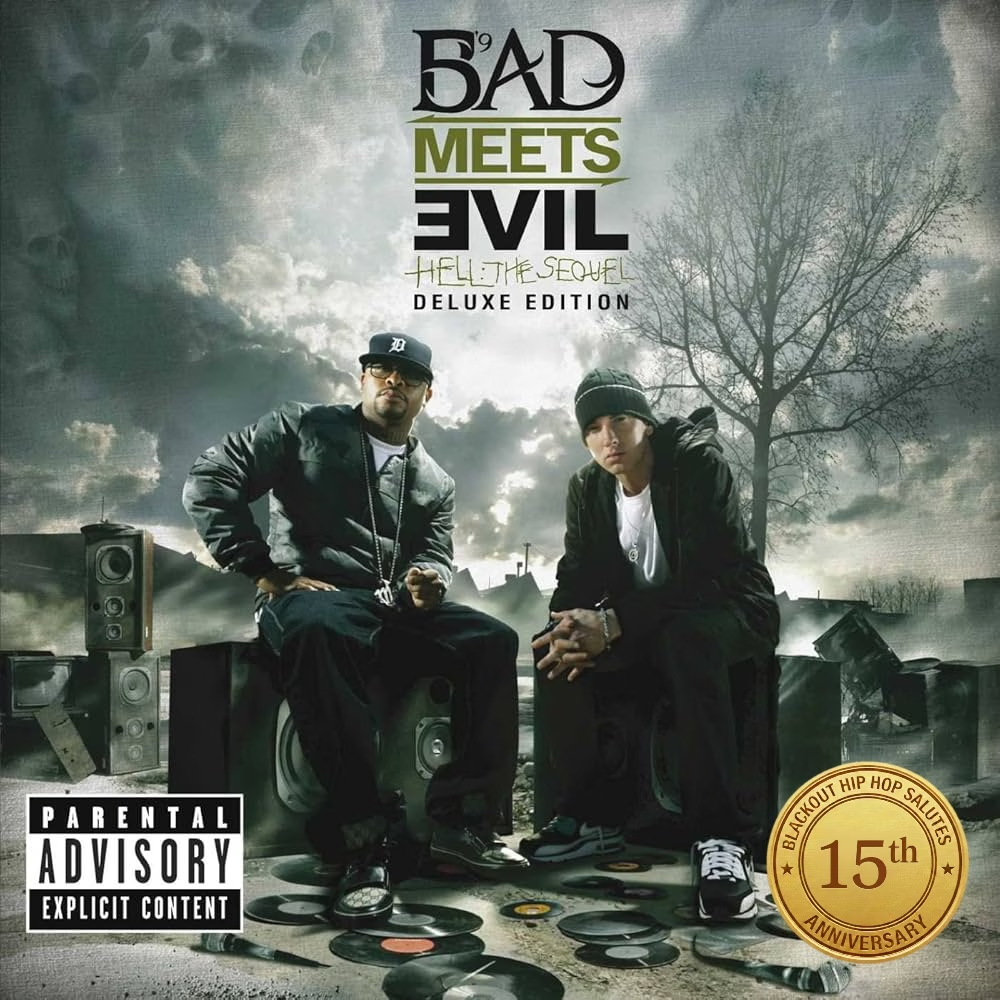
Today marks exactly 15 years since the release of one of the most highly anticipated reunion projects in modern rap history – the “Hell: The Sequel” EP by Detroit’s own Bad Meets Evil. When Marshall Mathers (Eminem) and Ryan Montgomery (Royce Da 5’9″) reunited under this legendary moniker in June 2011, the hip-hop landscape was in a complete frenzy. It was a transitional era moving from physical CD sales to digital formats, and their early-underground chemistry, proven in the late ’90s, was put to a major test once again. This mini-album wasn’t just a quick compilation of tracks recorded on the fly; it was a definitive testament to the fact that lyrical density and technical supremacy could still dominate the global music charts. Fifteen years later, we look back at how this project has aged, its impact on the culture, and whether the dynamic between these two elite MCs still holds up today.
From Street Tensions to adjacent Jail Cells
The story of Bad Meets Evil is impossible to tell without looking at their turbulent history of ups and downs. After releasing early underground classics like “Nuttin’ to Do” and “Scary Movies,” and appearing on Eminem’s major-label debut “The Slim Shady LP” (1999), a massive fallout occurred between the two artists. Professional disagreements and misunderstandings with Eminem’s D12 crew escalated into a years-long public feud filled with aggressive diss tracks. The tension peaked in 2003 when Royce and D12’s Proof were arrested following a confrontation outside a Detroit nightclub. Fortuitously, spending the night in adjacent jail cells allowed them to talk through their personal differences and permanently squash the beef. The tragic passing of Proof in 2006 devastated the Detroit hip-hop scene but ultimately became the bridge for Eminem and Royce to reconcile. By early 2011, after Shady Records signed Royce’s supergroup Slaughterhouse, the studio chemistry between the two long-time friends was fully restored, laying the groundwork for this EP.
Pure Detroit Chemistry and Lyrical Sparring
“Hell: The Sequel” kicks off with “Welcome 2 Hell,” produced by Mobb Deep’s Havoc. From the jump, the duo establishes a relentless pace. The fast tempo, aggressive drums, and rapid-fire verse trades showcase a lyrical sparring match where neither MC is willing to take a back seat. The lead single, “Fast Lane,” produced by Supa Dups, serves as the EP’s technical peak. Its heavy bassline and G-funk elements provide the perfect backdrop for the duo’s elite delivery and intricate schemes. Tracks like “Above the Law” and “The Reunion” channel a gritty Detroit atmosphere, blending hardcore lyricism with the dark, twisted humor that defined Eminem’s early catalog. On “I’m on Everything,” featuring Mike Epps, the duo offers a comedic but chaotic take on substance abuse, while “Take from Me” delivers a more introspective look at the cost of fame and the frustrations of music piracy. “Loud Noises” brings in the entire Slaughterhouse crew (Joe Budden, Joell Ortiz, and Crooked I), functioning as a high-octane posse cut where each artist tries to out-rap the next. Additionally, deluxe tracks like “Living Proof” and “Echo” further enriched the project’s overall depth.
The Polarizing Crossover Experiment: “Lighters”
Despite its heavy lyrical merits, the EP faced significant criticism, particularly regarding its second single, “Lighters,” featuring pop singer Bruno Mars. For underground rap purists, the track felt like a forced commercial play by Shady Records, disrupting the dark, gritty tone of the rest of the project. Critics pointed out that Royce’s street-oriented style felt slightly uncomfortable on such a pop-friendly instrumental. However, from a commercial standpoint, “Lighters” was a massive success. The single successfully bridged two completely different demographics, bringing mainstream ears to a hardcore rap EP. Today, 15 years later, the song stands as a calculated crossover move that secured the project’s legacy on global radio, even if it remains a polarizing point of discussion among the duo’s core fanbase who prefer the grittier aspects of the EP.
A Mainstream Takeover and Chart Dominance
For an EP, “Hell: The Sequel” performed like a major studio release. It debuted at number one on the US Billboard 200, selling over 171,000 copies in its first week. This was a milestone achievement, landing Royce his first-ever chart-topping project, while Eminem became the first artist in five years to score two number-one albums in a 12-month period (following 2010’s “Recovery”). Critics generally received the EP well, earning a score of 72 on Metacritic. Reviewers praised the outstanding natural chemistry and technical flows, though some pointed out production inconsistencies and a lack of thematic variety in certain spots. Today, the project has surpassed platinum status in the US, cementing its place in the commercial history of collaborative hip-hop releases.
The Lasting Impact of Lyrical Supremacy
Ultimately, “Hell: The Sequel” stands as a highly successful reunion and a reminder of an era when elite lyricism could still sit comfortably atop the music industry. For Eminem, it served as a creative bridge to the highly technical, fast-paced flows of his later career. For Royce Da 5’9″, the mainstream spotlight provided a career-defining boost, paving the way for his critically acclaimed solo run in the 2010s. While we never got a full-length follow-up LP, this EP remains the gold standard for modern collaborative rap projects in hip-hop culture. Fifteen years later, playing these tracks back, it’s clear that “Bad” and “Evil” have never sounded better together.