45 Years of “Deuce”: Kurtis Blow at a Sonic Crossroads
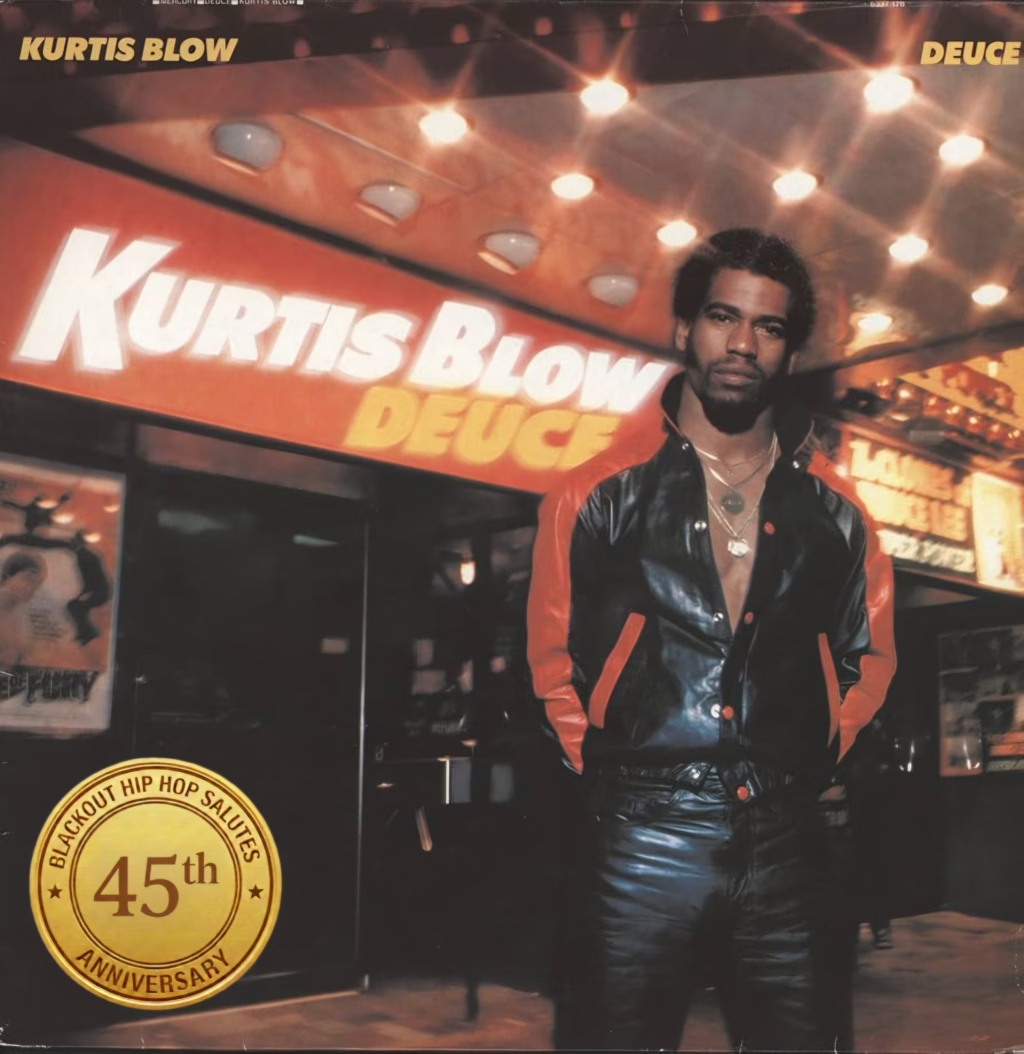
Today, on June 15, 2026, we celebrate exactly 45 years since the release of one of the most interesting and often unjustly overlooked albums of the early hip-hop era. When Kurtis Blow dropped his sophomore studio album Deuce in the summer of 1981 under the major-label powerhouse Mercury Records, the entire music industry was watching his next move with intense curiosity. Rap music was just starting to validate itself as a commercially viable genre, largely propelled by the massive gold-certified success of Blow’s 1980 anthem “The Breaks“. Major record companies had finally woken up to the realization that the street culture originating from the Bronx could generate serious revenue. Yet, the pressure on a young Kurtis Walker was immense—he had to prove that hip-hop was not merely a passing novelty engineered by neighborhood party DJs.
Interestingly, some digital databases and historical catalogs list a confusing release code “15.01981”, leading some to believe the record dropped in January of that year. However, a deep dive into Mercury Records’ chronological releases and Billboard’s charts from that era confirms that the album officially landed on June 15, 1981. Mid-1981 was a pivotal turning point for hip-hop; the genre was transitioning from raw, impromptu park jams into structured, radio-friendly studio recordings.
Greene Street and the Sonic Aesthetics of the Pre-Sampler Era
The recording sessions for Deuce took place at the legendary Greene Street Recording Studios in New York City, a space that would soon become the epicenter of a sonic revolution in hip-hop engineering. During this era, digital sampling technology (such as the game-changing SP-1200 or Akai MPC series) did not yet exist. To craft a rhythmically tight and danceable sound, producers J.B. Moore and Robert Ford Jr. had to hire elite session musicians to play the funk grooves live in the studio.
Under the technical guidance of recording engineer Roddy Hui, who captured and mixed the sessions using his famous “Roddy Way” technique, they constructed a wall of sound that emphasized the heavy dynamics of the rhythm section. Jimmy Bralower delivered the precise drum and percussion patterns, while Seth Glassman anchored the tracks with his bass lines. The guitar arrangements were handled by the veteran John Tropea, with Robbie Kondor on synthesizers and Rhodes electric piano. The result was a clean, catchy, and highly controlled funk sound that legendary critic Robert Christgau, in his B+ review, described as “inauthentic funk” that nevertheless rang his bell every single time. It was a polished, studio-crafted response to the untamed street energy of New York’s block parties.
An Incubator for Future Titans of the Hip-Hop Industry
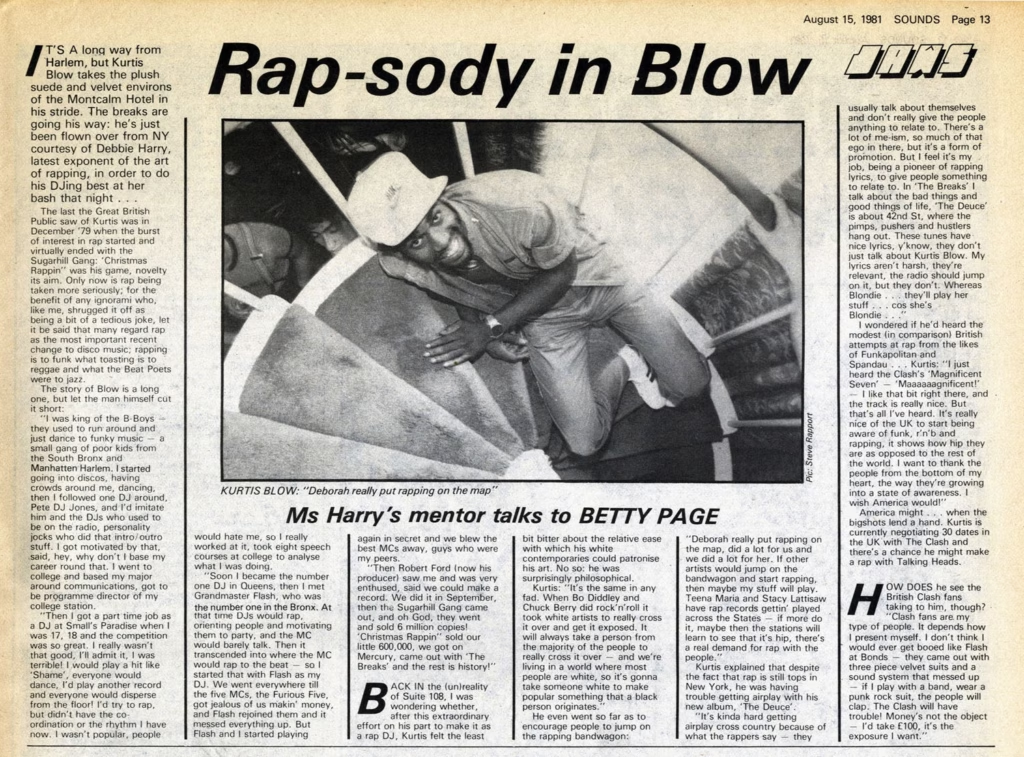
Looking back at the liner notes and writer credits of the Deuce LP today feels like reading a directory of hip-hop royalty. One of the most critical figures involved was Larry Smith, who co-wrote the opening track “The Deuce” and “Take It To The Bridge“. Larry Smith started out as a session bassist for Kurtis Blow, but his experience at Greene Street taught him that live bands often watered down the raw, aggressive edge required by rap vocals. This realization soon led him, along with Russell Simmons (who managed Blow and co-wrote “Do The Do” on this record), to ditch live instrumentation in favor of drum machines. That decision, made shortly after the Deuce sessions, would soon birth the minimalist, hard-hitting, rock-infused sound of Run-D.M.C., forever separating rap from disco’s shadow.
In addition to Simmons and Smith, the album features guitar contributions and co-writing from David Reeves (best known as Davy DMX) on the track “Rockin'”. Another fascinating highlight is the writing contribution of legendary music critic and author Nelson George on “Take It To The Bridge”, representing a rare historical moment where critical hip-hop journalism intersected directly with songwriting in the studio.
Track-by-Track Anatomy and the Drum Break That Reshaped Electronic Music
The original physical vinyl release contains exactly seven tracks split across two sides. Although some digital streaming services incorrectly list “Deejay’s Delight” as part of the original tracklist, the physical 1981 pressings confirm the seven-track sequence.
The most historically significant moment on the album arrives right at the start—the opening song “The Deuce“. The thunderous drum break at the very beginning of the track, performed by Jimmy Bralower, would go on to become one of the most influential breakbeats in electronic music history. This specific break was first sampled by Double D & Steinski for their legendary 1980s cut-up mix “Lesson 2 (The James Brown Mix)”. Through that seminal record, the break caught the ears of UK rave and jungle producers in the 1990s. Drum & bass pioneer LTJ Bukem famously sampled this exact drum pattern to anchor his 1995 atmospheric masterpiece “Horizons“.
The other tracks on the album carry their own distinct old-school weight. “It’s Gettin’ Hot” delivers steamy club funk aided by the soulful backing vocals of Deborah L. Cole and Harold B. Lee, while “Starlife” provides a reflective look at the double-edged sword of fame. “Getaway” is the longest track on the record, spanning nearly seven minutes, highlighted by the striking horn arrangements of saxophonist Mark “Sugar Rico” Rivera. “Do The Do” features a fast, syncopated party groove with live percussion from a group called “The Willowbrook Four”, and the closer “Rockin'” delivers an early rap-rock fusion with a unique stereo split—David Reeves’ guitar is panned hard left, while John Tropea’s lead guitar blazes on the right.
Chart Performance, Reception, and 45 Years of Heritage
From a commercial standpoint, Deuce did not replicate the massive gold-certified heights of “The Breaks”. The album peaked at No. 35 on the Billboard Top R&B/Hip-Hop Albums chart and No. 137 on the Billboard 200. Singles like “It’s Gettin’ Hot” and “Starlife” failed to ignite the pop charts, but they dominated the New York club circuit and found a highly receptive audience across Europe, where the album was widely distributed through PolyGram.
Looking back after 45 years, Deuce was a vital, evolutionary milestone for hip-hop. It proved that a solo rapper could deliver a cohesive studio album rather than just a collection of dance-floor singles. Today, on June 15, 2026, as we mark this incredible milestone, blow the dust off your turntables or cue up your digital playlists—Kurtis Blow and the Greene Street crew deserve your ultimate respect.