15 Years of Beats, Rhymes & Life: The Raw ATCQ Truth
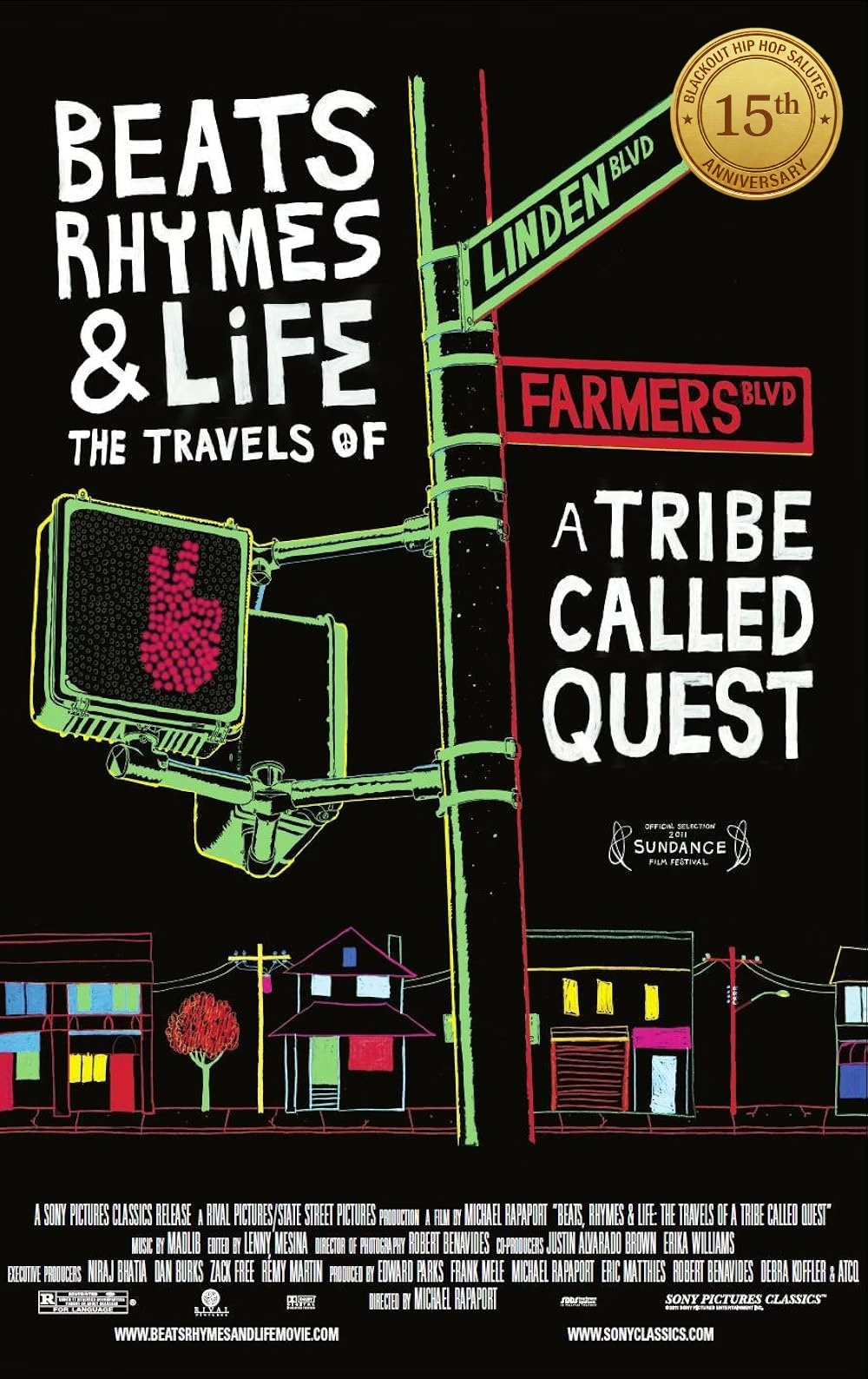
Today, July 8, 2026, marks exactly 15 years since the documentary Beats, Rhymes & Life: The Travels of A Tribe Called Quest hit theaters via Sony Pictures Classics. When Michael Rapaport joined the Queens crew on their 2008 tour, nobody predicted we’d get such a raw music doc. This wasn’t a sanitized MTV-style promo; it was a deeply emotional look at a lifelong brotherhood fracturing under the weight of fame, health struggles, and creative clashes. For blackouthiphop.com, we look back at a classic that stripped away the myth of hip-hop royalty to reveal the flawed geniuses underneath.
When a Hardcore Fan Steps Behind the Lens
Rapaport aimed to spotlight Tribe in a legendary light, driven by his deep-seated fandom. Raised on the Native Tongues collective, where ATCQ, De La Soul, and Jungle Brothers brought positive vibes to a gangsta-dominated landscape, he approached the project with reverence. Their 1990 debut People’s Instinctive Travels got the ball rolling, while 1991’s The Low End Theory completely shifted the culture.
Yet, making an indie doc about these giants was a grueling uphill battle. Aside from volatile egos, clearing music samples was a nightmare. Rapaport later shared that sample clearance was so daunting that entire scenes were edited around tracks they ultimately couldn’t secure, nearly derailing the film. Still, despite starting in just four theaters, the film went on to gross $1.2 million, a solid win for an indie hip-hop doc.
Battling for the Narrative: Beats, Rhymes and Fights?
The drama surrounding production became just as legendary as the group’s catalog. Friction sparked in December 2010 when a rough cut was sent to the group. Q-Tip was displeased with his portrayal, and a Twitter war erupted when the Abstract publicly stated he did not support the film. Tip claimed the original agreement was for the band members to be signed on as producers with final cut privileges.
Rapaport fiercely disputed this, claiming producer credits weren’t mentioned for two and a half years until the group used them as leverage to sign off on distribution. While the director eventually granted them producer credits, he refused to yield editorial control, resisting a glossy PR piece. The tension peaked when a trailer leaked under the title Beats, Rhymes and Fights. Led by Phife Dawg, the group fought tooth and nail against it, arguing it sensationalized their legacy. Although changed, the scars remained. Q-Tip later went on MTV’s RapFix, urging other hip-hop pioneers like Rakim and Wu-Tang to “tell y’all own stories” and maintain ownership of their historical narratives.
The Fractured Brotherhood: Q-Tip vs. Phife Dawg
The film’s core is the relationship between Q-Tip and Phife Dawg. Growing up together, the duo possessed unmatched chemistry—Tip’s smooth flow contrasting Phife’s punchlines. But as the film unfolds, we watch that childhood bond disintegrate.
The cracks started in 1993 when Phife moved to Atlanta. The divide widened during the recording of 1996’s Beats, Rhymes and Life when Q-Tip unilaterally brought his cousin, Consequence, into the studio. Phife admitted in the doc that he saw Consequence’s heavy presence on the album as Tip’s way of slowly phasing him out, damaging their trust.
Everything came to a head on the 2008 Rock the Bells tour. Phife was in terrible health, dealing with Type 1 diabetes, undergoing dialysis three times a week, and running on dangerously low blood pressure. During an August 9 show, Tip ad-libbed: “Look alive, look at Phife Dawg”. Phife took it as a public jab, a feeling amplified after reading a Spin magazine interview where Tip stated he “never had a problem with Phife”. A week later, in Mountain View, years of bottled-up frustration exploded backstage in a screaming match.
Between the Beats and the Business
Yet, the doc isn’t entirely bleak. The first hour is a beautiful celebration of pure hip-hop craftsmanship. Watching Q-Tip in his home studio recreate “Can I Kick It?“, showing how he flipped Lou Reed’s bassline with custom-chopped drum breaks, is a transcendent moment.
But the film quickly pairs this magic with the industry’s harsh reality. At a Tribeca Q&A, Phife admitted he hated performing the track because Lou Reed claimed 100% of the royalties. This shift from joyful creation to cold reality is perfectly scored by the legendary Madlib. Utilizing disonant, jazz-inflected keys, Madlib’s score kicks in at the one-hour mark, turning the documentary’s vibe from a celebration of golden-era hip-hop into a melancholic soundtrack of a legendary group’s final days.
A Lasting Legacy
Despite the backstage drama, the film was a critical success, winning the PGA Award and the Black Reel Award for Outstanding Documentary, alongside a Grammy nomination in 2012. At the 2011 Sundance premiere, Phife Dawg was the only member to show up. Tearing up, Phife said: “Q-Tip has no idea how many people love him. I wish he was here to witness this.”
Those words hit incredibly hard 15 years later. Phife passed away in 2016 due to diabetes complications. Before his transition, the group managed to quietly record their final masterpiece, We Got It from Here… Thank You 4 Your Service, before permanently disbanding in 2017. Fifteen years after its theatrical release, Beats, Rhymes & Life remains the gold standard for hip-hop documentaries. It showed us that our musical heroes are deeply human—vulnerable, prideful, and complicated. More than anything, it reminds us why their journey was so vital to the culture we live in today.