The Voice of Hope and Hip-Hop Roots (R.I.P. Jesse Jackson)
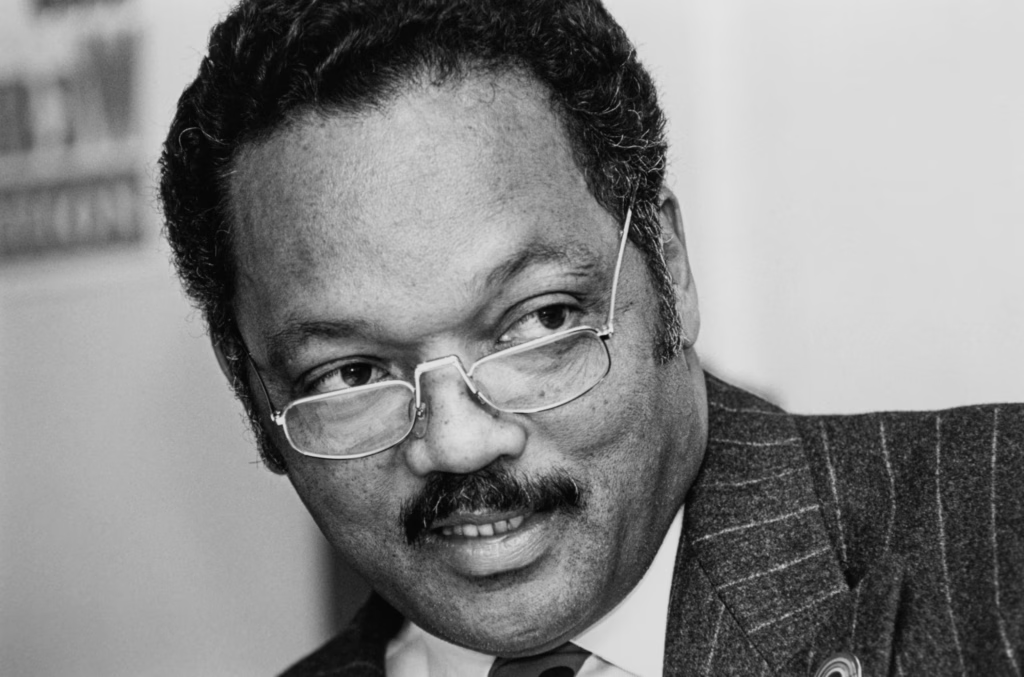
Close-up of Shadow Sen. Jesse Jackson, D-D.C., in 1995. (Photo by Maureen Keating/CQ Roll Call via AP Images)
The Reverend Jesse Jackson left us today, February 17, 2026, in Chicago. His passing at the age of 84, following a long battle with neurological issues (Progressive Supranuclear Palsy), leaves a void felt from church pews to the concrete of the Bronx . Jackson wasn’t just a “Civil Rights OG”; he was the man who gave hip-hop its political consciousness and a rhythmic template that still resonates in the culture’s best verses.
His journey began in the 1960s, standing shoulder to shoulder with Dr. Martin Luther King Jr. He was there in Selma, and he was there in Memphis on that tragic day. But Jackson’s true contribution to the culture started when he realized that freedom isn’t just gained by marching, but through economic empowerment and, most importantly, a voice with “flow.” By founding organizations like Operation PUSH and the Rainbow Coalition, Jackson laid the groundwork for what hip-hop would later call the “self-help” philosophy .
If you listen to Jackson’s performance at the Wattstax festival in 1972, you’ll hear the precursor to modern rap. His famous recitation of “I Am Somebody” wasn’t just a speech; it was a performance with incredible rhythm and “call and response” technique. While the crowd repeated his words, he dictated the tempo just like the best MCs do on stage. His voice was an instrument, and his message of self-respect became the blueprint for conscious rap in the 1980s.
When he decided to run for President in 1984, hip-hop stood behind a politician with full force for the first time. Grandmaster Melle Mel released the legendary track “Jesse,” marking one of the earliest examples of rap music directly agitating for an election. Melle Mel used his rhymes to call on the brothers to register and vote, seeing in Jackson a man who understood the streets. Although he didn’t win then, Jackson captured five states and proved that the Black vote carried immense power, paving the way for everyone who followed, including Barack Obama.
Jackson’s influence can literally be measured through music. His voice has been sampled in nearly 250 tracks. Public Enemy, led by Chuck D, used his speeches to give their albums weight and authority. In classics like “Fight the Power” and “Rebel Without a Pause,” Jackson’s voice serves as the sonic backdrop of the revolution. Even 2Pac utilized his voice to add a spiritual note to his narratives of survival.
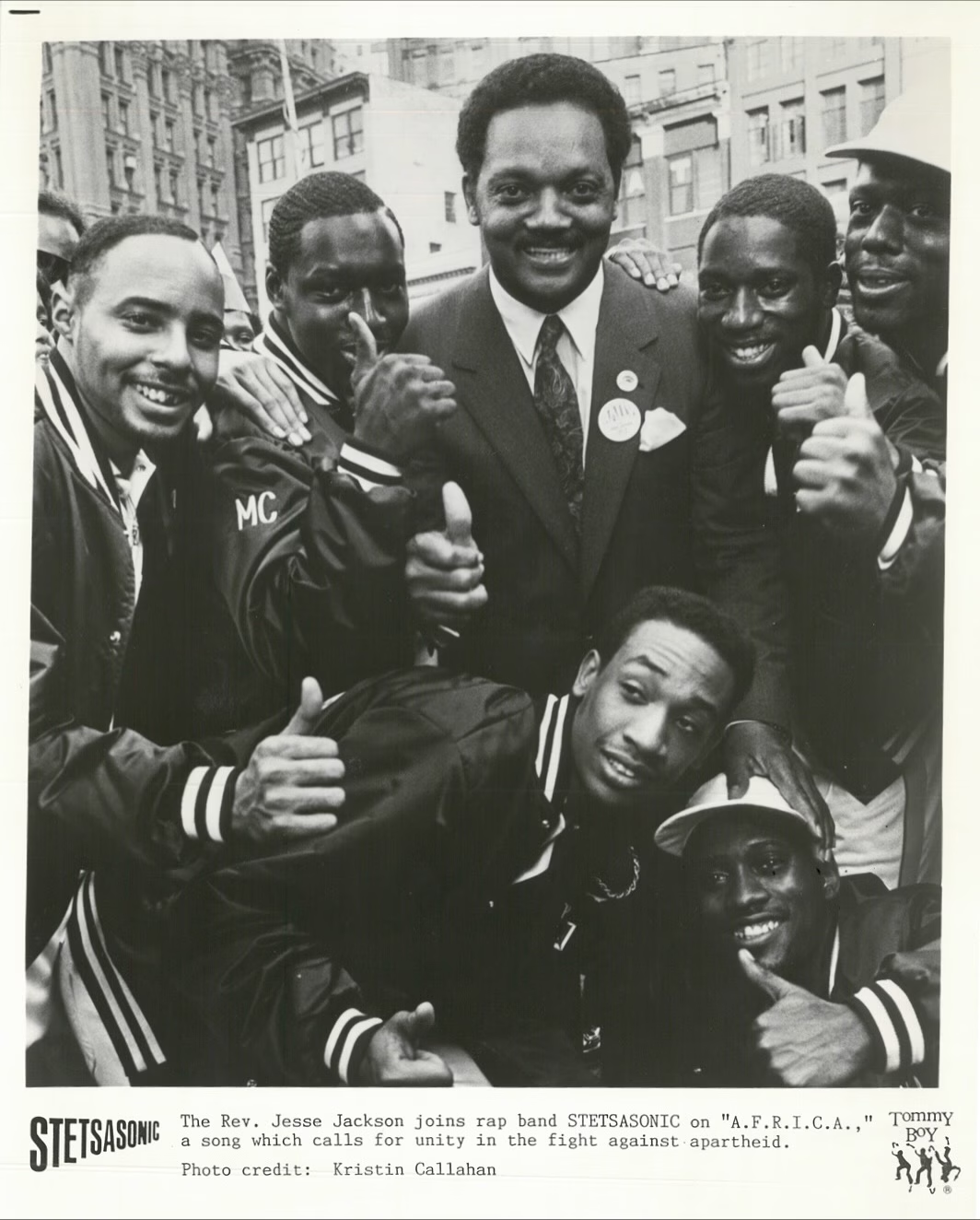
Released in 1987 by the Brooklyn group Stetsasonic, “A.F.R.I.C.A.” is a landmark conscious hip-hop track that directly challenged the South African apartheid regime. The song was inspired by Reverend Jesse Jackson’s 1986 visit to the “Frontline States“—the black-ruled nations bordering South Africa that were under constant threat from the apartheid government. Jackson appeared alongside Stetsasonic and Nigerian percussionist Babatunde Olatunji in the music video to further legitimize the movement. The song functioned as a geography lesson, naming countries like Angola, Zimbabwe, and Botswana, and was even distributed with a “Teaching Guide” for schools and churches.
However, it wasn’t always “peace and love.” As hip-hop became more commercial and aggressive, Jackson became one of its sharpest critics. In 2007, he organized a symbolic “funeral” for the N-word, urging rappers to stop using it in their lyrics. This sparked a serious “beef” with the younger generation. Rappers like David Banner and Master P argued that hip-hop only reflected a reality that politicians like Jackson had failed to fix. It was a classic generational clash—older leaders demanding respectability and young artists wanting to stay raw and honest.
Despite these disagreements, Jackson’s mantra “Keep Hope Alive” remains etched in hip-hop’s DNA. His work to integrate African American businesses into major corporations allowed today’s moguls like Jay-Z or Dr. Dre to even have a seat at those tables.
Jesse Jackson taught us that you have to fight for your place under the sun loudly, rhythmically, and unapologetically. He was a “servant leader” who shared the world with all of us . Today, as we say goodbye, the hip-hop community honors him with the words: “Rest in Power.” He has put down the mic, but his echo will forever be heard in every beat that seeks justice.

You must be logged in to post a comment.