The Source: Balancing Old School Roots and New School Shifts
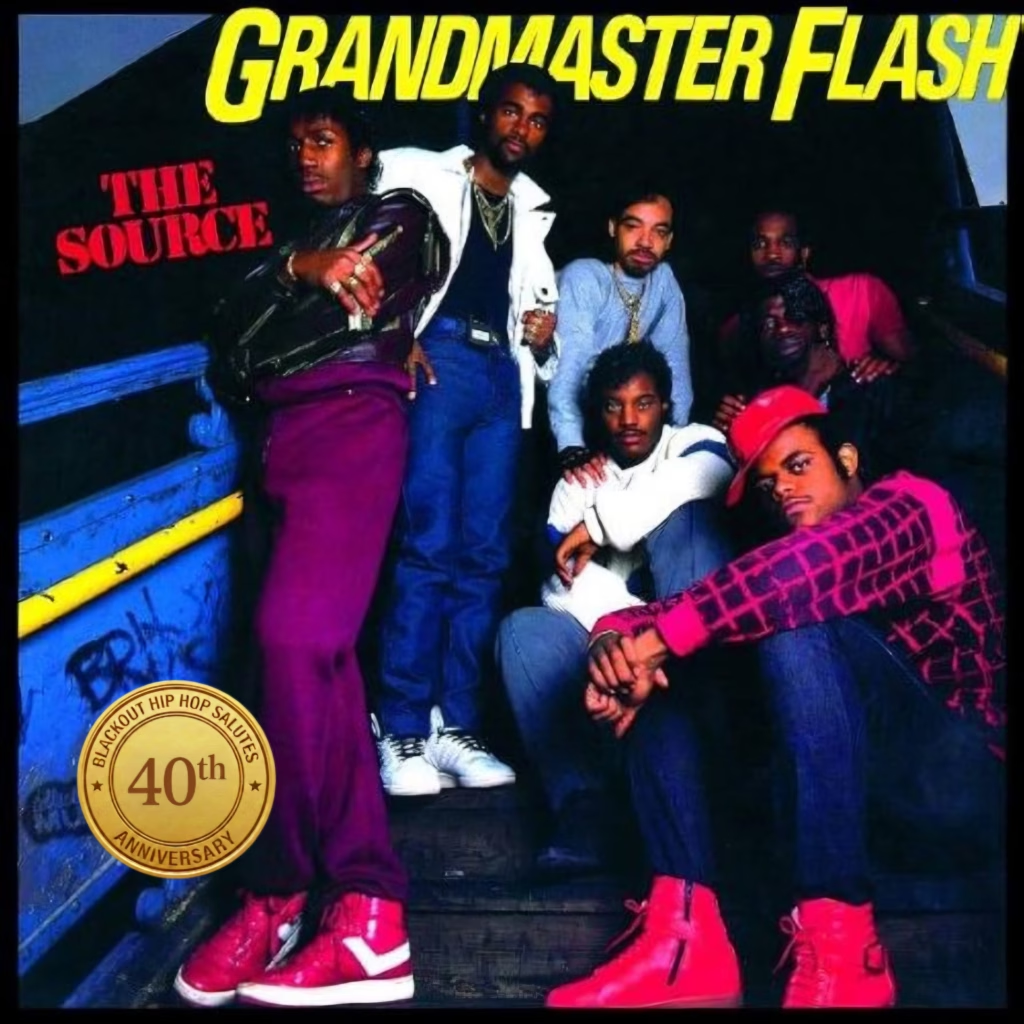
When we talk about 1986 in hip-hop, we usually think of Run-D.M.C. and their Raising Hell dominance or the Beastie Boys breaking into the mainstream. However, for pioneers like Grandmaster Flash, that year was a period of significant transition. On this day, March 2, 1986, Flash released his fourth studio album The Source via Elektra Records . This release stands as the centerpiece of his “Elektra trilogy,” offering a fascinating look at how one of the genre’s greatest legends navigated the seismic shifts of the mid-eighties scene.
Following a bitter split from Sugar Hill Records and $5 million lawsuits over unpaid royalties, the original Grandmaster Flash and the Furious Five disbanded. While Melle Mel stayed loyal to Sylvia Robinson, Flash took Rahiem and Kidd Creole with him to sign a major deal with Elektra . To fill the gaps, Flash recruited new talent: Kevin “The Lord LaVon” Dukes on bass and vocals, rapper Russell “Mr. Broadway” Wheeler, and dancer Larry “Love” Parker . Although legally barred from using the “Furious Five” name, this lineup attempted to preserve the specific Bronx energy that had made them world-famous.
On the production side, the album was helmed by Flash himself along with Vincent Castellano . The sound was noticeably polished, recorded at Grand Slam Studios in New Jersey—a standard procedure for major label releases back then . However, critical reception was split. While some praised the technical precision and clean mix, purists felt Flash sounded too conservative compared to the raw, minimalist energy of the new school artists taking over at the time .
The lead single, “Style (Peter Gunn Theme),” is a perfect snapshot of that era . Flash flipped Henry Mancini’s famous theme into an electro-rap hybrid aimed at a broader audience. The track peaked at number 54 on the Billboard R&B chart—a respectable showing, though it failed to become the massive crossover hit needed to return Flash to the top of the charts. On the other hand, “Fastest Man Alive” remains a true gem for fans of original DJ artistry, where Flash proves why he’s still a master on the wheels of steel, showcasing his scratching skills and Quick Mix Theory.
Interestingly, The Source eventually earned a Gold certification from the RIAA, representing over 500,000 units shipped . Despite often being overshadowed by the legendary The Message LP, it performed quite well commercially, reaching number 27 on the Top R&B/Hip-Hop Albums chart . For today’s collectors, this is essential listening to understand the evolution of production. If you’re into crate digging, finding this on wax provides that authentic 80s electro feel that laid the groundwork for countless future samples.
Objectively speaking, The Source isn’t the album that changed the world like the single “The Message” did, but it is a vital document of a time when hip-hop was becoming corporate. It shows pioneers trying to stay relevant in a game that was changing every month. Flash’s ability to integrate new members and modernize his sound without losing his identity as a DJ deserves respect from any true hip-hop head. It remains a solid “Dig of the Day” for anyone looking to understand the bridge between the park jams of the Bronx and the global industry hip-hop would soon become.