Ten Years Without Blowfly: Remembering the Legacy of Clarence Reid (1939–2016)
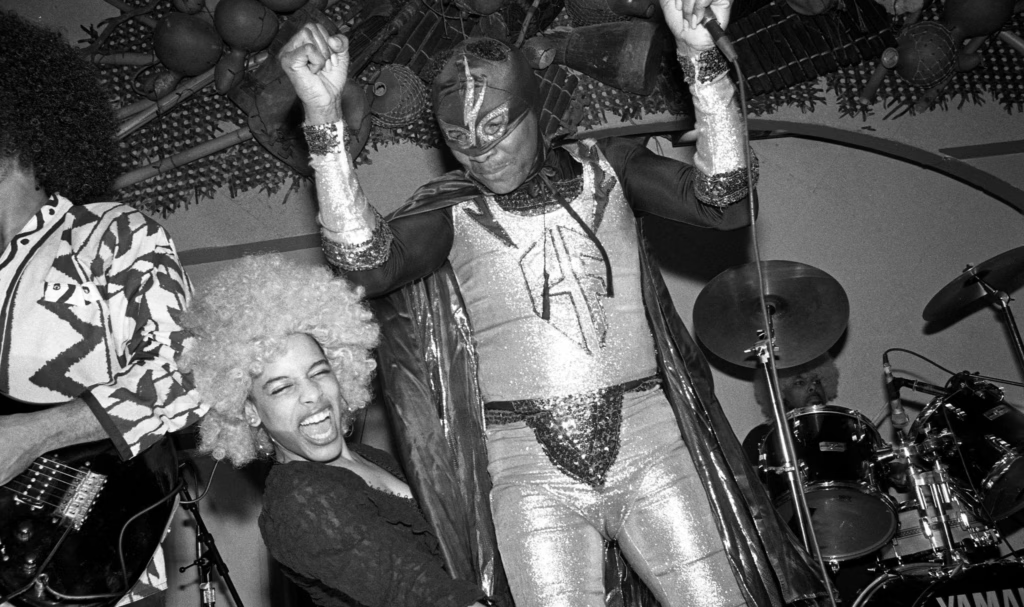
Today, January 17th, marks a full decade since the passing of Clarence Reid, the man whose alter-ego Blowfly became one of the most unique and influential foundations of hip-hop culture. His death in 2016 at a Florida hospice marked the end of an era for an artist who managed to blend top-tier soul songwriting with a raw, comedic, and often explicit expression that would define rap music decades later.
Reid’s career in Miami during the ’60s and ’70s was impressive long before he put on the masked costume. As a powerhouse songwriter and producer for TK Records, he penned some of the era’s most beautiful soul tracks. He wrote “Clean Up Woman” for Betty Wright, a platinum-selling hit, as well as classics for Gwen McCrae (“It’s Worth the Wait”). However, inside the studio, Reid began creating parodies of those same songs, inserting explicit lyrics to entertain his colleagues. These “forbidden” versions eventually birthed the Blowfly project.
His 1971 album, “The Weird World of Blowfly,” is now rightly analyzed as a precursor to rapping. Reid didn’t just sing; he used a rhythmic, spoken-word style over funky backdrops, which was entirely outside the mainstream at the time. His influence on the scene is monumental. The group 2 Live Crew would not have existed in their known form without Blowfly, and his legendary legal battle with songwriter Stanley Adams over copyright issues set important precedents in the music industry.
What makes Blowfly a true ‘general’ of the game isn’t just his persona, but his dual legacy. Under his real name, Clarence Reid, he penned soul classics like Betty Wright’s ‘Clean Up Woman’—a track that became a cornerstone for music production, sampled by everyone from Mary J. Blige and Afrika Bambaataa to Sublime and Chance the Rapper. However, as Blowfly, he was the ‘Ground Zero’ for explicit rap. He provided the blueprint for the entire Miami Bass movement and acts like 2 Live Crew, proving that street humor and raunchy lyrics had a place in rhythm long before hip-hop even had a name.
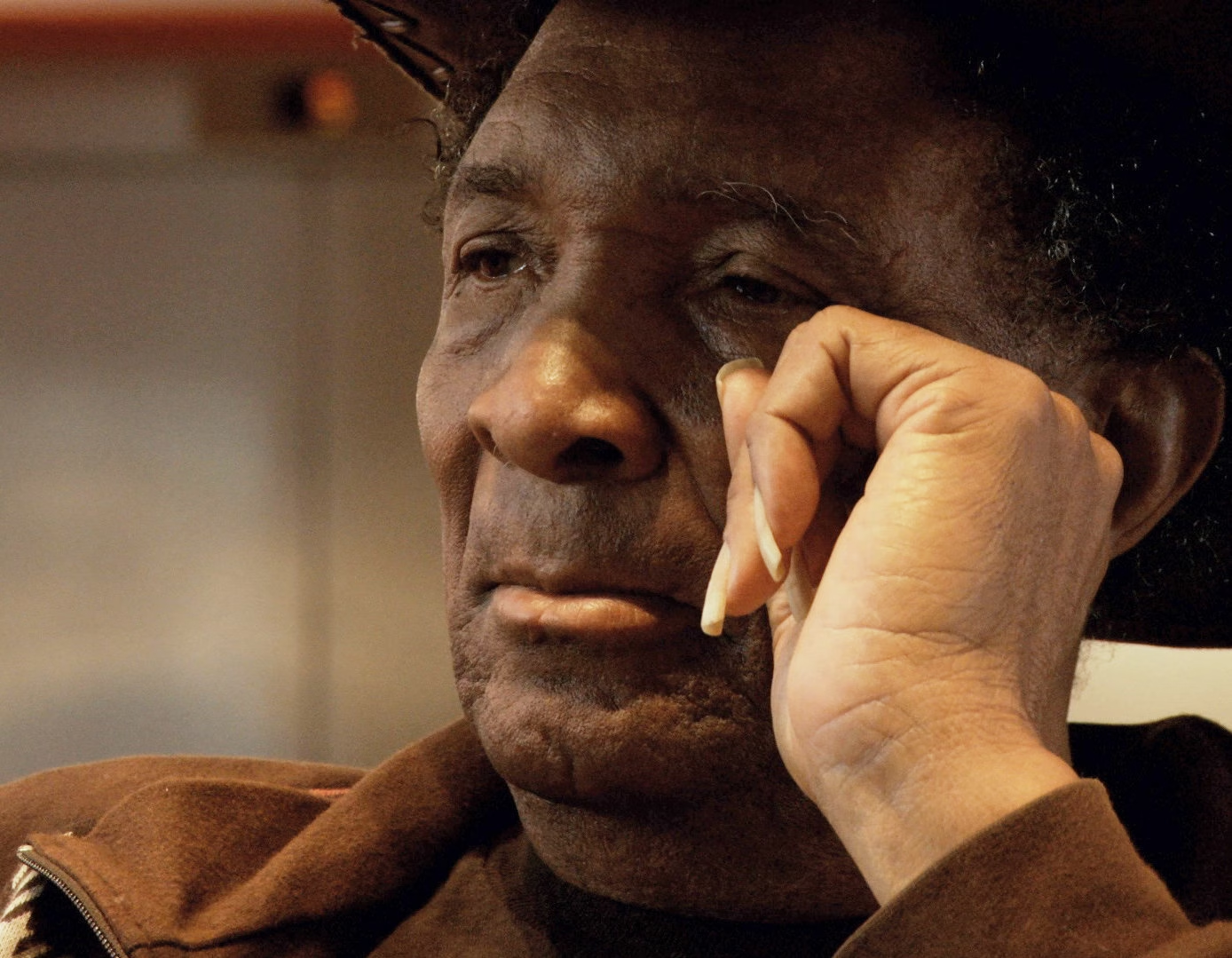
Ten years after his passing, we remember Clarence Reid not just as the man behind the mask, but as a musical genius who broke barriers and proved that music could simultaneously be high art and raw, uncompromising entertainment.


You must be logged in to post a comment.