Rest in Power: JDL of the Cold Crush Brothers
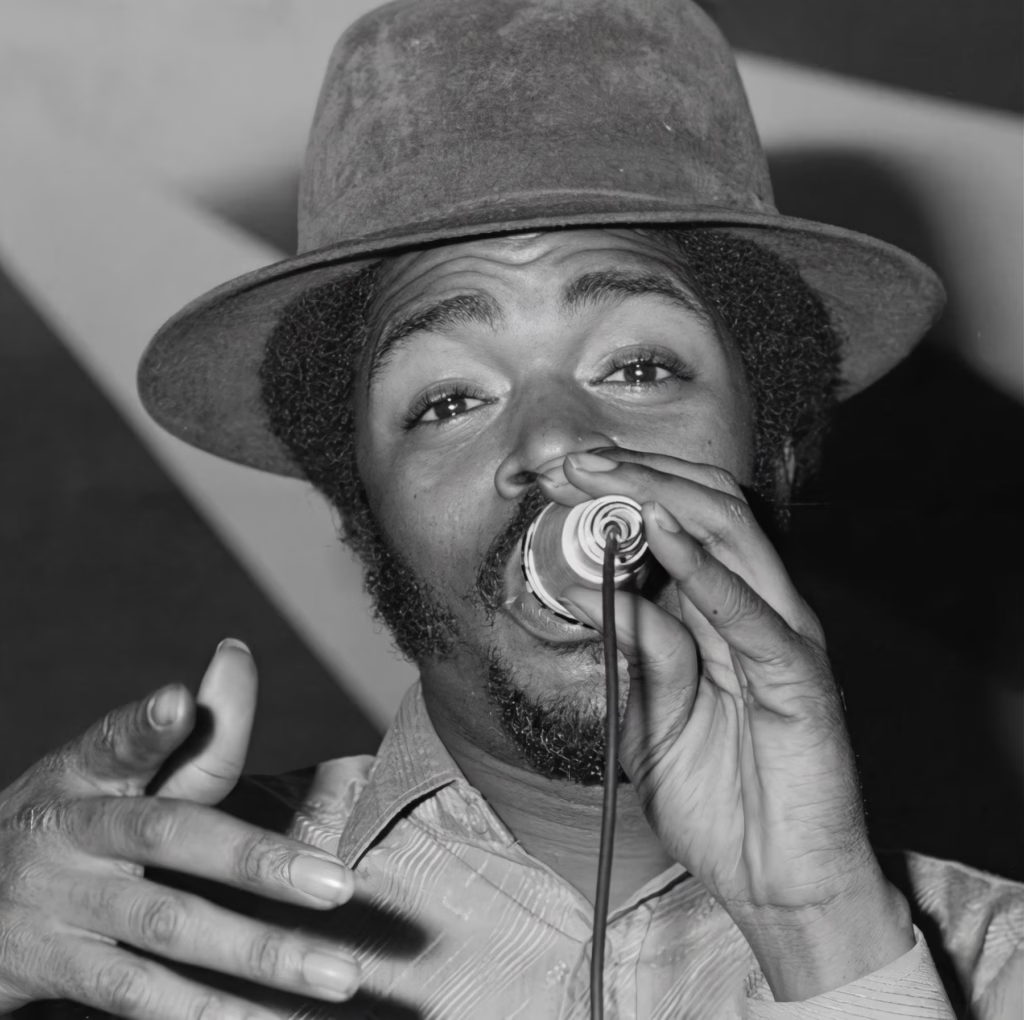
On March 23, 2026, the hip hop community lost one of its most vital figures from the pioneering era. Jerry Dee Lewis, known to the world as JDL, passed away, leaving behind a legacy that literally defined what an MC performance should look and sound like. As a pivotal member of the Cold Crush Brothers, JDL was not just a rapper; he was a “crowd rocker” and an innovator who helped transform hip hop from a local Bronx subculture into a global phenomenon.
JDL grew up in the gritty but creatively charged environment of the South Bronx during the 1970s. Before becoming a pillar of the Cold Crush Brothers, he honed his skills in crews such as the Brandywine Crew and the Force MCs. His real ascent began in 1979 when he joined the lineup consisting of DJ Tony Tone, DJ Charlie Chase, Grandmaster Caz, Almighty Kay Gee, and Easy A.D..
This iteration, often referred to as the “Cold Crush Four” MCs, became synonymous with professionalism. While Grandmaster Caz was the lyrical mastermind, JDL was the one who brought energy, humor, and sarcasm to the stage. He was nicknamed the “Hut Maker” for his ability to control the crowd and maintain the vibe even in the highest-pressure situations .
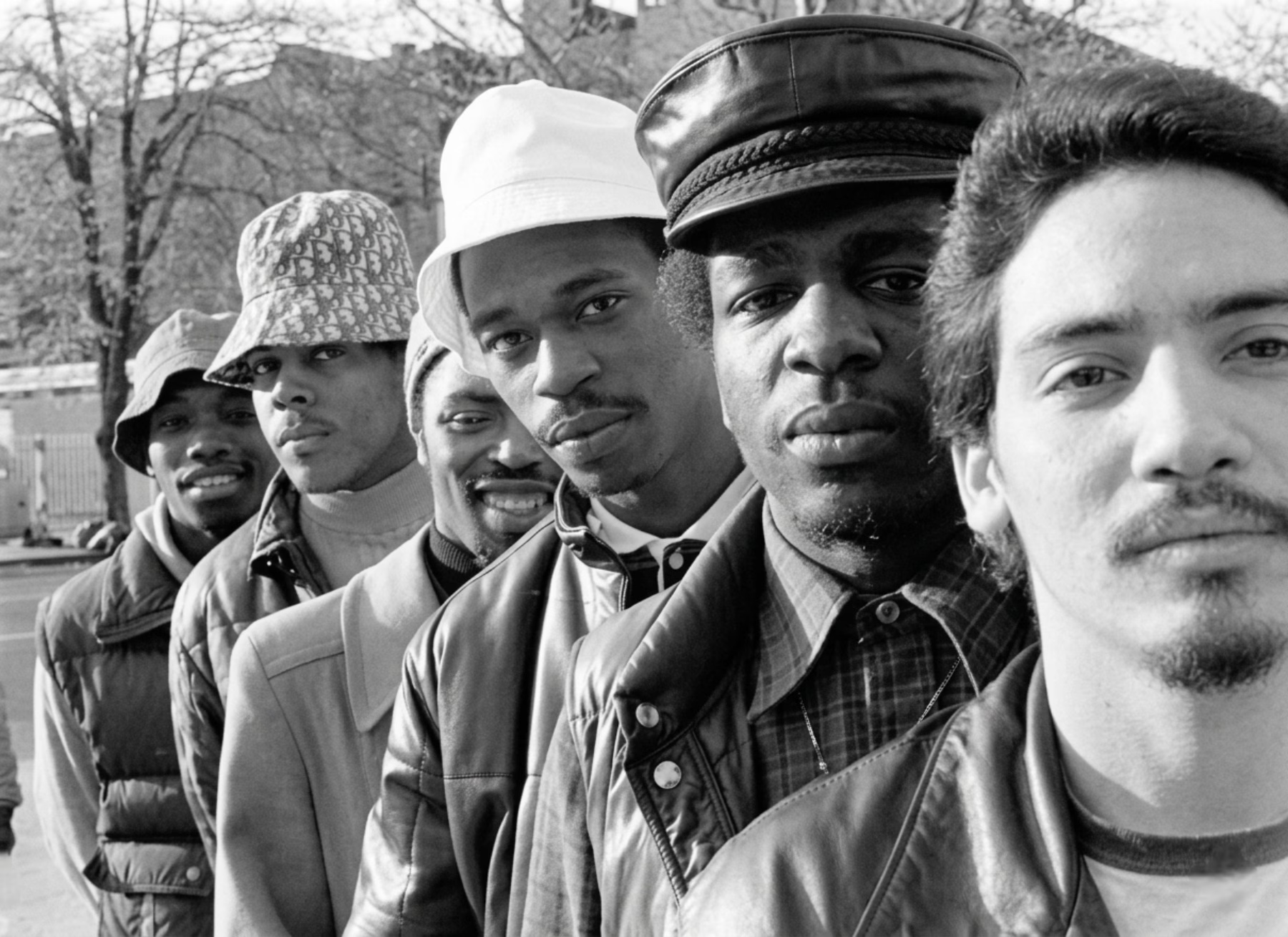
Before the Cold Crush Brothers became a well-oiled machine, JDL and Grandmaster Caz performed as a duo called the Notorious Two. During this phase, they developed the “back-and-forth” rhyming style that required immense synchronization. They were among the first to introduce harmonized routines and shared verses, which was a complete departure from the solo MC sets common at the time.
Their ability to combine rapping with four-part harmonies set the standard for future groups like Run-DMC and Jurassic 5. Run-DMC often noted that their famous trading-off style was directly inspired by what JDL and his crew were doing in the parks of the Bronx.
One of the most significant moments in JDL’s career, and in hip hop history, was the battle against the Fantastic Five on July 3, 1981, at Harlem World. The stakes were $1,000 and the title of the city’s best. Although the judges awarded the win to the Fantastic Five that night, subsequent cassette recordings proved the dominance of the Cold Crush Brothers. JDL was a key factor in this battle; his charisma and ability to fire back at hecklers and rivals made that performance immortal.
These “bootleg tapes” spread globally via soldiers stationed abroad and hip hop enthusiasts, making JDL a star beyond New York’s borders before he ever released an official record.
When the film Wild Style was released in 1982, JDL was given the opportunity to showcase his talent to the entire world. The basketball court scene where the Cold Crush Brothers face off against the Fantastic Five became an instant classic. JDL’s verse, where he identifies himself as the “J pro on the phone” and demonstrates the synergy between sports and rhyme, remains etched in the memory of every hip hop historian .
Following the film, the group embarked on a tour of Japan in 1983, becoming some of the first ambassadors of hip hop on the Asian continent. JDL proved there that the energy of a live show transcends linguistic barriers.
While the Cold Crush Brothers were primarily a live act, they left their mark on wax as well. Their first single, “Weekend,” released in 1982, demonstrated their harmonizing skills. This was followed by the pioneering “Punk Rock Rap” (1983), which was the first official fusion of hip hop and rock, years before the Run-DMC and Aerosmith collaboration.
In 1986, JDL released a solo 12-inch single titled “The Fat Boys Ate Up The Food” on PKO Records . This project showcased his unique vocal tone and the sense of humor that always made him stand out. In 1988, he participated in the Troopers album, which spawned classics like “Feel The Horns” and “The Bronx“.
An interesting fact often forgotten is that JDL indirectly influenced the name of one of the greatest MCs of all time. Darryl McDaniels, better known as DMC, changed his stage name from Easy D to DMC precisely because his idols from the Cold Crush Brothers used initials (JDL, EAD, AKG) . This speaks volumes about how these men were viewed as “gods” by the following generation.
The passing of Jerry Dee Lewis marks the end of an era. He was a man who believed that hip hop was done from the heart, not just for the money . His routines, energy, and smile remain preserved on old cassettes and in the hearts of everyone who respects the foundation of this culture. JDL, thank you for every “hut” and every synchronized step. The Bronx and the rest of the world will never forget you.
Rest in Power, JDL.
You must be logged in to post a comment.