Rest in Power: In Memoriam Gwendolyn “Blondy” Chisolm
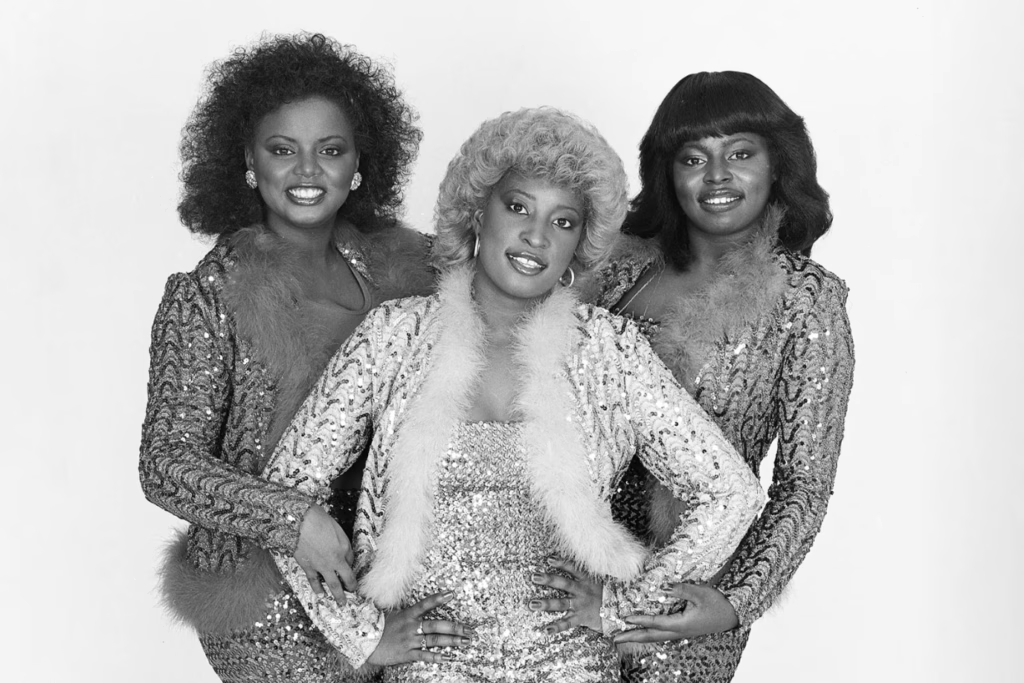
The hip-hop community has grown quiet this week. The news that Gwendolyn “Blondy” Chisolm passed away on April 6, 2026, at the age of 67, has deeply affected all of us who cherish the very roots of this culture. Her passing comes just over a year after the tragic loss of her group mate, Angie Stone (known then as Angie B), leaving Cheryl “The Pearl” Cook as the lone guardian of the fire for the first female hip-hop trio to ever sign a record deal.
Blondy wasn’t just a “background singer” or part of the choreography; she was an essential component of a machine that, in 1979, proved rap wasn’t just a male affair reserved for New York’s five boroughs. The Sequence came from Columbia, South Carolina, bringing with them a Southern flavor that was entirely foreign to the concrete of the Bronx at the time.
Blondy’s story begins in the Saxon Homes projects. She, Angela Brown, and Cheryl Cook were childhood friends who later became cheerleaders at C.A. Johnson High School. It was that experience on the sidelines—the rhythmic chanting and the energy—that became the foundation for their specific sound. While rappers in New York were performing long “rhyme marathons” without clear choruses, the girls from South Carolina added harmony, gospel singing, and pop structure into the equation.
The turning point occurred on October 20, 1979, at the Township Auditorium. Blondy was working at Super Saver Foods at the time, and her manager had promised her tickets to a Sugarhill Gang performance for her 20th birthday. When the tickets failed to materialize, the girls managed to talk their way backstage, where they met Sylvia Robinson, the visionary behind Sugar Hill Records. That’s where the historical moment happened: during an impromptu audition, after performing a couple of routines, Cheryl remembered the “Funk You Up” chant. Sylvia immediately stopped everything, called bassist Doug Wimbish and guitarist Skip McDonald, and ordered them to “put more thump” into the rhythm. And just like that, a hit was born.
Stories about Sugar Hill Records often only mention Sylvia and Joe Robinson, but the structure of the house was more complex. Milton Malden was a key figure in the shadows, a co-founder and investor who, along with the Robinsons, laid the foundations of the label on the ashes of All Platinum Records. Malden was a man who understood how to capitalize on the street sound.
His contribution was both logistical and strategic; he was part of the triumvirate that ensured The Sequence had access to top-tier studio equipment and in-house musicians. During that time, Milton Malden played a significant role in keeping operations running through the label’s golden, yet turbulent, period. Sugar Hill Records was a “tight ship,” and Blondy remained loyal to that family for years, even working in the label’s administration after the group stopped recording.
The single “Funk You Up” was released in December 1979 and became the label’s second official release, right after “Rapper’s Delight“. It was the first female rap hit in history, reaching number 15 on the Billboard Hot Soul chart . Blondy brought a song that wasn’t just rap—it was a fusion of soul, funk, and what we would later call the R&B-hip hop crossover.
The impact of this single is immeasurable. It has been sampled by everyone from Dr. Dre to Erykah Badu . Even the controversial legal case with Bruno Mars and the song “Uptown Funk” serves as a testament to how deeply Blondy’s musical DNA is woven into modern pop. Although the group ceased activity in the mid-1980s following the album The Sequence Party (1983), Blondy’s role in writing lyrics and arranging backing vocals for other artists like West Street Mob remains etched in the annals of history.
Blondy left us quietly, but her mark is a shout that echoed across hip-hop history. She was one of the first ladies to stand by the mic and say, “We are here.” Without her, the path for Salt-N-Pepa, Queen Latifah, or Missy Elliott would have been much harder.
Rest in power, Blondy. Your rhythm is still heard.