Kanye West – 10 Years of The Life of Pablo
Today is February 14th, 2026, which means we are celebrating exactly ten years since Kanye West dropped his seventh studio album, The Life of Pablo (TLOP). Rarely has a project in hip hop history caused such a stir, confusion, and ultimately, a complete redefinition of how we consume music. Released under G.O.O.D. Music and Def Jam, TLOP wasn’t just an album; it was the music world’s first major “software update,” which Kanye famously dubbed a “living breathing changing creative expression.”
We all remember the chaotic rollout that spanned months. The titles changed like clockwork—from So Help Me God to SWISH and Waves, before finally settling on its name just three days prior to the release. The premiere at Madison Square Garden on February 11, 2016, as part of the Yeezy Season 3 show, was an iconic cultural moment where over 20 million people on Tidal watched Ye control the massive arena from a single laptop while models stood like statues. However, the real “earthquake” hit on February 14, immediately following his Saturday Night Live performance, when the album finally became available for streaming.
Conceptually, the album revolves around three Pablos: the Apostle Paul (Saint Paul), Pablo Picasso, and Pablo Escobar. Through them, West explores his inner turmoil—he is simultaneously a Christian messenger, a misunderstood artistic genius, and a ruthless mover of “product” (the Yeezy brand). This tension is best heard in the opening tracks. “Ultralight Beam” is a grandiose gospel prayer featuring a stellar verse from Chance the Rapper, only to be immediately followed by “Father Stretch My Hands Pt. 1,” which brings us back to earth with raw and vulgar bars over one of Metro Boomin’s hardest beat drops. That duality of the “holy and the unholy” is the central nervous system of the entire record.
Musically, this was the pinnacle of Kanye’s “curator” approach. He assembled an incredible team: from legends like Rick Rubin and Mike Dean to the then-reigning trap leaders like Metro Boomin and Southside, with a special Madlib contribution on the phenomenal “No More Parties in LA.” The album is a sonic collage—ranging from soul samples in “Famous” (featuring Rihanna) to the dark, industrial soundscapes of “Feedback” and “Freestyle 4.” Critics at the time described the album as “intentionally messy and fragmented,” and many noted that the lyricism wasn’t always on par with his earlier masterpieces.
But what etched TLOP into history was the fact that the album was effectively unfinished on its release day. Kanye continued to “patch” the record for months. “Wolves” received a total remix, restoring the Sia and Vic Mensa vocals, while Frank Ocean’s outro was moved to its own standalone track. In June, “Saint Pablo” featuring Sampha was added as the final philosophical epilogue. This approach was unprecedented and forced Billboard to change its reporting rules, as TLOP became the first album to top the charts based predominantly on streaming (with 70% of its total units coming from streaming activity).
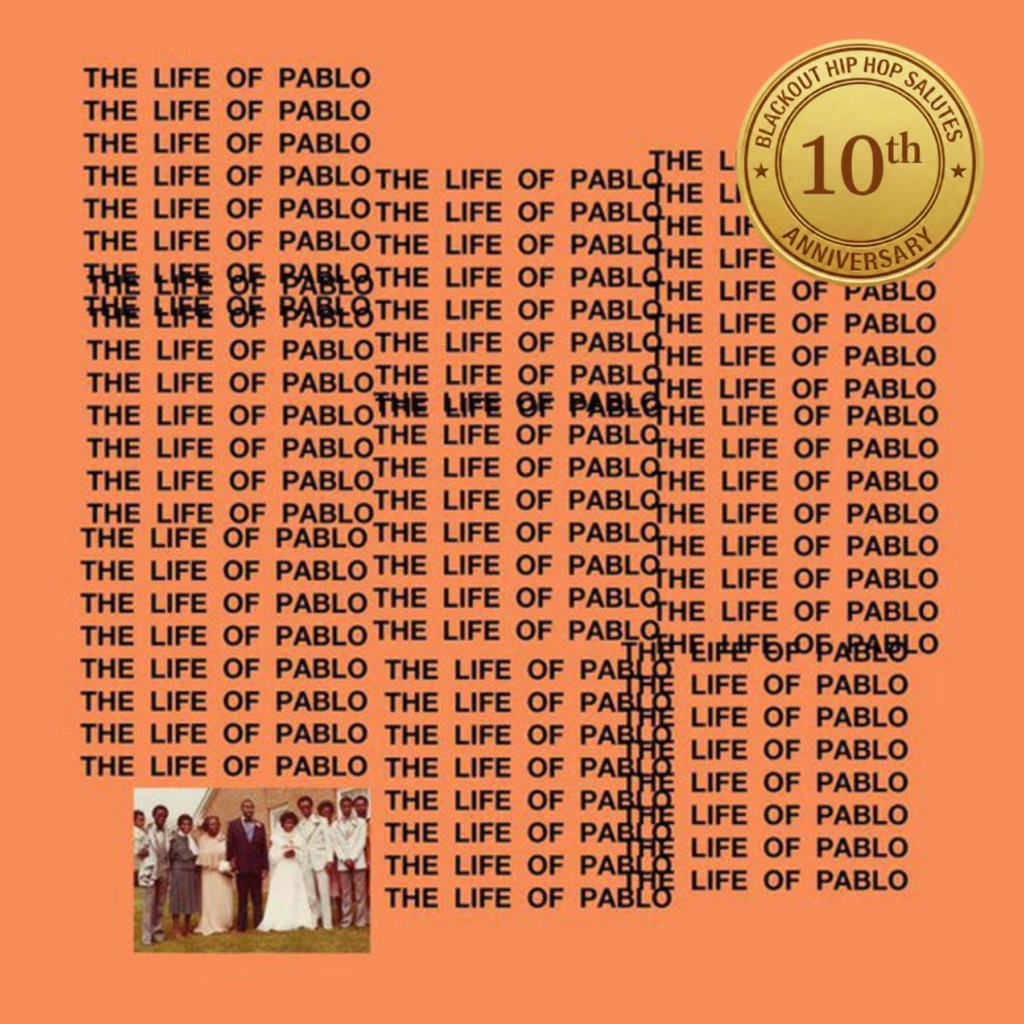
The visual identity created by Peter De Potter—that “MS Paint orange” cover with the vintage family photo and the provocative shot of model Sheniz Halil—remains one of the most recognizable in the genre. The “WHICH ONE” motif stamped across the artwork isn’t just a question for Kanye, but for all of us balancing between faith and vice. Ten years later, The Life of Pablo might not be Kanye’s “cleanest” album, but it is definitely the one that broke the fourth wall between artist and audience, ushering us into an era where music no longer has to be finalized.