J Dilla: Donuts – The Architecture of Mortality & The Loop
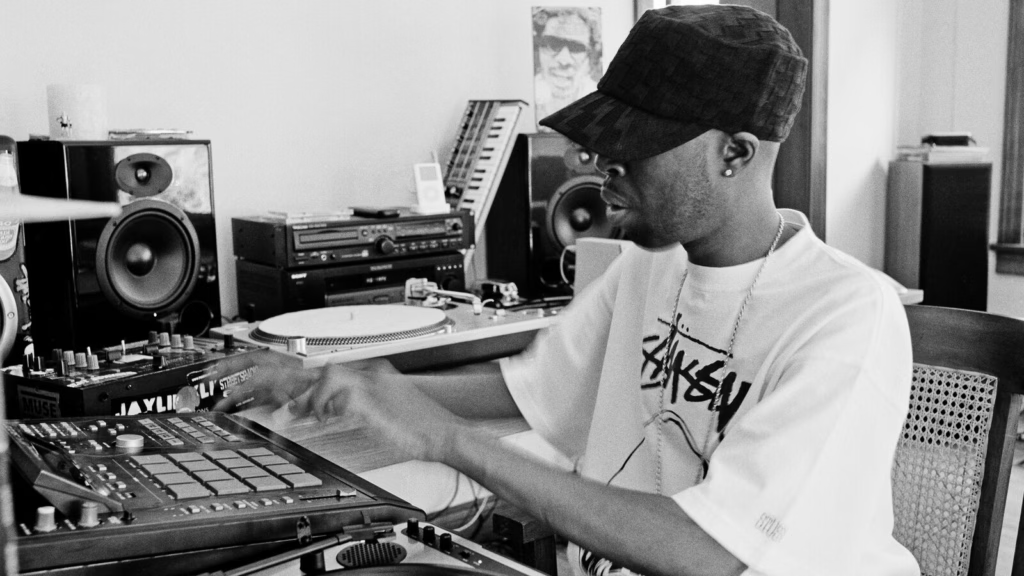
There are dates in the hip-hop calendar that carry a specific weight, and February 7th is definitely one of them. On that day in 2006, James Dewitt Yancey, better known to the world as J Dilla (or Jay Dee), celebrated his 32nd birthday. On the same day, his album Donuts was released via Stones Throw Records. Just three days later, Dilla passed away. This chronology isn’t just a tragic footnote; it is the key to understanding one of the most complex instrumental projects ever recorded.
In today’s “Dig of the Day,” we won’t just dwell on nostalgia. Our goal is to deconstruct how this “beat tape” became a “magnum opus” and what was actually happening behind the scenes at Cedars-Sinai Medical Center in Los Angeles.
The Detroit Genius and the Evolution of Sound
Dilla wasn’t just a producer; he was an architect of rhythm. From his early days with Slum Village and the Soulquarians collective, he set the standard for what we now call the “neo-soul” sound. His approach to the MPC-3000 was revolutionary because he refused to use quantization. That “drunk,” “off-beat” swing became his signature.
However, by 2005, Dilla’s health was severely compromised. He was diagnosed with lupus and a rare blood disorder known as TTP (thrombotic thrombocytopenic purpura). He lost nearly 50% of his body weight and required dialysis several times a week. It was during this period, while confined to a hospital bed or a wheelchair, that Donuts came to life.
The Hospital Bed Myth vs. Pro Tools Reality
A long-standing legend suggests that Donuts was made entirely in the hospital using only a Boss SP-303 sampler and a small turntable. While his friends from Stones Throw did bring gear to his room, recent research—notably in Dan Charnas’s book Dilla Time—indicates that much of the material began as home demos created in Pro Tools.
Using Pro Tools allowed him to employ techniques like time-stretching, which the MPC-3000 simply couldn’t handle in that specific way . Nevertheless, the hospital room was where these “sketches” received their final polish. When his hands would swell too much from the illness, his mother, Maureen “Ma Dukes” Yancey, would massage his fingers for hours so he could continue hitting the pads.
Album Structure: An Unending Circle
The title Donuts has two meanings. The first is simple: Dilla loved donuts. The second is metaphorical: the donut as a circle symbolizing the cyclical nature of life and the album itself. The project consists of 31 tracks (the age he was during most of the recording) and is designed as an infinite loop.
The first track is actually an “Outro,” and the final track blends perfectly back into the start of the album. In doing so, Dilla ensured his music would theoretically never end. In a world where instrumental albums often served as mere backdrops for MCs, Donuts was a “rap album without rappers” that communicated emotion solely through samples .
Hidden Messages in the Samples
Many theorists and close collaborators, such as Questlove, believe Dilla used vocal samples to send final messages to his family because he no longer had the strength to rap.
-
- “Waves”: Samples 10cc’s “Johnny Don’t Do It,” but Dilla chops the vocal to sound like “Johnny… do it,” interpreted as a message to his brother John (Illa J) to pursue his music career .
- “Stop”: Dionne Warwick sings “You better stop and think about what you’re doing,” acting as Dilla’s call to listeners to reflect on the transience of life .
- “Don’t Cry”: A direct message to his mother. The Escorts sample serves as comfort for those he was leaving behind.
Stones Throw’s Business Risk
At the time, Stones Throw Records was facing financial difficulties. Their distributor, EMI, was skeptical. Who would buy an album with 31 tracks that last only a minute and a half and have no vocals? The original version was only 22 minutes long .
Art director Jeff Jank played a crucial role. He took Dilla’s beat tapes, sequenced them, and added edits to give the project its 43-minute album form. A unique deal was struck: Stones Throw would release the album, but Dilla retained the right to sell those same beats to other rappers, providing much-needed funds for his medical bills .
72 Hours: From Celebration to Silence
On Tuesday, February 7, 2006, Dilla celebrated his birthday at home with his inner circle while record stores worldwide received the first copies of Donuts. It was a moment of triumph of will over the body. However, on Friday, February 10, his heart stopped due to complications from lupus.
Today, Dilla is considered “your favorite producer’s favorite producer.” His influence on names like Kanye West, Flying Lotus, and Kendrick Lamar is immeasurable. His MPC sits in the Smithsonian, and Donuts remains essential listening for anyone wanting to understand what it means to leave your soul on a track.
This album isn’t just a collection of beats; it is a testament to a man who knew he was leaving and chose to wave at us through the hole of a donut.
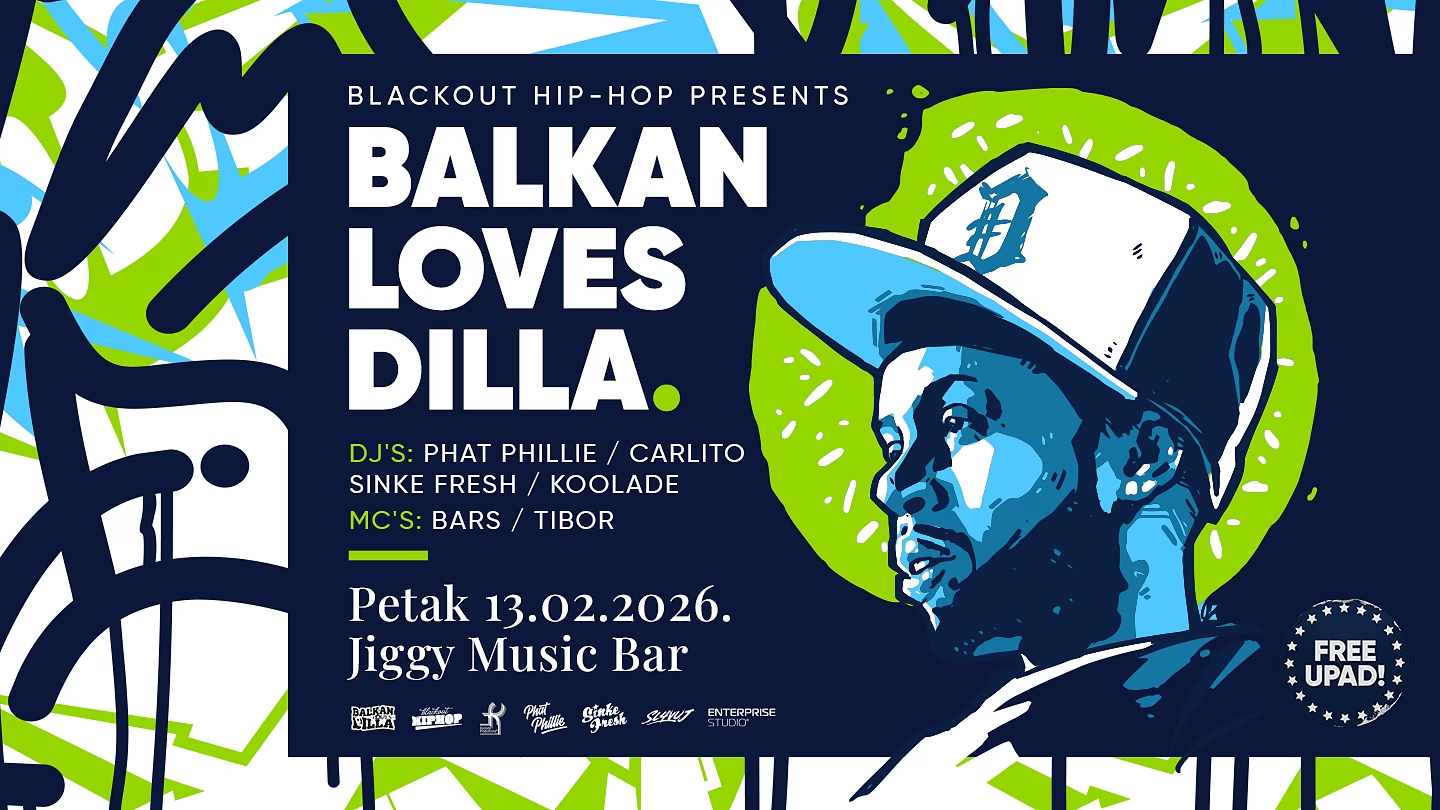
The 5th annual “Balkan Loves Dilla” party is back. On Friday, February 13th, we will gather at Zagreb’s Jiggy Music Bar to pay tribute to the legendary J Dilla with a top-tier atmosphere and incredible music.
The lineup features Phat Phillie, Koolade, Carlito, and Sinke Fresh on the decks, while BARS and Tibor will be showcasing their skills on the mic.
Admission is free, and doors open at 9 PM. See you there!
For more information and additional details, visit the official Facebook event page.
Events in honor of J Dilla have also been organized in Skopje as well as in Sofia.

You must be logged in to post a comment.