From the Gray Album to Gray Tuesday: From experiment to a cultural flashpoint
Author: Raprogram
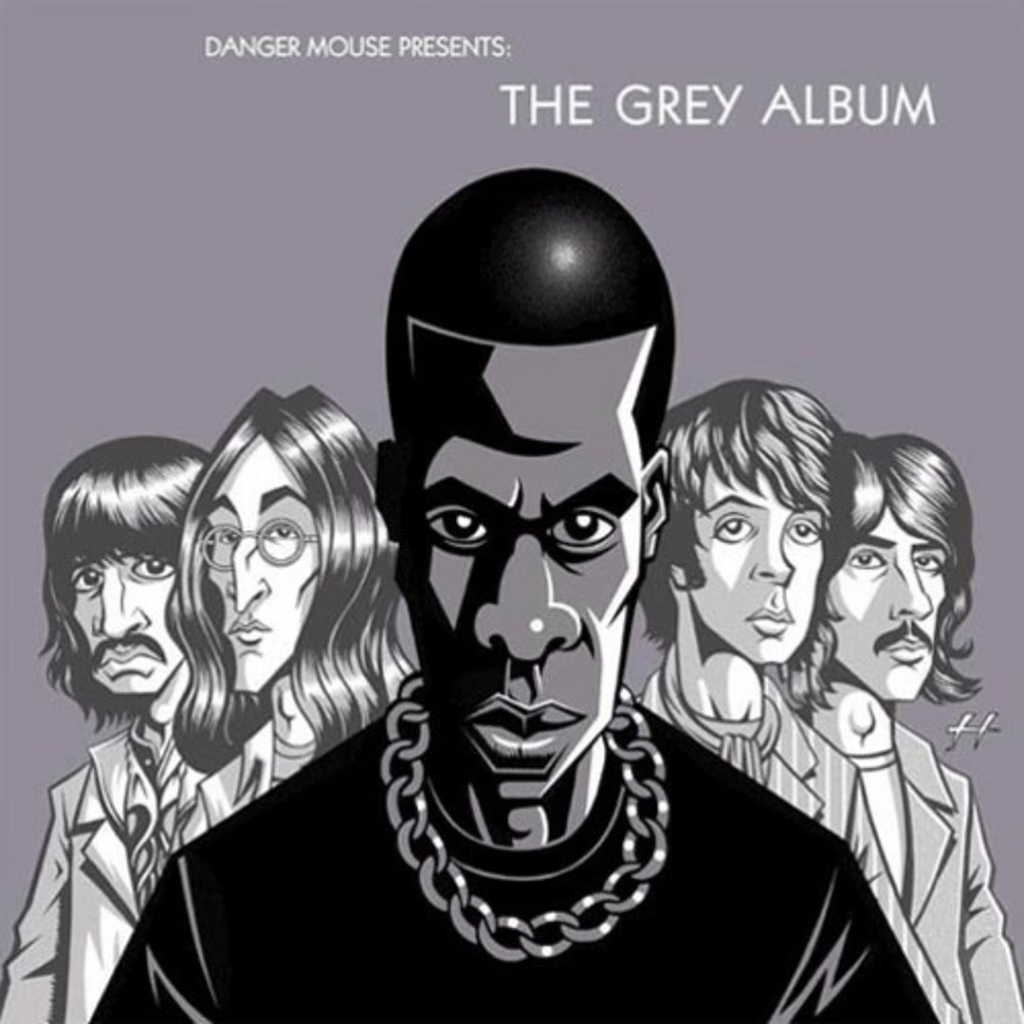
In 2004, before his name was everywhere, Danger Mouse dropped a project that nobody in the industry quite knew how to deal with. The Grey Album sounded like a crazy idea on paper but once you heard it, it made perfect sense. He took the vocal tracks from The Black Album by Jay-Z and rebuilt the entire musical backdrop out of pieces from The Beatles (White Album) by The Beatles. Actually, those acapellas were not leaked or stolen. Jay-Z had released them officially so producers could remix them. Most people treated it like a fun challenge. Danger Mouse treated it like a full artistic statement.
Instead of just stacking vocals over familiar loops, he dissected the Beatles recordings and reshaped them from the ground up. Drums were chopped and rebuilt, guitar lines were flipped into new grooves, and little musical moments were stretched into something completely different. The album does not sound like a mashup stunt. It feels like a real record with its own atmosphere, almost like those songs were always meant to exist that way.
At that point Danger Mouse was still moving mostly in underground circles. One of the projects that hinted at what he could do was his collaboration with Jemini the Gifted One on Ghetto Pop Life. Critics later called it “the best hip hop record of 2003 you never heard”. The album showed his ear for strange combinations and unexpected textures, but it did not explode commercially. The Grey Album was the moment when that creative approach suddenly reached a much bigger audience.
The Grey Album sounds like two timelines crossing. Old rock recordings from the late sixties collide with early 2000s rap and somehow the chemistry works. Danger Mouse built the project at home on basic gear, focusing on detail and patience rather than studio polish. Some samples appear for only a moment before turning into a new rhythm. The album is raw but incredibly carefully crafted and musically layered, which is exactly why listeners connected with it so quickly.
In the beginning the record spread the way underground music often does. A small batch of CD-R copies and promos circulated among DJs and friends. Then the files started moving online. Message boards, music blogs and file sharing communities picked it up and suddenly the album was everywhere. That wave of attention eventually triggered a response from EMI, the company controlling the Beatles catalog, which began sending cease and desist letters to websites hosting the project.
That move backfired in a big way. On February 24, 2004, a coordinated online action called Gray Tuesday took place. Hundreds of websites decided to post the album for free download on the same day as a protest against the takedowns. Within 24 hours the record had been downloaded hundreds of thousands of times, and what had started as an underground project turned into a full cultural moment.
The album never got an official commercial release and never had traditional distribution in stores, but by then it didn’t really matter. The story had already traveled far beyond the usual industry channels. For a lot of listeners and critics, The Grey Album became one of the most important records of that year. Some magazines and music outlets even treated it as the best album of 2004.
More importantly, it pushed Danger Mouse into a completely different league. After that moment, collaborations followed with artists like MF DOOM, Cee Lo Green, Black Thought, and many musicians outside hip hop as well. Looking back now, The Grey Album feels like one of those rare projects where creativity outran the system and people decided for themselves what mattered.