2Pac: 25 Years of Until the End of Time – The Vault’s Peak
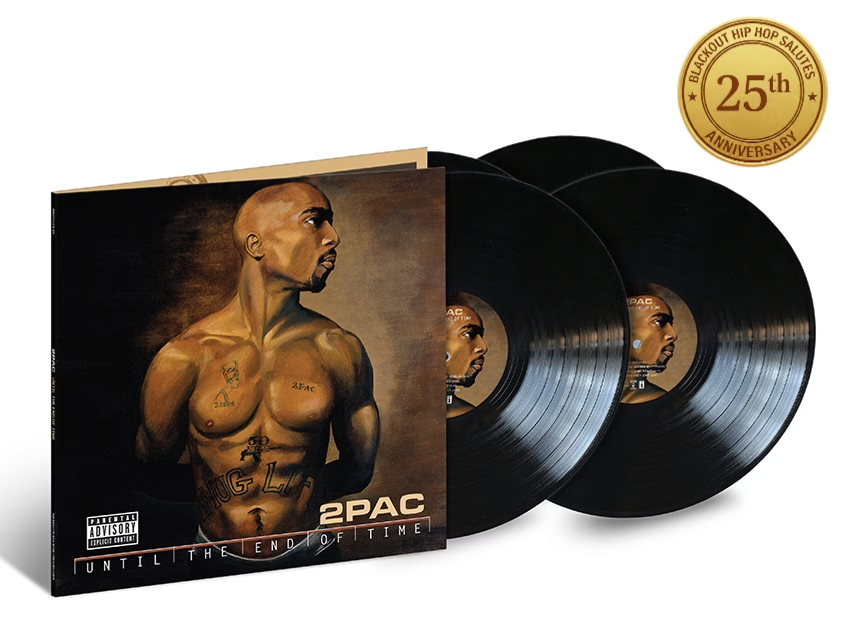
A Quarter Century of “Makaveli” Energy: A Retrospective of Until the End of Time
Today is March 27, 2026, marking exactly twenty-five years since the world first heard Until the End of Time, the third posthumous studio album by Tupac Shakur. When this project dropped on that Tuesday in 2001, the hip-hop scene was in a strange transition. G-funk was losing its grip, and the “shiny suit” era was in full effect. In that context, new Pac material arrived as a reminder of the raw energy he brought to the game during his final year at Death Row Records.
Archival Genesis and the Makaveli Period: The core of this album consists of recordings made between October 1995 and September 1996 – a window fans call the “Makaveli era”. Pac was at the height of his productivity, recording multiple tracks per night at Can-Am Studios. Legend has it that over 100 completed songs remained in the vault, and Until the End of Time was an effort by Amaru Entertainment and Afeni Shakur to modernize that material for a new decade. The album debuted at number one on the Billboard 200, selling 426,870 copies in its first week, making it the final number one for the original Death Row Records banner.
Production and the Remix Controversy: The defining debate surrounding this album has always been the production. While earlier posthumous works like R U Still Down? had that vintage boom-bap flavor, Amaru and Interscope brought in a fleet of producers including Johnny “J”, QDIII, L.T. Hutton, and the Trackmasters to make the sound radio-friendly for 2001. Fans were often split – some loved the polished feel of songs like the title track or “Letter 2 My Unborn,” while purists longed for the original (OG) versions that circulated on bootleg tapes.
One major stain on the post-production was the technical fail on “Everything They Owe,” where the vocals are visibly off-beat due to an engineering error, which ruined the vibe for many. The systematic censorship was also noteworthy. Almost every mention of “Death Row Records” or its affiliated artists was muted, except for the title track, “U Don’t Have 2 Worry,” and “All Out“. Even Snoop Dogg’s vocals on “This Ain’t Livin'” were scrapped due to legal tensions between labels at the time.
Key Cuts and Samples: The title track “Until the End of Time” became an instant classic. Sampling Mr. Mister’s hit “Broken Wings,” the song showcased Pac’s deep, introspective side. Interestingly, the song was originally titled “Broken Wings,” but the name was changed just weeks before release due to legal hurdles. The music video was especially emotional, utilizing a compilation of unreleased studio footage of Pac, giving us a glimpse into his creative process.
Then there’s “Letter 2 My Unborn,” which sampled Michael Jackson’s “Liberian Girl”. In it, Pac sends a message to future generations, aware that he might not live to see his own children. It’s that emotional depth that always set him apart from the other “ridaz” of that era.
Legacy in 2026: Looking back from 2026, Until the End of Time remains one of the best-selling hip-hop albums of all time, certified 4x Platinum. While later projects like Loyal to the Game (produced by Eminem) were more heavily criticized for over-manipulating the source material, this 2001 double-disc is still considered by many as the “last true Pac album”.
For its 20th anniversary in 2021, we saw a deluxe vinyl reissue on bone-colored wax featuring previously unseen photographs. Today, on its 25th anniversary, the debates over whether the original beats should have been left alone continue on forums, but the quality of the bars is undeniable. Pac was a visionary, and this album is proof that his word lives on, just as the title suggests – until the end of time.