25 Years of Afrika Bambaataa: Looking For The Perfect Beat
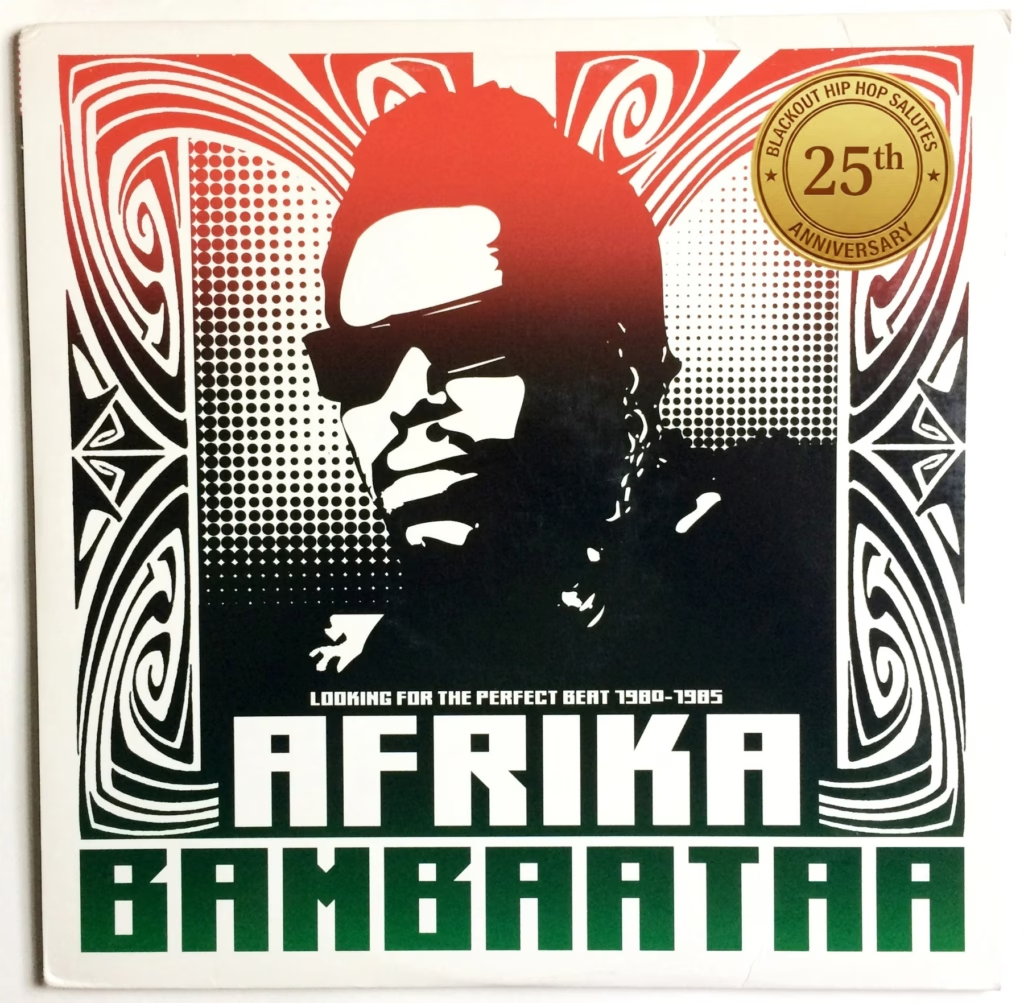
Today is March 20, 2026, marking exactly 25 years since the release of the compilation Looking For The Perfect Beat 1980-1985. For those of us who grew up on the crackle of vinyl and the hiss of cassettes, this 2001 release was far more than just another “Greatest Hits” package. It was a cornerstone of the Tommy Boy 20th Anniversary series, meticulously remastered by Tony Dawsey to solidify the legacy of the man we call “The Amen Ra” of hip hop culture – Afrika Bambaataa.
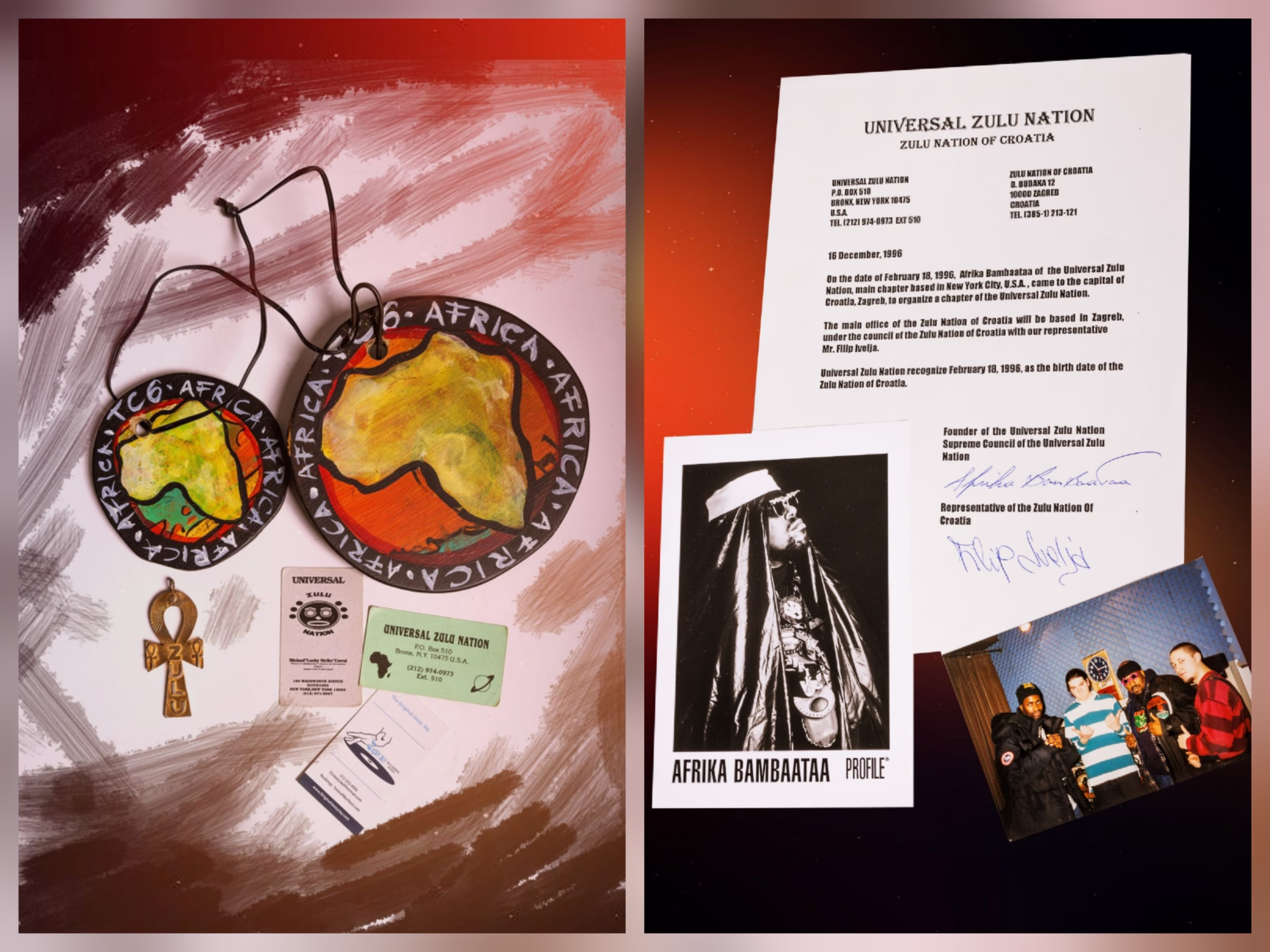
To understand the weight of this album, we have to look back at the Bronx in the 1970s. Bambaataa, then known as Lance Taylor, was a warlord for the notorious Black Spades gang. However, a life-changing trip to Africa, inspired by the 1964 film Zulu, changed everything. Upon returning to NYC, Bam decided to transform street energy into something creative. He founded the Universal Zulu Nation (UZN) in 1973, promoting peace, unity, and fun through the four elements: DJing, MCing, breakdancing, and graffiti.
The compilation opens with “Zulu Nation Throwdown,” documenting that early transition from street warfare to block parties at the Bronx River Houses. These were the moments when hip hop was pure, raw street sound, long before major labels even knew what was hitting them.
The central pillar of the compilation is the technological revolution. “Planet Rock” (1982) is the song that literally blew out speakers in record shops across Brooklyn. Producer Arthur Baker and keyboardist John Robie, with Bam’s blessing, fused the futuristic sound of Kraftwerk (the melody from “Trans-Europe Express” and the rhythm from “Numbers”) with raw rap energy.
A legendary anecdote tells us that the team didn’t actually own a Roland TR-808. They found an ad in the Village Voice: “Man with drum machine, 20 dollars a session.” That guy, Joe, brought the 808 to Intergalactic Studios, and the rest is history. At the time, the 808 was considered a toy because its sounds were “artificial,” but that robotic kick became the foundation for everything we hear today – from techno to modern trap. The Soulsonic Force rappers initially hated the beat because it was too fast, prompting MC G.L.O.B.E. to invent a style he called “MC Popping” – rhyming around the beat instead of directly on it.
Following the massive success of “Planet Rock,” the pressure for a follow-up single was immense. Arthur Baker admitted in interviews that he “rediscovered drugs” during this period due to the stress, but from that madness emerged a title that defined an era: Looking for the Perfect Beat. Unlike their previous hit, they decided not to sample Kraftwerk this time to ensure no one could accuse them of biting. The track was developed over months in Robie’s apartment, and Baker ended up performing some of the incidental vocals (the barking and “Beat This”) himself because the rappers refused to do them.
One of the most powerful moments on the compilation is the 1984 collaboration with James Brown on “Unity.” It was a historic “handover” – the moment the Godfather of Soul officially gave his blessing to the new generation that had been sampling him relentlessly. Bam was always the “Master of Records,” a man who mixed punk, reggae, rock, and funk in his sets at clubs like The Roxy, and this collaboration was the crown jewel of that philosophy.
The 2001 release arrived in a specific Digipak designed by Gregory Burke. The disc itself featured a three-spot color print in red, black, and green – the Pan-African colors, directly referencing the Afrocentric philosophy of the Zulu Nation. While the compilation might lack extensive liner notes, the sound remastered by Tony Dawsey is crystal clear.
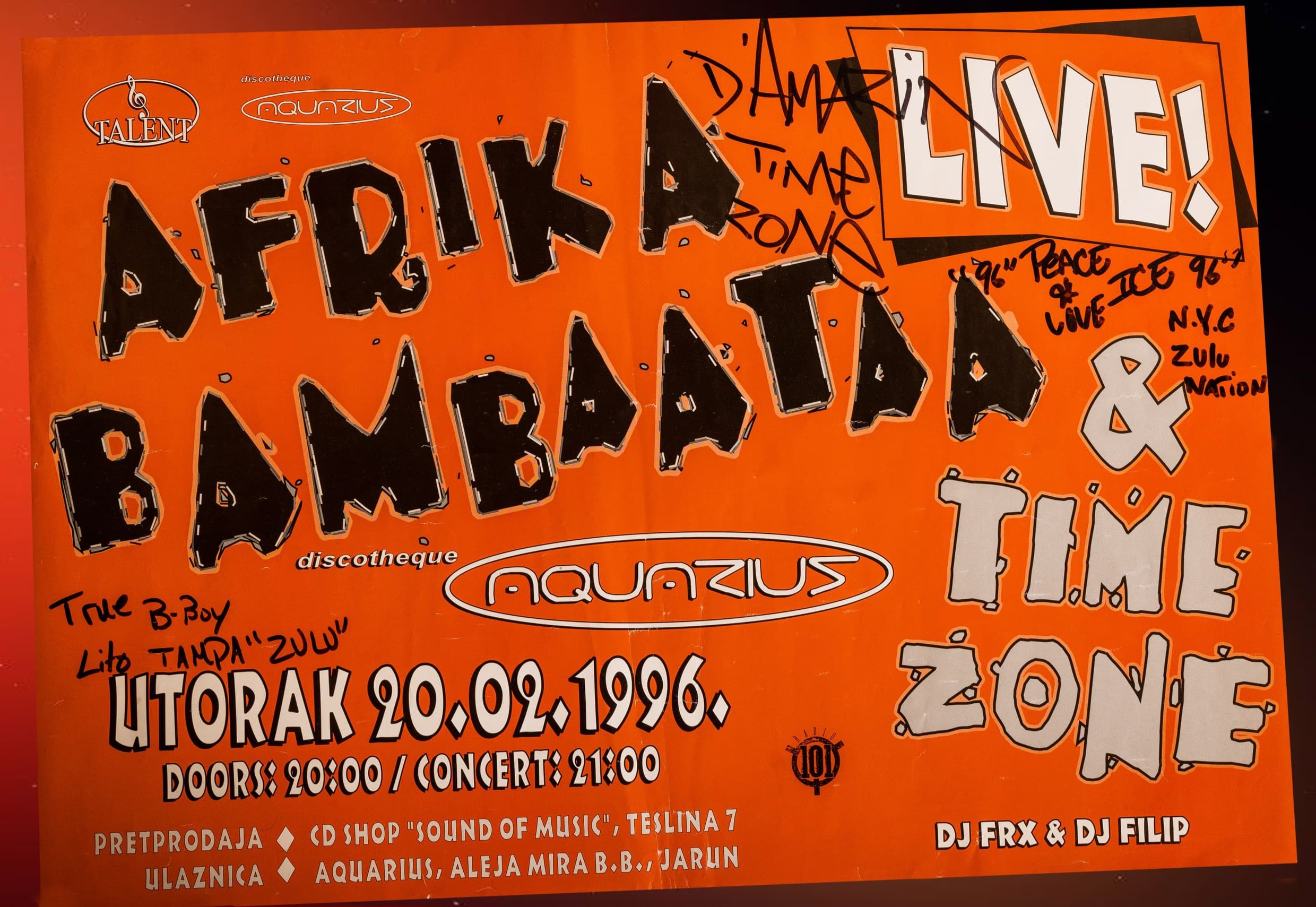
We also can’t overlook the local significance for our region. Bambaataa visited Zagreb in 1996 with the Time Zone crew, a “etched in stone” moment for the Croatian hip hop scene. Phat Phillie and Frx were the hosts, and footage from that show still circulates as proof that Bam’s mission of spreading the culture reached our shores early on.
Looking For The Perfect Beat 1980-1985 is not just a music album; it is a document of how hip hop became a global phenomenon. From a Bronx warlord to a global ambassador for peace, Afrika Bambaataa proved that a rhythm can be stronger than a bullet. 25 years later, these beats still sound like they arrived from the future.
You must be logged in to post a comment.